























:format(jpeg) "Kaffeeecke einrichten")
Your own coffee corner
as a little time-out at homeThe first coffee in the morning, the smell of freshly ground beans, and a few minutes of peace: A personal coffee corner can turn a daily ritual into a cherished moment. It doesn’t require much space. Even a free spot on the kitchen countertop can suffice. Those with more room can create a coffee station on a sideboard, in a shelf, or as a small coffee bar.
What matters less is size but rather the combination of practicality, good organization, and suitable lighting. A coffee corner should not only look good: The machine, cups, and accessories should be easily accessible and preparation should be convenient and straightforward with well-placed light. In this guide, we provide you with some tips to set up your own coffee corner.
Once the coffee is made in the coffee corner, take it with you in your favorite cup to your favorite spot in the living room, kitchen, or dining room – or enjoy it while working in the home office.
Plan coffee corner
The right place makes the differenceThe best place for a coffee corner at home is where electricity and, if necessary, water are available and at the same time there is enough workspace for coffee preparation. Therefore, the kitchen is ideal for a coffee corner since water, electricity, and workspace are usually already available. But a coffee station can also be set up in the dining room, home office, or even in the living room.
When looking for a suitable location, consider:
- Is there a power outlet nearby?
- Is a water connection reachable, if necessary?
- Is the workspace sufficient for the coffee machine and preparation?
- Can the water tank be removed without hassle?
- Can the bean container be opened and refilled?
- Are cups, coffee, and accessories quickly accessible?
- Is there enough light on the workspace?
- Can the cables be routed as inconspicuously as possible?
The dimensions of the coffee machine are often underestimated: The machine might fit comfortably on a sideboard but have too little space above if the water tank or bean container opens upwards. Also, the coffee machine should not be restricted by a wall on the side, as many coffee waste containers fold out to the side.
Suitable solutions for every coffee corner
From small to spaciousHow much space a coffee corner needs depends on the equipment, but even a small area on the kitchen countertop can suffice for the coffee machine, cups, and accessories. A coffee corner can be set up in a compact kitchen by utilizing the existing workspace and creating additional storage with wall shelves, hooks, or a narrow niche. Depending on space, a countertop, sideboard, dresser, open shelf, or mobile serving cart is suitable for a home coffee bar.
:format(jpeg) "Kaffee Station")
Coffee station on the kitchen countertop
The simplest variant: The coffee machine has a fixed place on the workspace. A tray can visually unify machine, cups, and accessories, defining the area at the same time. For additional storage, use the wall above. A small shelf or board offers space for cups and coffee jars—and provides the opportunity to selectively illuminate the area.
:format(jpeg) "Sideboard")
Sideboard or dresser as a coffee bar
A sideboard often offers more space and is particularly suitable for the dining or living room. Coffee beans, filters, and other less frequently used items can be stored in drawers and closed compartments, while daily essentials remain within reach.
A wall-mounted light can illuminate the workspace without taking up valuable space on the furniture.
:format(jpeg) "Offene Regale")
Open shelf or narrow niche
When space is tight, look up. A narrow shelf utilizes the room’s height and can hold cups, glasses, and supplies.
The open space should be deliberately arranged. A few selected cups and containers look calmer than a collection of all coffee utensils. Important: A coffee machine has a certain weight that the shelf surface must be able to support.
:format(jpeg) "Servierwagen")
Serving cart as a mobile coffee bar
A serving cart is interesting for small apartments and open floor plans. The coffee station can be moved as needed, being in the kitchen in the morning and later in the living area. With a battery-operated light, the mobile solution can also be illuminated flexibly—especially where no other light can or should be installed.
:format(jpeg) "Kaffeeecke bauen")
Integrated coffee corner in the cabinet
For a more tranquil appearance, coffee accessories can be housed in an open cabinet compartment. Adequate ventilation and robust cabinet surfaces are essential to prevent damage from heat and steam. This is particularly recommended for cleaned and cooled filter machines and French presses and only under these conditions for fully automatic coffee machines.
The kitchen is the most obvious room for a coffee machine for another reason: the flooring in the kitchen is generally more resistant to moisture and dirt than in other living areas. If the water container drips or some coffee spills, it is usually quickly cleaned up on vinyl, PVC, or tiles. A little more caution is needed in the living room.
:format(jpeg) "Frau am morgen beim Kaffee trinken")
Organize coffee machine, cups, and accessories intelligently
From small to spaciousThe coffee machine forms the functional centerpiece of the coffee station. Only items that are regularly needed should be arranged around it.
For a barista corner with an espresso machine, it is best set up with ample workspace for the machine and grinder, as well as designated spots for the tamper, milk frothing jug, scale, and coffee beans. Cups and coffee accessories can be stored space-efficiently by combining wall shelves, hooks, narrow boards, organizers, and closed storage space. Uniform tins or jars are suitable for coffee, sugar, and other supplies. This creates order and prevents many different packages from dominating the coffee station. A tray or small organizers can also help to consolidate many individual items into a tidy unit.
A simple rule helps with organization: What is needed daily stays within reach. What is only occasionally needed can go into closed storage.
When setting up a coffee corner of any kind, one accessory is always included: a non-slip mat with slightly raised edges. This can be a tray or a rubber mat. It's essential that it captures any spilled liquid—whether due to spills or inadvertently overfilled drip trays—along with any dirt like tamper remnants or pressed coffee waste. This protects the materials of the furniture pieces where the coffee machine is placed.
The right lighting for the coffee corner
Functional and stylishFor a coffee corner, under-cabinet lights, wall lights, table and battery-powered lamps, as well as LED strips that create task or mood lighting as needed, are particularly suitable. A warm white light color of about 2,700 to 3,300 Kelvin makes the coffee corner especially cozy and supports the homely café character. However, for the actual coffee preparation, the light should be bright enough, even, and as glare-free as possible. Direct task lighting and indirect mood lighting perform different tasks: While one facilitates preparation, the other provides depth and atmosphere.
)
If the coffee corner is located under a wall shelf or hanging cabinet, under-cabinet lights are an especially practical solution. They bring the light where it's needed: on the machine, cups, and workspace. This is particularly helpful in small kitchens where there's no room for an additional table lamp. Wireless under-cabinet and battery-powered lamps are also suitable as easy retrofit solutions. They can be deployed where new electrical wiring cannot or should not be installed.
)
On a sideboard or dresser, a wall light doesn't take up space on the work surface. At the same time, it can visually define the coffee station as its own zone. When positioning, care should be taken that the light isn't placed directly at eye level, which might cause glare. A side or slightly higher positioned light source, or a wall light with a shade, can pleasantly illuminate the area without disturbing the view of the machine.
)
On a larger sideboard, a table lamp can complement the functional area with a homely light source. Compact lamps that aesthetically fit into the style of the coffee station are especially suitable. Battery-powered lamps offer another advantage: They don't require a permanently free socket. This means they can also be used on a serving cart or at other flexible locations.
:format(jpeg) "LED Strips")
For shelves, niches, and modern coffee bars, LED strips are suitable as supplemental lighting. Placed under a shelf, they illuminate cups and the work surface, for example. Behind furniture edges or shelves, they create more of an indirect light. This allows the coffee station to be visually highlighted without the light fixture itself being the focal point.
Lighting should also be considered during the planning phase. If, for example, the coffee station is located under a hanging cabinet or in a niche, the existing room lighting, typically the regular ceiling light, can quickly cast shadows on the work surface.
Designing a coffee corner
Four looks for your home caféA modern coffee corner suits clear colors like black, white, and beige, as well as materials like wood, metal, glass, and ceramics. However, coffee corners can stylistically reflect anything that the users love in other parts of their living space.
:format(jpeg) "Tassekaffee sonnendurchflutetes Zimmer")
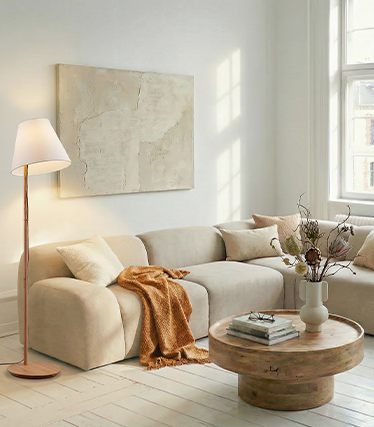
Wood, ceramics, linen, and some plants create a warm, homely atmosphere. Cream, beige, and brown tones can be complemented with a warm white table or wall light.
:format(jpeg) "Kaffeemaschine heißer Kaffee mit Milch")
Clear lines, few visible items, and materials like black, white, chrome, or glass make for a tidy appearance. A subtle wall light or integrated light strip fits unobtrusively into the concept.
:format(jpeg) "graue Holzküche")
Dark wood, black metal, and open shelves give the coffee station a more striking character. With an espresso machine, the machine itself can become a design object. A characterful wall or pendant light adds an additional accent.
:format(jpeg) "Gebäck Croissants")
Colorful cups, framed pictures, and selected nostalgic details make the coffee station more personal. Recurring accent colors connect the individual elements. A decorative light can become an additional eye-catcher.
)
)
)
Decor and accessories
for a personal coffee cornerA coffee corner doesn't need to be fully decorated. Often, a few thoughtfully selected elements are enough:
- favorite coffee cups
- storage jars or a coffee tin
- a small plant
- a picture or subtle coffee art motif
- a tray as a cohesive element
- a small book or selected barista accessories
The design of the coffee corner is especially harmonious when colors and materials from the rest of the room are repeated. Seasonal decorations can be added at will, but they shouldn't restrict the actual function of the coffee station or take up unnecessary space.
Typical mistakes
when setting upTo ensure that a lovely coffee corner is also completely practical in everyday life, both function and design should always be considered together. However, problems can occasionally occur despite careful planning. The following can be easily avoided if considered from the beginning:
- The coffee machine fits on the furniture, but it cannot be filled comfortably – It is best to check before setting up whether the water tank, bean container, and other components can be fully opened.
- There is a lack of space for preparation – Do not cover the entire available area with decor. Next to the machine, there should be enough free workspace.
- Too much is left out in the open – Cups, cans, and accessories can look decorative, but too many items quickly create clutter. Select accessories and tools carefully and store supplies.
- The light comes from the wrong direction – A single ceiling light can be behind the person operating or the machine, creating distracting shadows. Additional task lighting directly at the coffee station helps solve this.
- The light is dazzling – Particularly for wall lights and visibly open light sources, the position should be chosen so that the light does not shine directly into the face.
- Sockets and cables are considered too late – The coffee machine, coffee grinder, and additional lighting may require multiple power outlets. Early planning provides for a neater solution.
- The shelf directly above the machine does not have enough distance from heat and steam – Heat and steam can stress the immediate surroundings. Therefore, sufficient distance should be planned according to the requirements of the respective devices and furniture.
- Sensitive or difficult-to-clean surfaces are directly next to the machine – Coffee splashes, water, and milk residues are common. Robust and easy-to-wipe materials make maintenance easier.
Conclusion
The coffee corner as a personal favorite spotA functional coffee corner is not created by fitting as many coffee utensils as possible into a small space. What matters is how well the space fits into your everyday life.
The right location provides short routes. Thoughtful storage keeps cups, beans, and accessories close at hand without overwhelming the area. And suitable lighting ensures that the coffee station not only looks good but also serves its purpose during daily preparation.
Even a specifically placed under-cabinet light, a space-saving wall light, or a flexible battery lamp can make a noticeable difference. In this way, a free corner gradually becomes a functional and personal favorite spot – whether on a small kitchen board or as a generous coffee bar in the living area.
:format(jpeg) "Kai")
Online editor at Lights.co.uk
Expert tip
"Don't plan the lighting for your coffee corner only after the machine and accessories have found their place; think about the lighting from the start. A strategically placed under-cabinet or wall light ensures that the work surface and coffee machine are evenly illuminated, preventing distracting shadows when preparing. For a cozy atmosphere in the evening, you can complement the functional task lighting with a dimmable table or battery lamp with warm white light. Cordless lights are especially practical if there is no additional power outlet at the desired location. This way, the coffee corner combines functional lighting for everyday use with a pleasant atmosphere for relaxed coffee enjoyment."
 "Esszimmerbeleuchtung")
 "Funtional Indoor")
 "Indirekte Beleuchtung")
 "Schwarz goldene Lampen")
 "Lichtkonzept für die Küche")
 "Industriallampe")