





































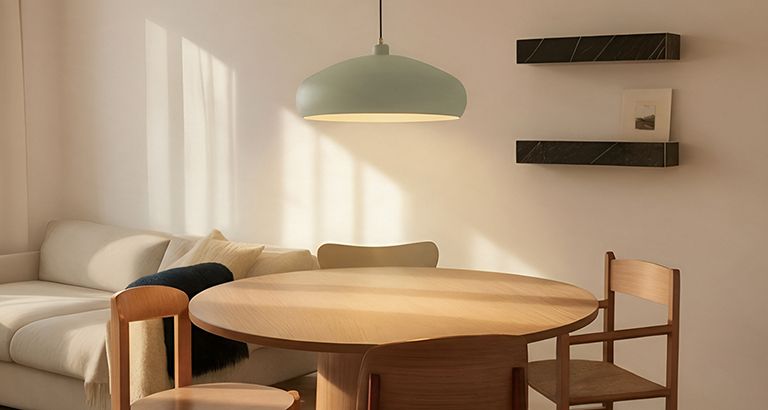
Dining room lighting
Practical lighting ideas for atmosphere, style and functionAt first glance, the dining room may seem to be the place where we mainly eat – but in fact it is much more than that: it is a multifunctional meeting place for shared meals, stimulating conversations, convivial evenings and, in these times of working from home, quite often a place for focused work as well.
With the right dining room lighting, tailored to the situation, you can style this versatile room to suit your needs. The key here is a well-thought-out lighting concept that combines different light sources in a sensible way.
Planning the perfect lighting scheme for your dining room
Whether it’s for daily family meals, working at the dining table or a cosy evening with guests: the right dining room lighting combines practicality with comfort. In the dining area, it makes sense to plan a lighting scheme that combines pleasant ambient lighting, specific task lighting and accent lighting to create the right atmosphere. Furthermore, the lighting concept for the dining room takes into account the size of the room, the furniture, the style, the windows, the shape of the table and how the room is used.
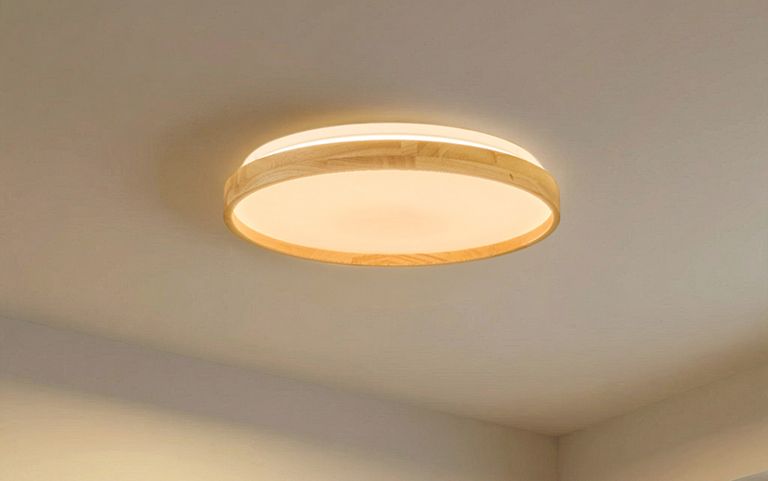
Uniform general lighting helps you find your way around and creates a bright, pleasant atmosphere in the room. Furthermore, it reduces eye strain if the contrast between the spot lighting and the rest of the room’s lighting is not too great. Ceiling lights, multi-bulb ceiling spotlights or LED panels distribute light throughout the dining room and form the basis for well-balanced lighting. Another very popular option is to combine a central pendant light for zone lighting with wall lights to provide general illumination for the rest of the room.
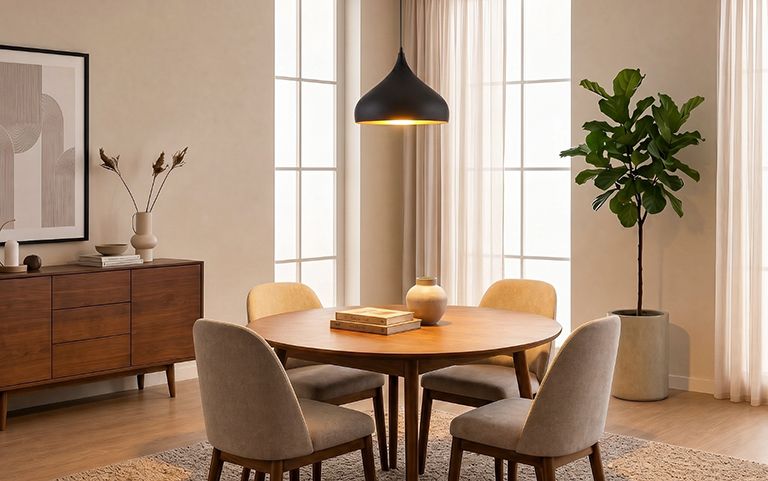
The dining table is the centrepiece of the dining room and should be lit in a targeted manner. Pendant lights are particularly well suited to this, as they direct their light straight onto the table top whilst at the same time highlighting the dining area. Which light fitting is most suitable depends, amongst other things, on the shape and size of the dining table: whilst a single pendant light often looks harmonious above a round table, oblong tables can benefit from multi-bulb light fittings or several pendant lights.
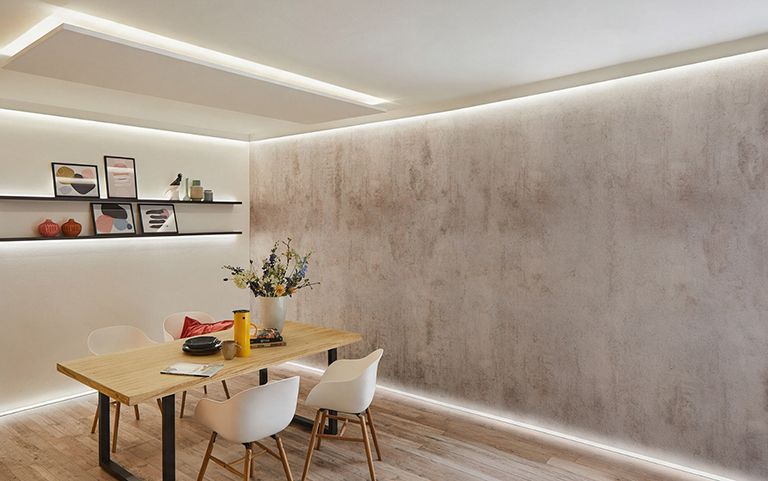
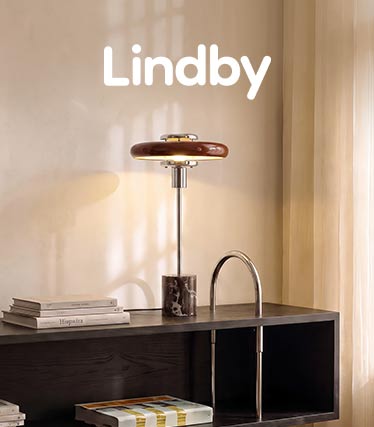
Accent lighting and mood lighting give the dining room a unique atmosphere. Decorative table lamps on sideboards, spotlights aimed at pictures or illuminated shelves create visual highlights and draw the eye to selected pieces of furniture. Indirect lighting, such as LED strips on furniture or in the corners of a room, creates soft highlights and a pleasant atmosphere.
Take dining room scenarios into account
The dining room is the setting for a wide range of activities – from family meals together and a cosy dinner for two to doing homework, working from home or a fun games evening. With the right lighting, you can adapt the light flexibly to any situation.
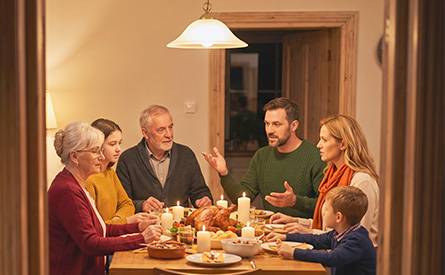
For a family meal, it is advisable to have bright, even lighting across the entire table and the surrounding seating areas. A pendant light that matches the shape of the table creates a warm, inviting atmosphere, allowing everyone at the table to see each other clearly.

At dinner in the evening, however, the focus is on a cosy atmosphere. Subdued, warm white light above the dining table creates a cosy atmosphere, whilst soft background lighting from wall lights, the sideboard or indirect light sources provides subtle accent lighting.

If the dining table is also used for working from home or doing homework, a higher brightness level and a universal white colour temperature are advisable. Dimmable CCT lights are particularly practical, as they can be switched at any time from functional task lighting to a relaxing ambience.
Even during a games evening, the whole table should be well lit so that playing cards, game boards and small details remain clearly visible. Dimmable and height-adjustable dining table lamps allow you to adjust the brightness and the distance from the table top to suit your needs.
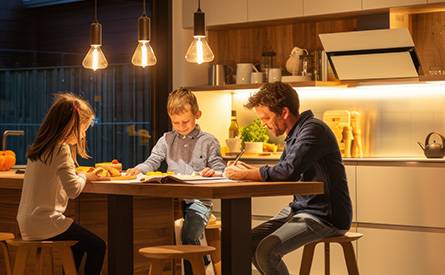
After the meal, the lighting can finally be dimmed a little again. Instead of continuing to shine a bright light on the dining table, many pendant lights can be dimmed. Wall lights, floor lamps or subtle lighting on the sideboard create small pockets of light that lend depth to the room and invite you to linger.
Dining room lighting at the dining table
Ideas for the centre of the room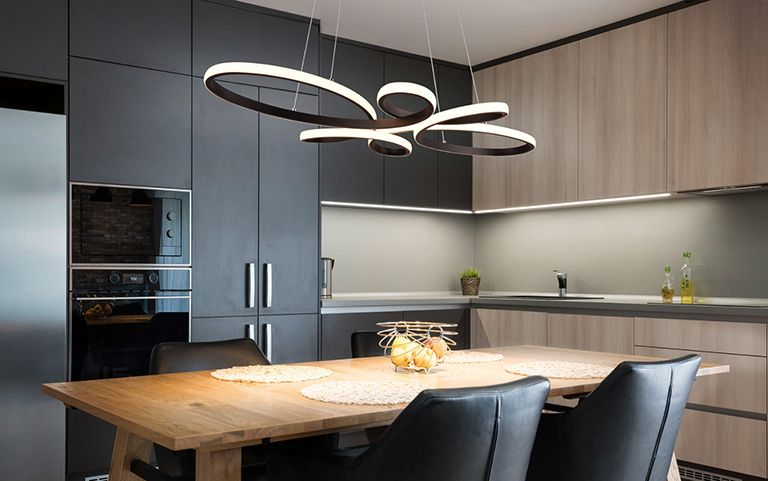
The lighting above the dining table plays a key role in the dining room: it highlights the table as the focal point of the room whilst creating a pleasant lighting atmosphere. A pendant light is particularly well suited to this, as it directs the light specifically onto the table and visually separates the dining area from the rest of the room.
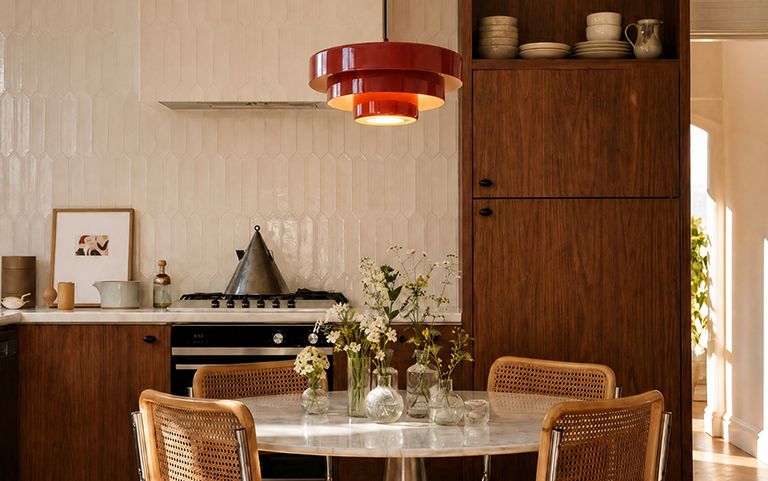
To achieve harmonious lighting, the correct positioning and height of the light fitting are of paramount importance. As a guideline, the distance between the tabletop and the light fitting should be around 60 to 75 cm. This ensures that the table surface is adequately lit without obstructing eye contact between those seated. It is also important to ensure that the light is distributed in a way that does not cause glare, so that it is not perceived as a distraction whilst eating or chatting.
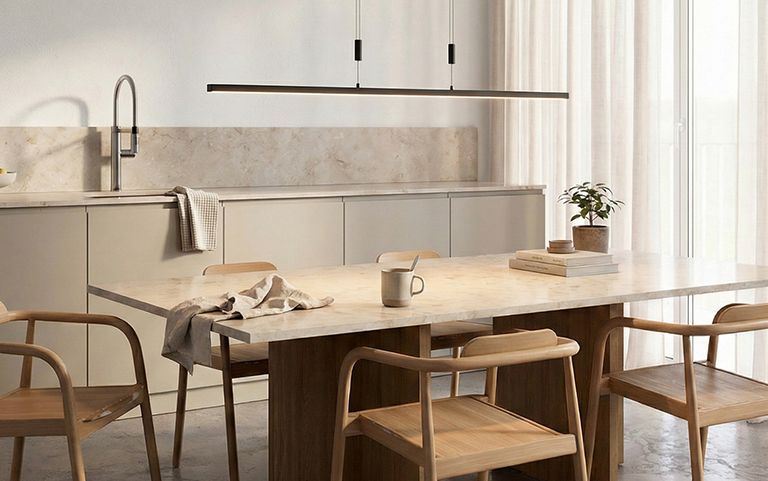
Height-adjustable pendant lights are particularly practical, as they allow the position of the light to be flexibly adapted to different situations. In addition, the dimmable feature ensures that the brightness can be adjusted to suit the occasion – from bright lighting for dining or working to soft lighting for a cosy evening.
Pendant lights for the dining room
Our recommendations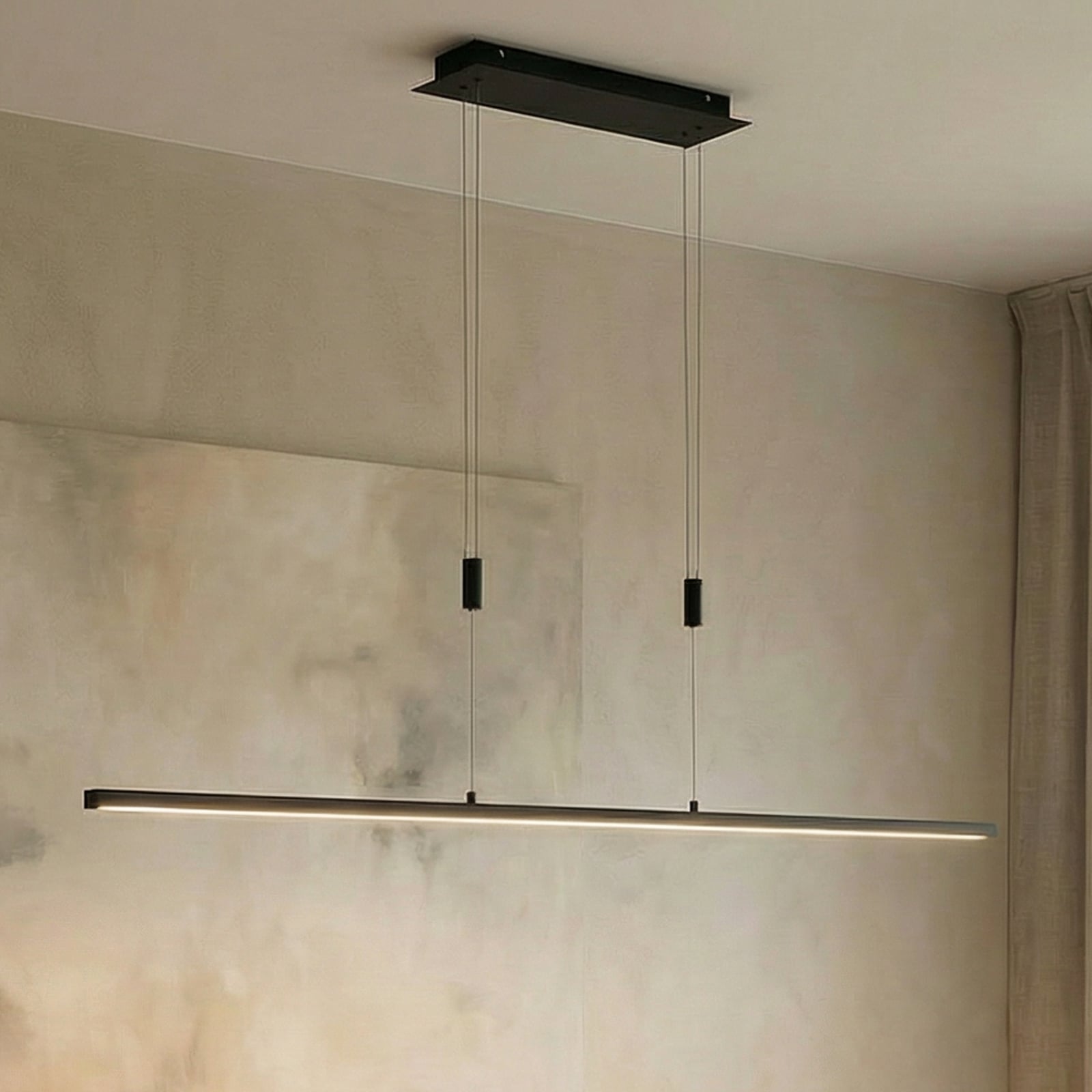
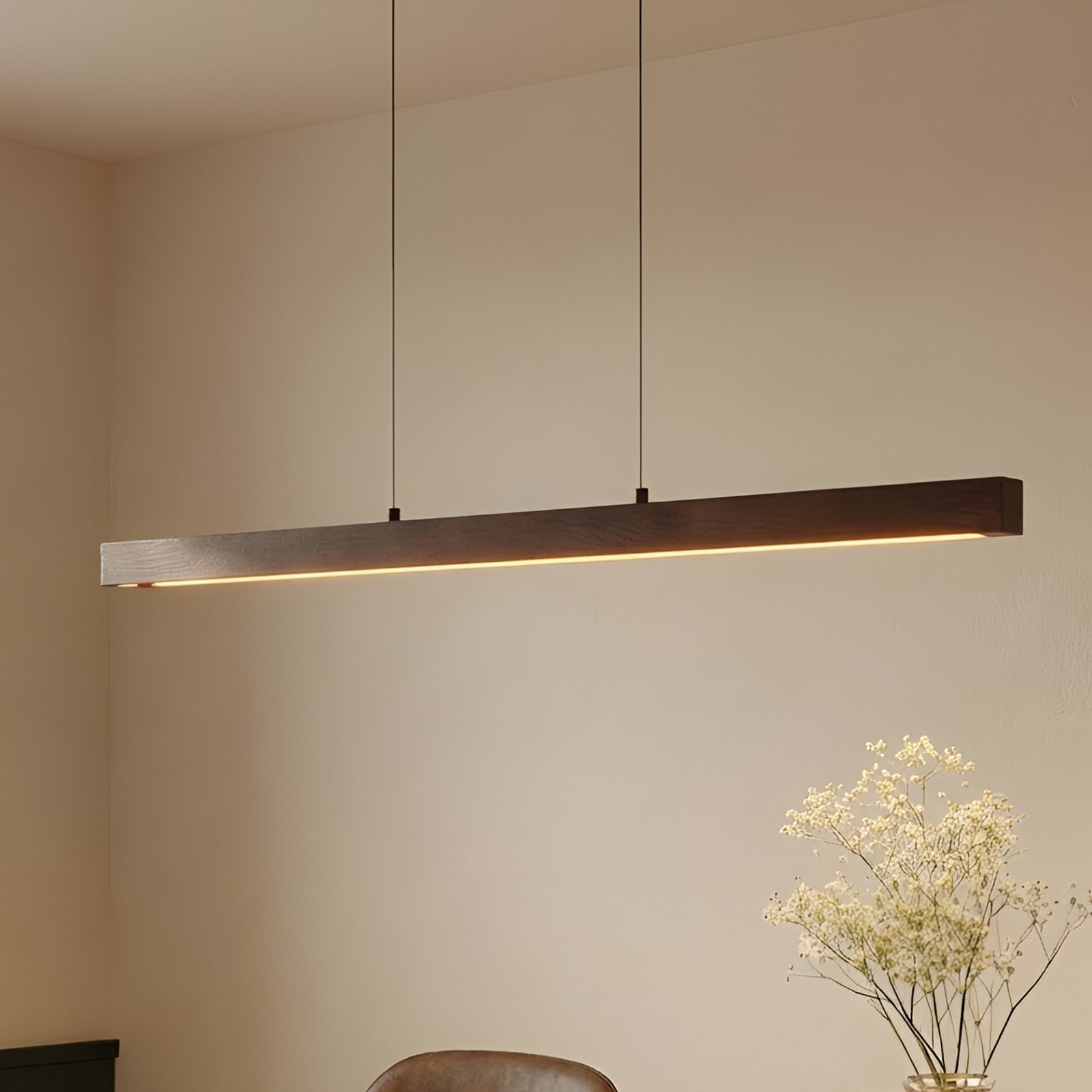
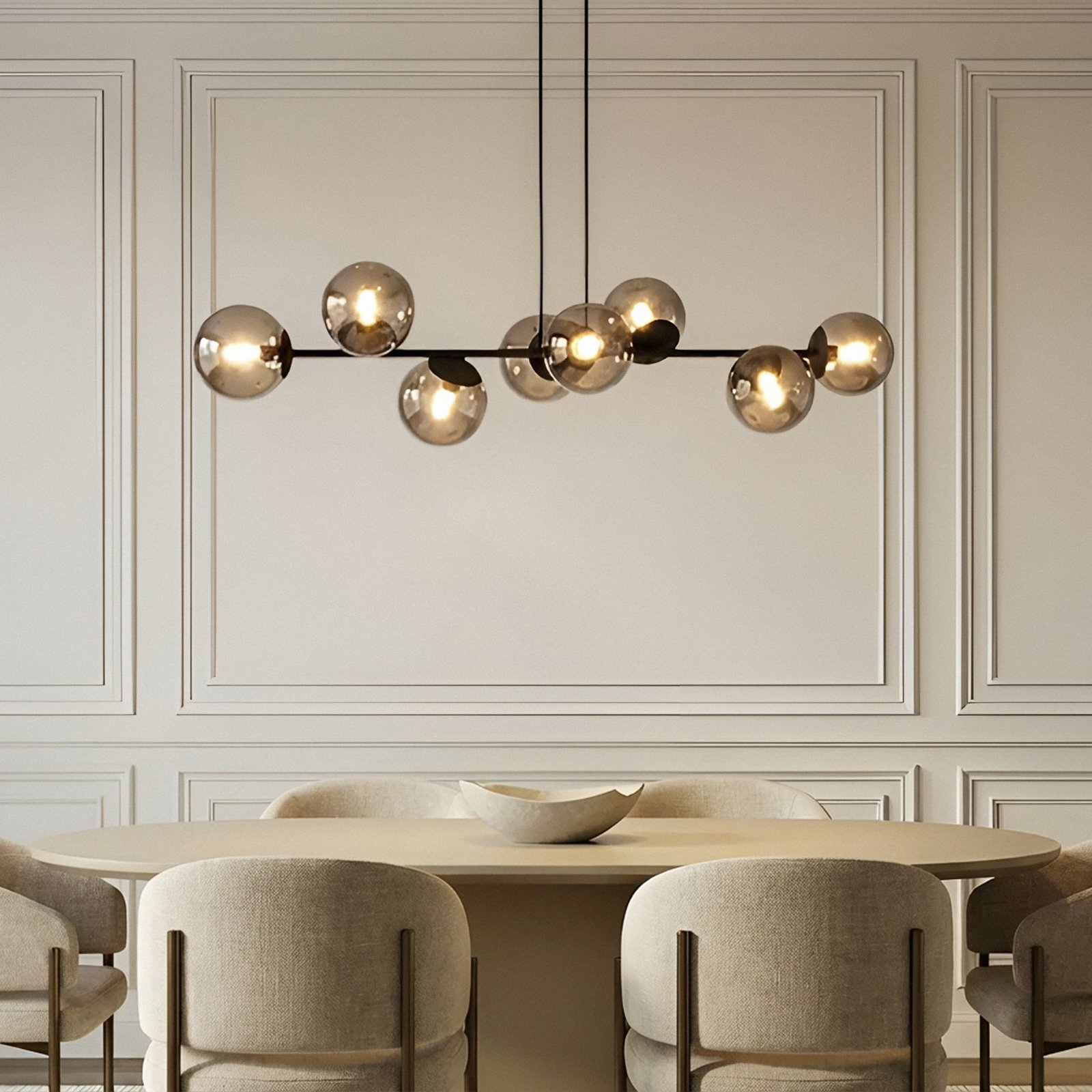
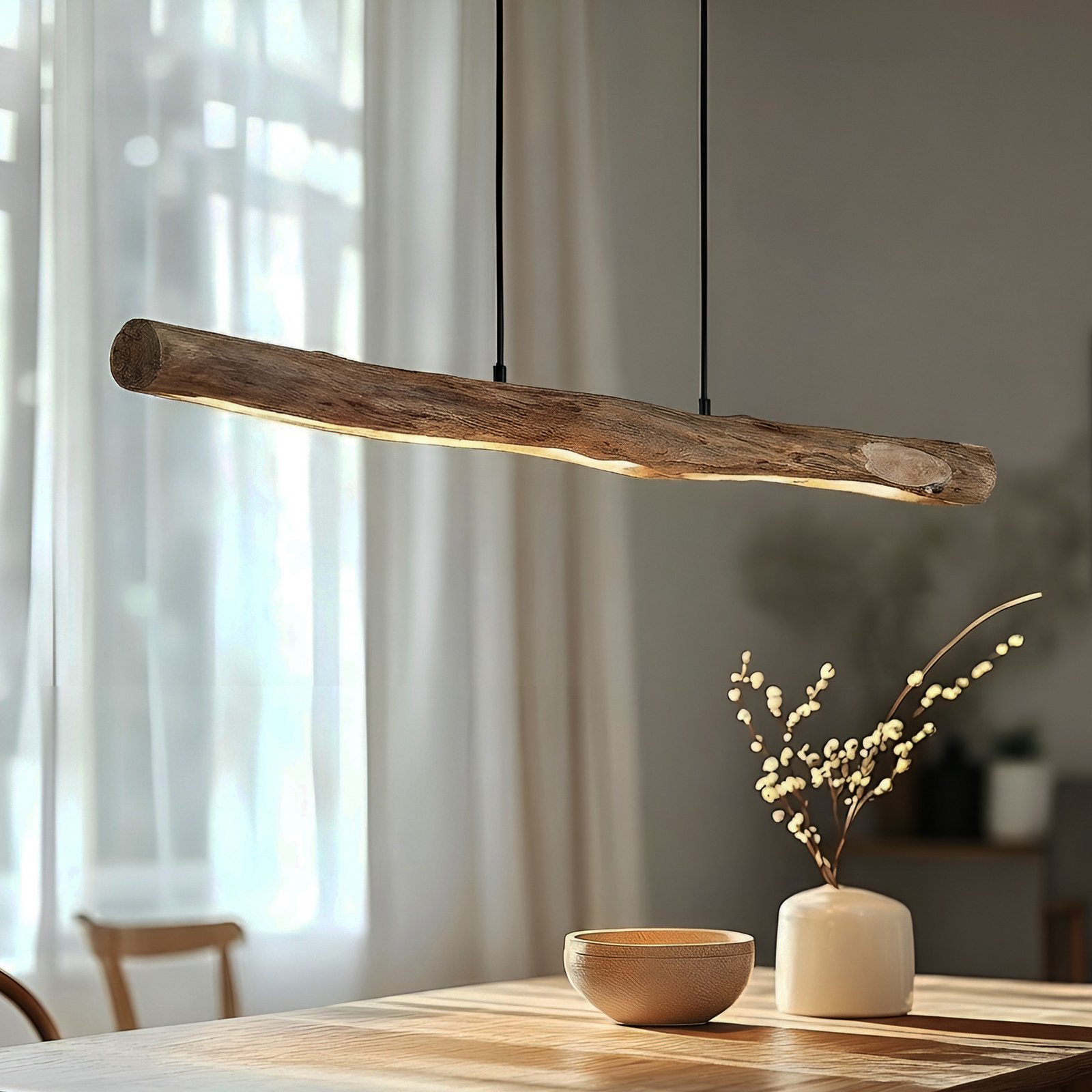

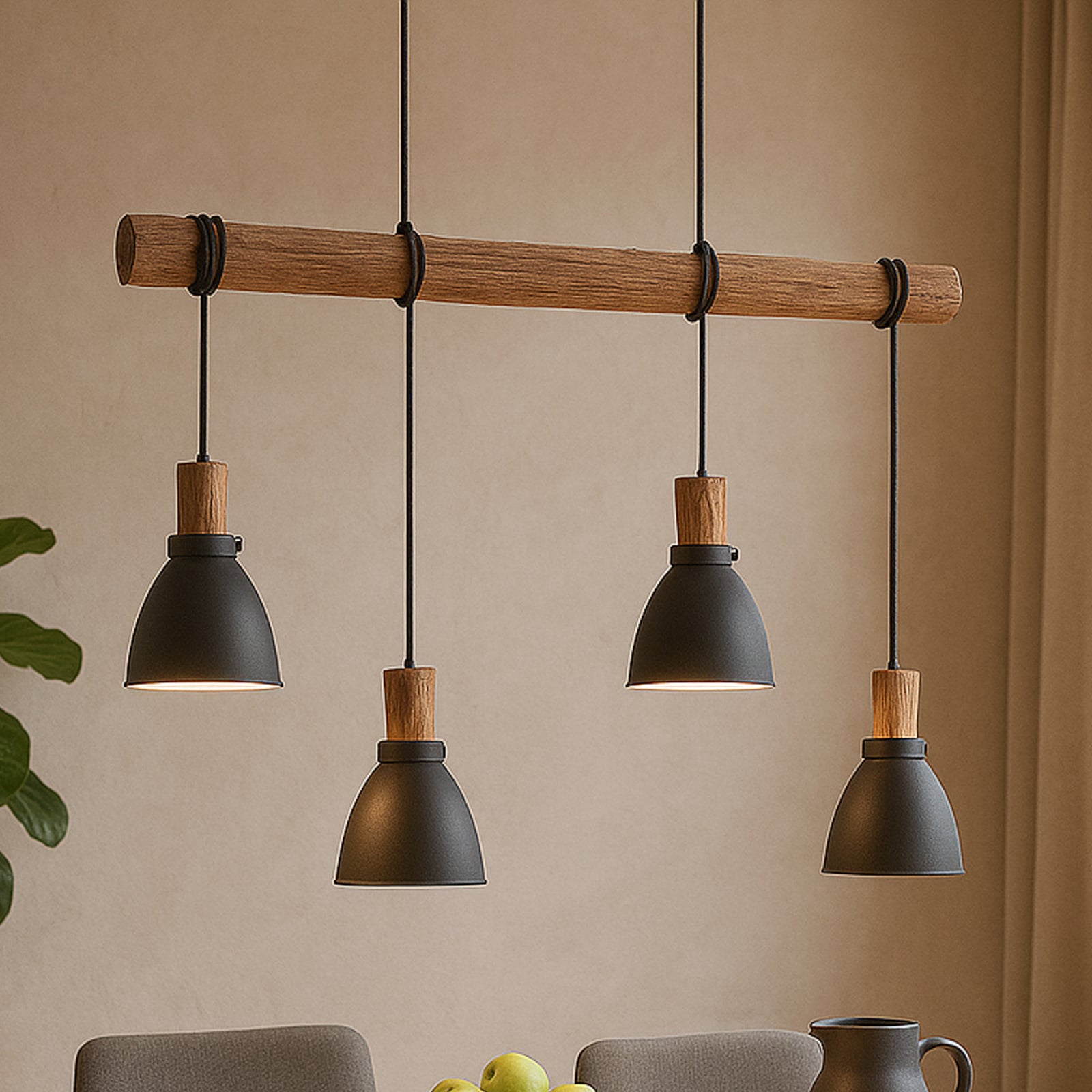
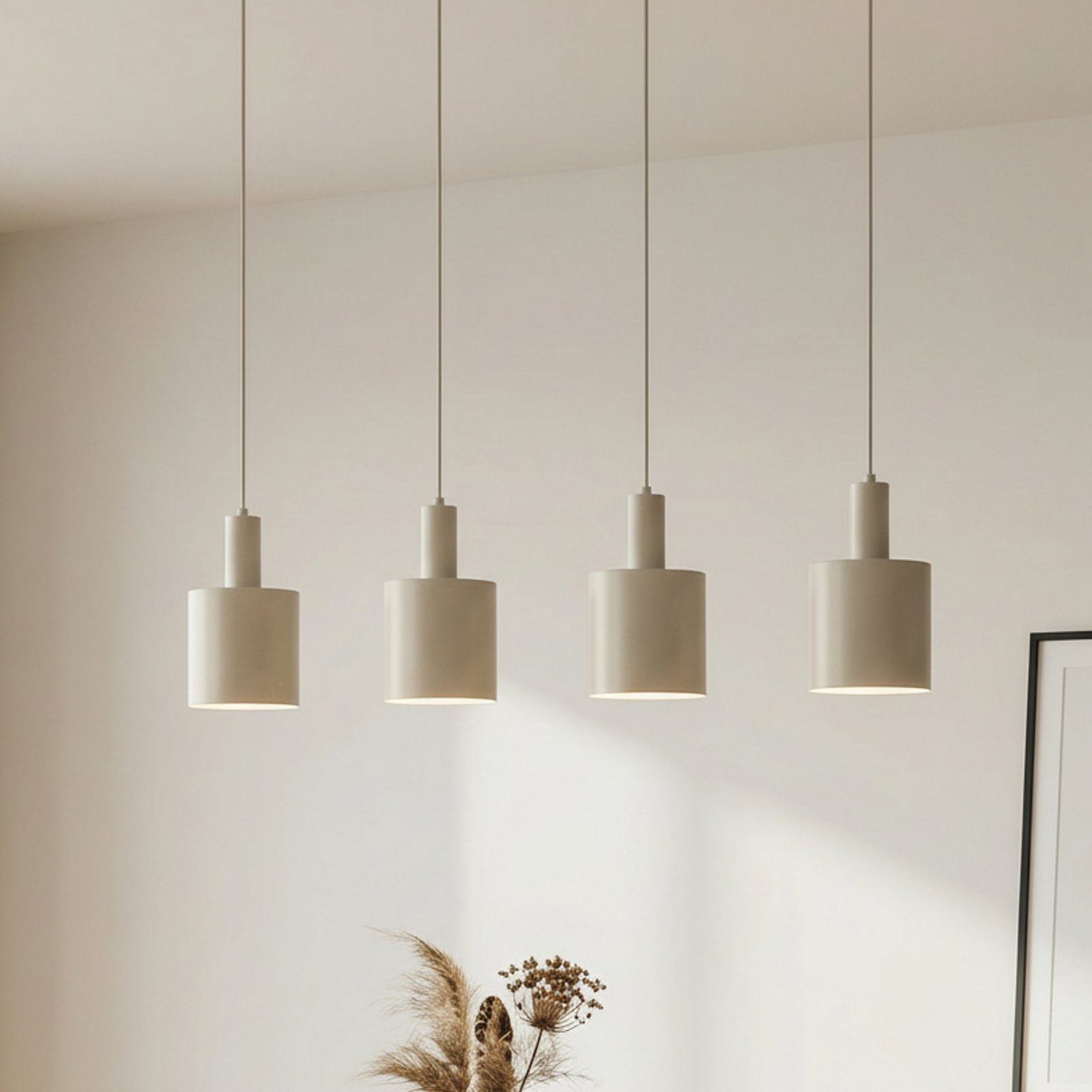
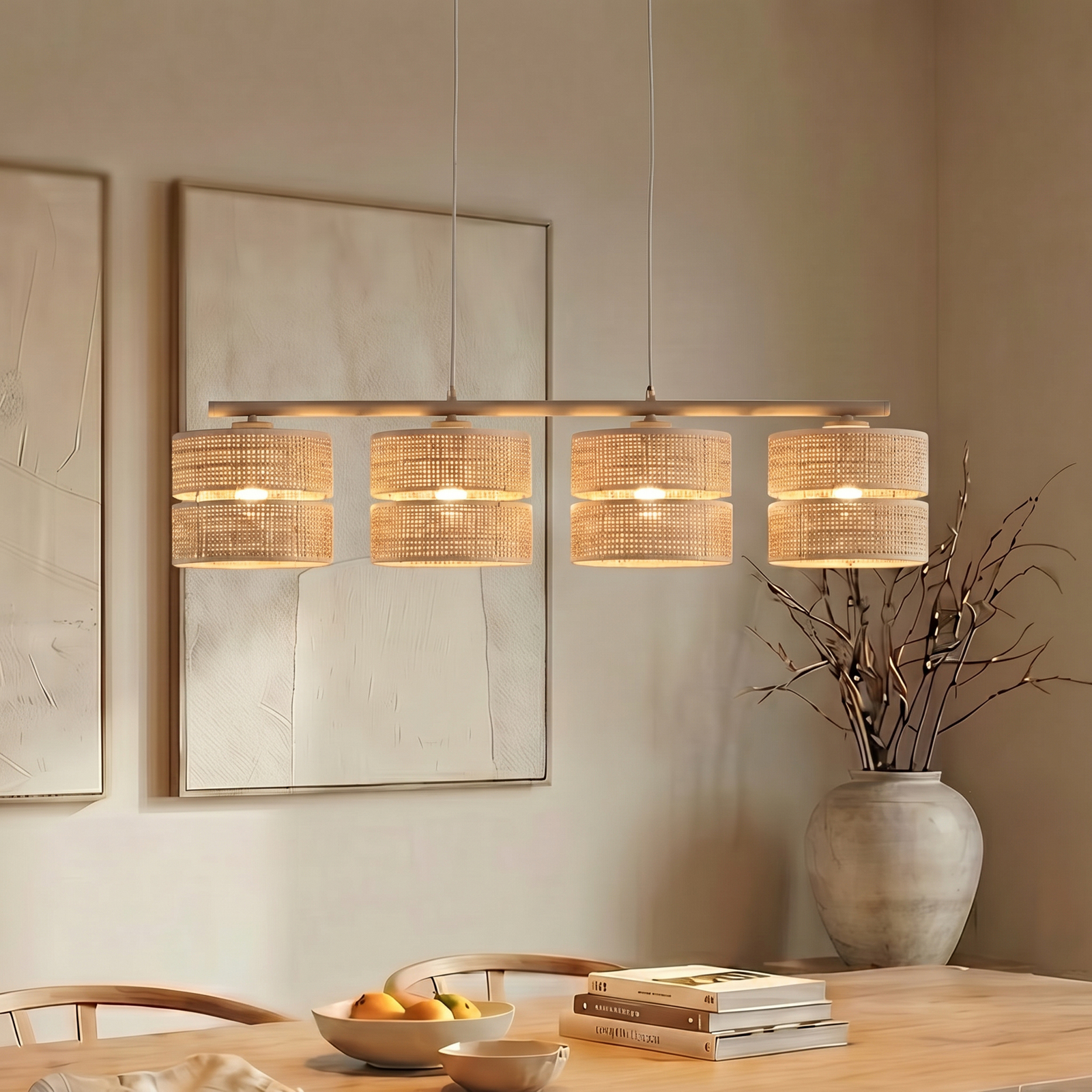
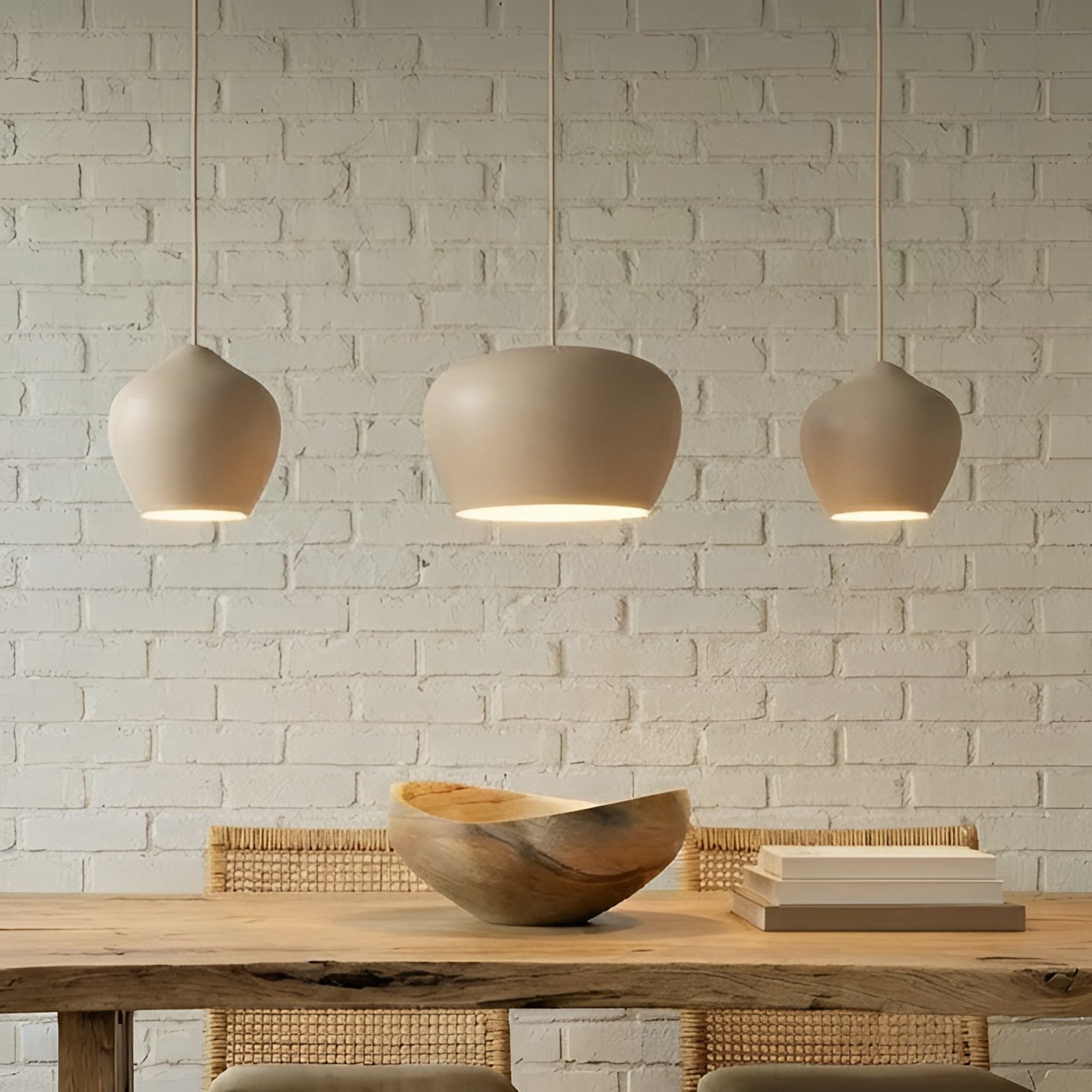
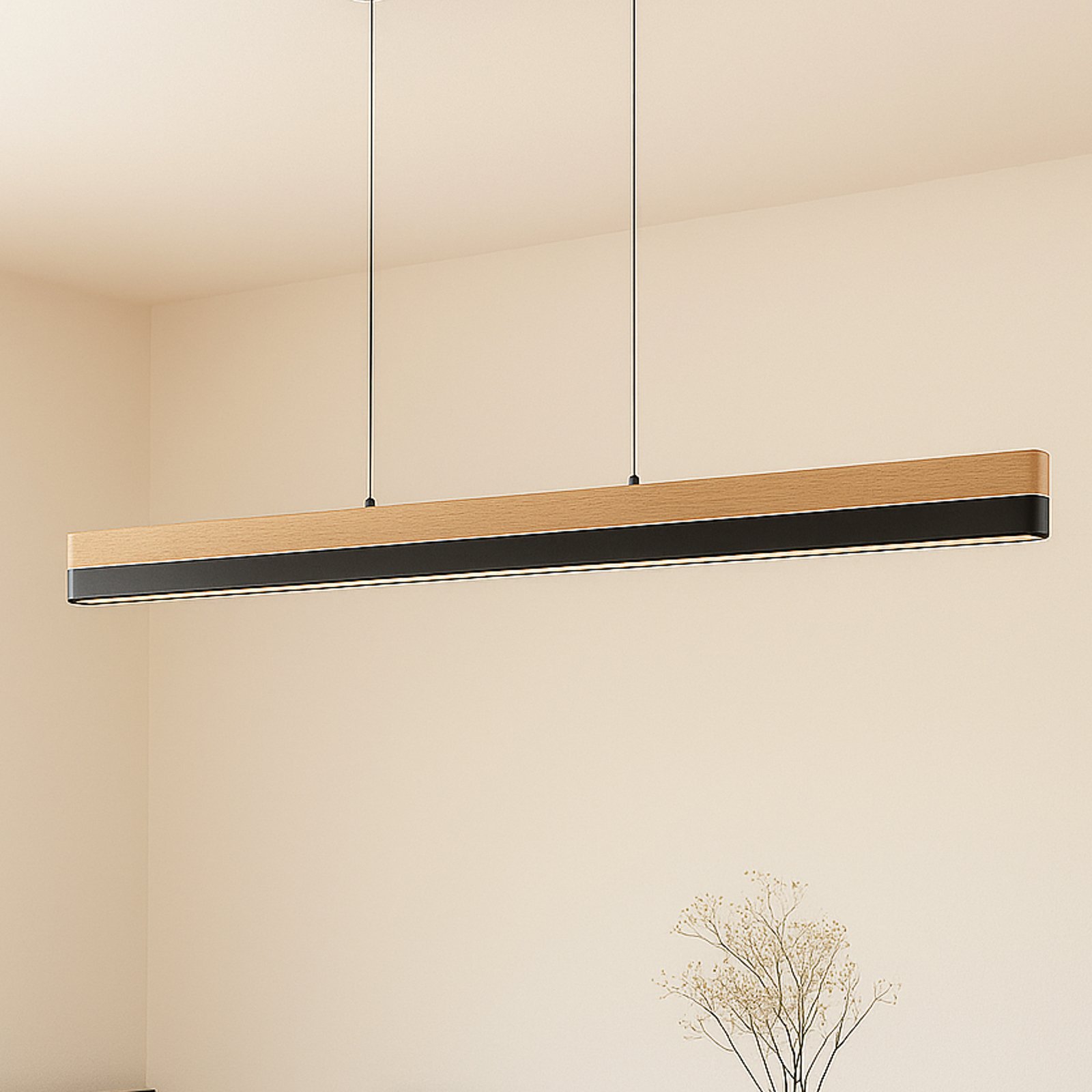
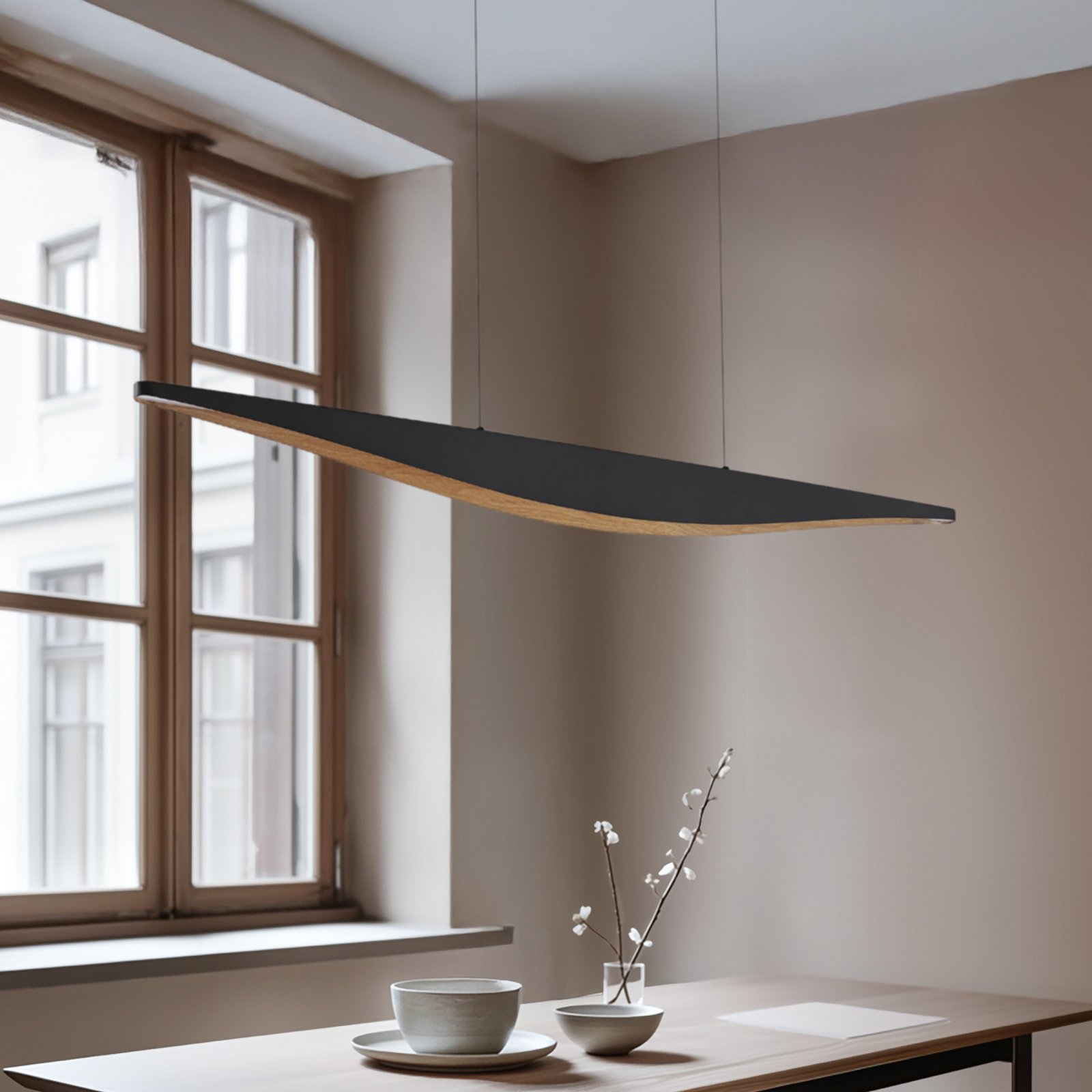

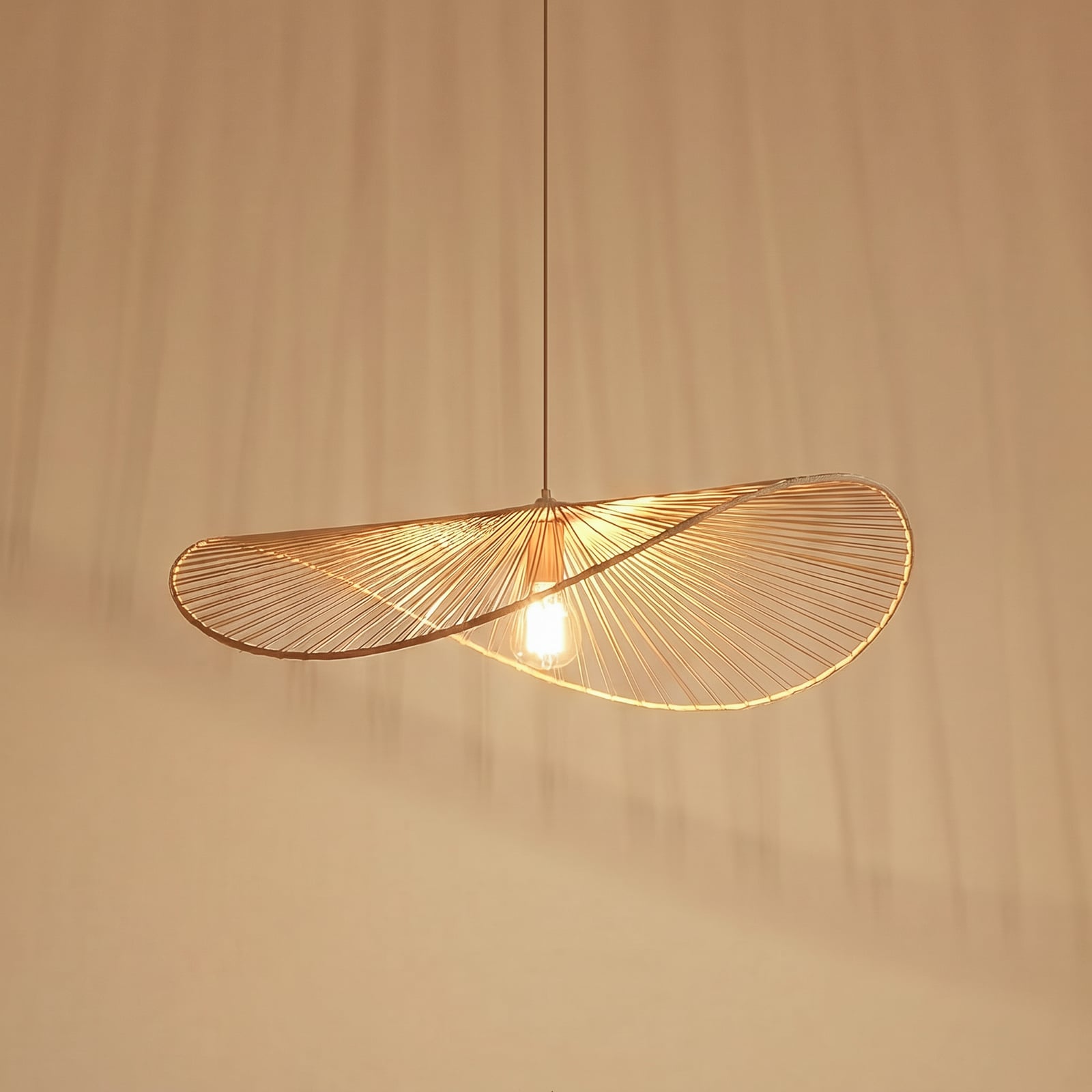
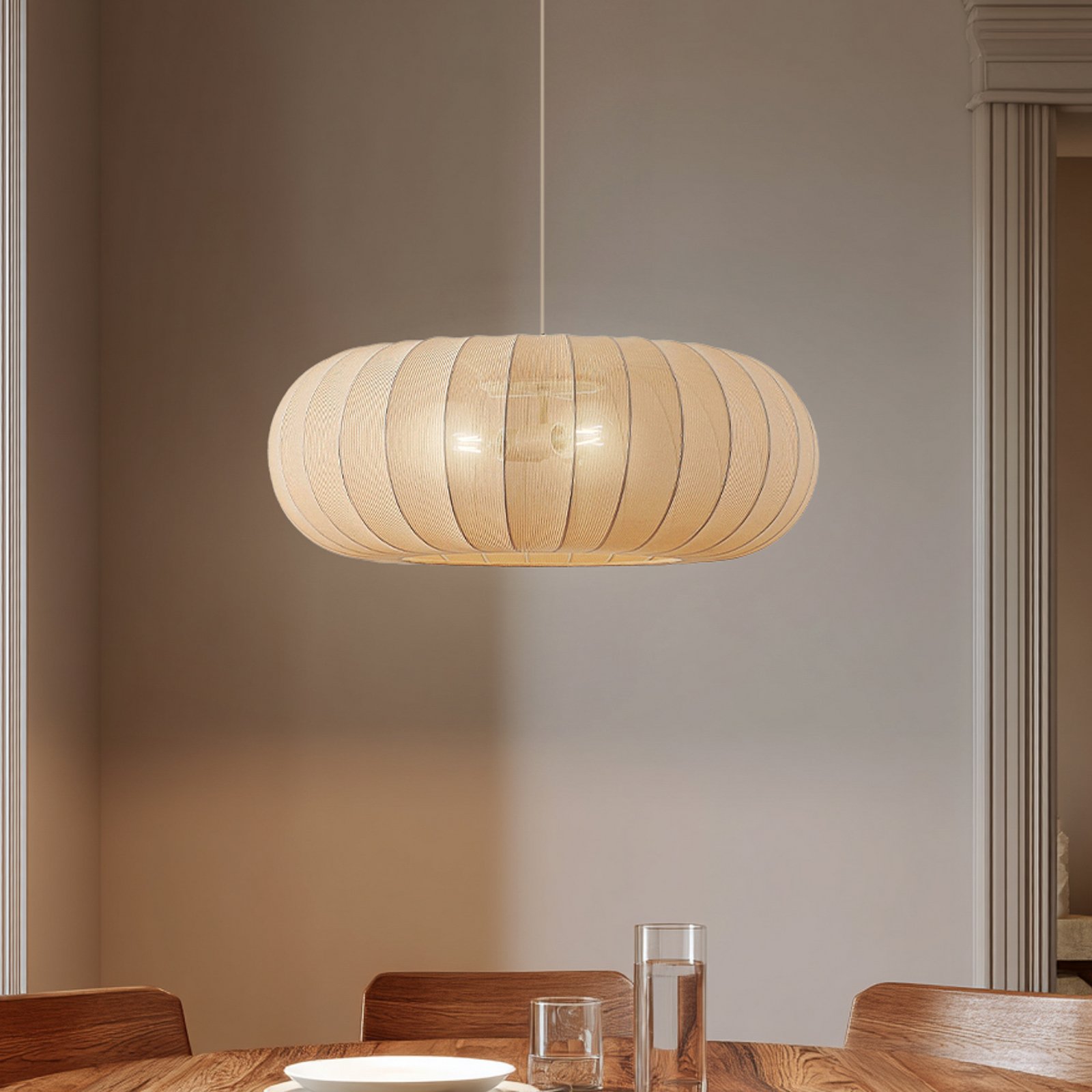
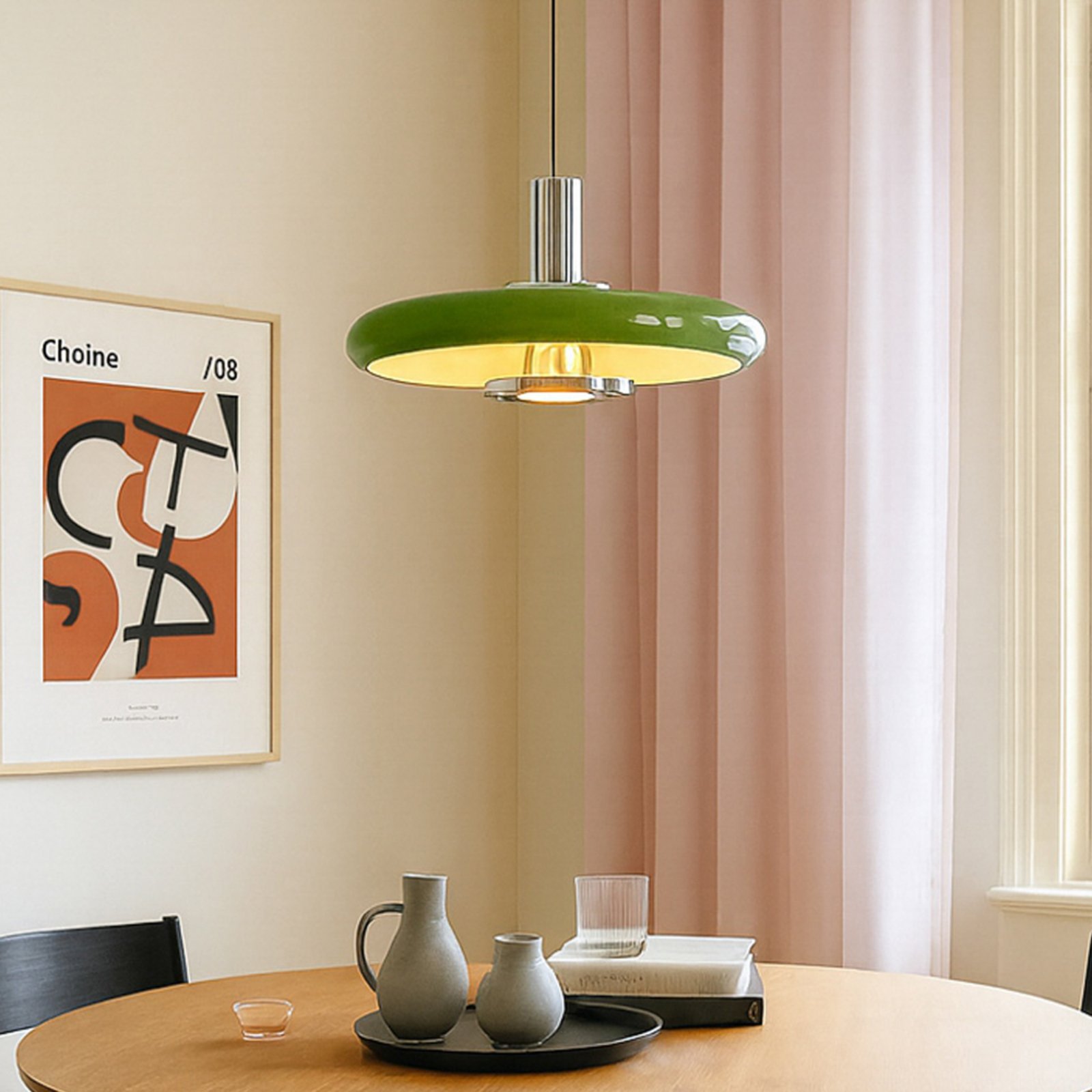
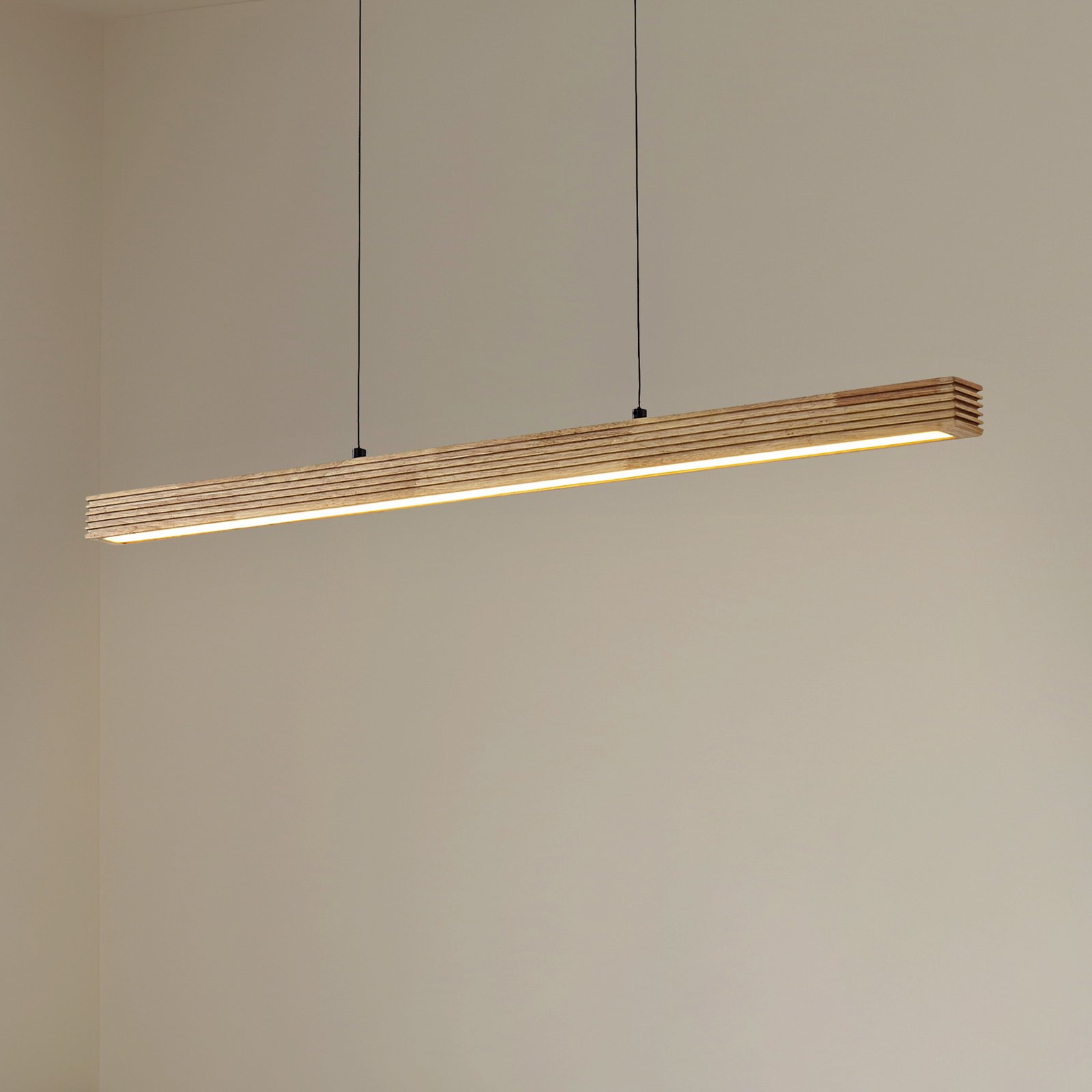
Dining room lighting to suit the shape of the table
The right lighting in the dining room should not only complement the interior design style, but also be suited to the shape and size of the dining table.
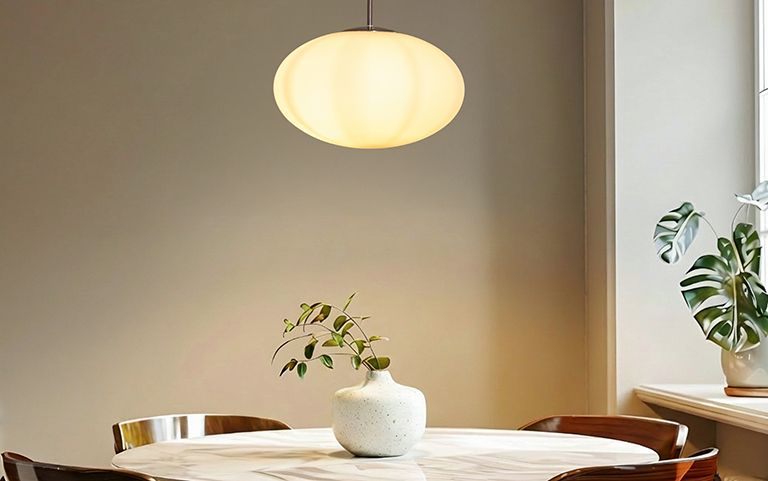
For a round dining table, a single, centrally positioned pendant light is ideal, as it illuminates the table evenly and creates a harmonious focal point. Round or organically shaped lights that echo the shape of the table look particularly harmonious. Alternatively, a cluster light is ideal for larger round tables or for creating a bespoke lighting scheme.
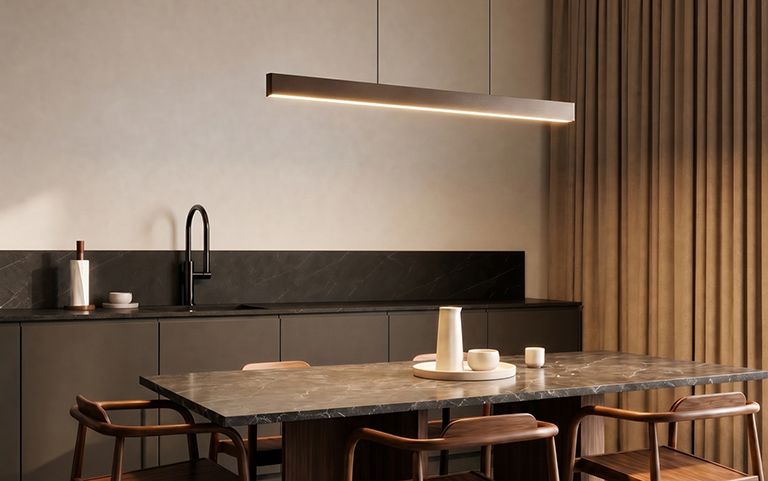
Rectangular dining tables can be effectively lit with elongated, linear pendant lights. They distribute the light across the table and ensure that even the seats at the edges receive sufficient light. Another option is to arrange several pendant lights in a row, as well as, of course, multi-bulb pendant lights arranged in a row.
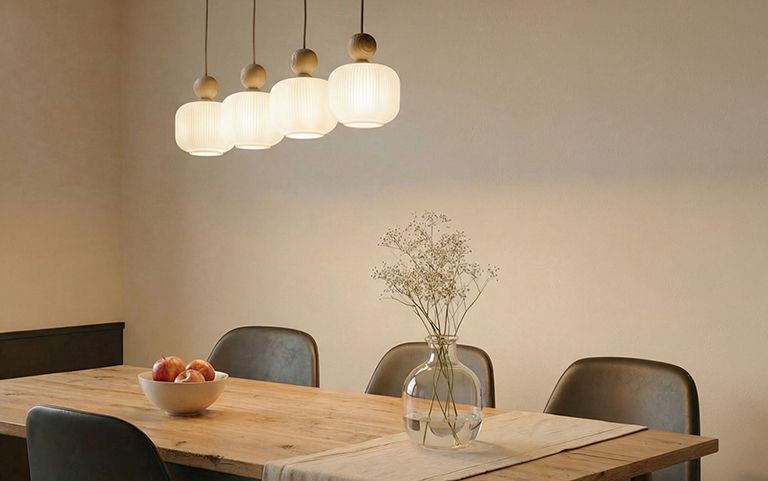
For particularly long dining tables or spacious dining areas, lighting is required that extends along the entire length. Multi-bulb pendant lights, several pendant lights coordinated to complement one another, or modern track lighting systems offer suitable solutions for this. Whilst multiple pendant lights provide uniform illumination, track systems offer additional flexibility when positioning individual light sources.
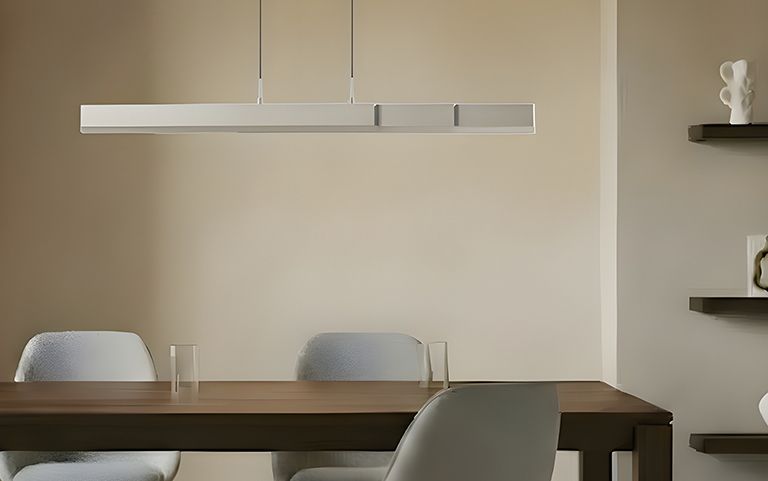
In the case of extendable dining tables that are regularly extended to their full length, the lighting should not only be suited to the table’s everyday size, but should also provide sufficient light when the table is fully extended. Elongated pendant lights are particularly practical here. It is important to plan the position and range of the light fitting so that the entire table surface is evenly lit, even when the table is fully extended.
Lamp ideas for the dining room
The right lighting for every situationThe dining room is where the family gathers, friends are welcomed, and the day draws to a close over a meal together. The right lighting plays a crucial role in ensuring that the room can be used to its full potential in each of these situations.
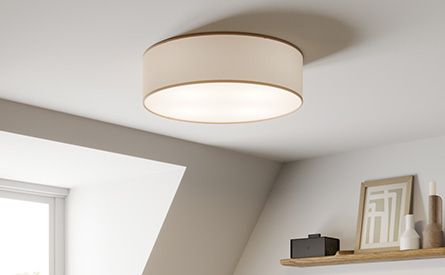
A ceiling light provides general lighting for the dining room and is a particularly practical solution in rooms with low ceilings. Unlike a pendant light, which directs the light specifically onto the dining table, it spreads the light throughout the whole room. A dimmable model offers extra flexibility: when eating together, the light can be kept pleasantly subdued, whilst a brighter setting is more suitable for games evenings, homework or other activities.
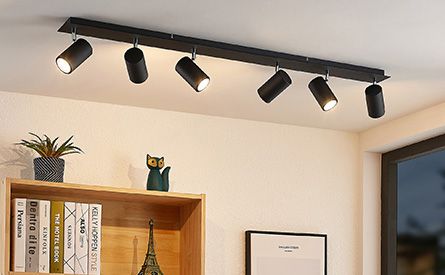
Spotlights and downlights can be used to direct the light in the dining room precisely where it’s needed. They are ideal, for example, for showcasing pictures, wall decorations or special decorative items on a sideboard. Adjustable lights make it possible to illuminate individual areas as required or to direct the light indirectly onto the walls. This creates a varied play of light that lends the room greater depth and emphasises its individual character.
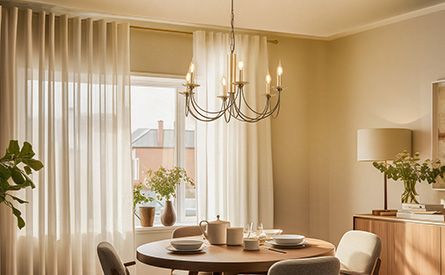
If you want to make your dining area stand out, a chandelier can create a striking focal point. These striking light fittings really come into their own, particularly in spacious rooms. In smaller rooms, a model with a wide overhang can quickly appear to dominate the space. Whether classic with sparkling crystals, elegant in gold and brass, or modern in black with minimalist designs: the important thing is that the size of the light fitting suits the proportions of the room.
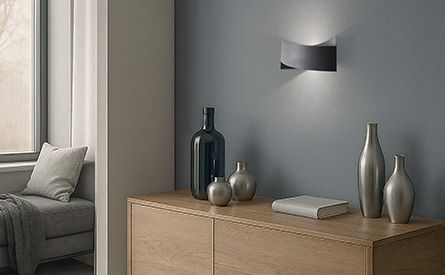
Wall lights can showcase bare wall spaces, highlight decorative features or, using indirect light, provide pleasant background lighting or supplement general lighting. Models with light directed upwards or downwards create some fascinating effects. Scissor-arm wall lights also offer interesting possibilities: with their movable or wide-reaching arms, they can direct light straight onto the dining table and are a practical alternative when there is no suitable ceiling outlet. A dimming function allows you to adjust the light intensity flexibly to suit the situation.
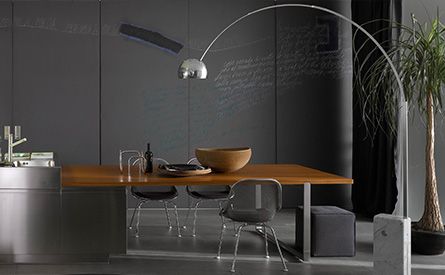
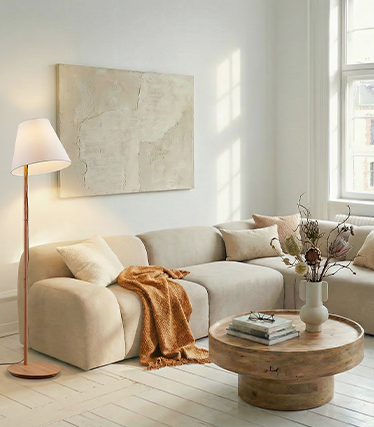
Floor and arc lamps provide extra light exactly where it is needed. An arched lamp, with its shade extending well beyond the dining table, can serve as a replacement for a pendant light if the ceiling outlet is in an awkward position or if you deliberately choose not to mount the light to the ceiling. The lamp base should be positioned so that it has sufficient space without obstructing walkways or seating areas. Classic floor lamps, on the other hand, are particularly practical in the corners of the dining room. If, as well as atmospheric lighting, you value exceptional design, a striking floor lamp can enhance the look of your interior.
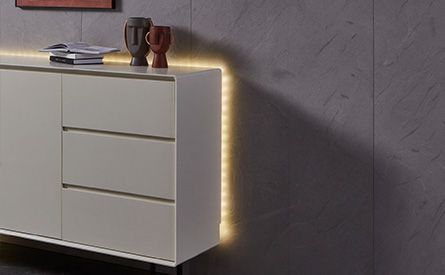
A balanced lighting scheme is achieved through the interplay of direct and indirect lighting. Whilst a pendant light provides focused and sufficiently bright illumination over the dining table, indirect light sources – reflected off the walls, from furniture or from behind the sideboard – create a pleasant ambience. One simple way to incorporate indirect lighting is to fit LED strips behind or underneath the sideboard. They cast a subtle glow along the edges of the furniture and make the sideboard appear lighter.
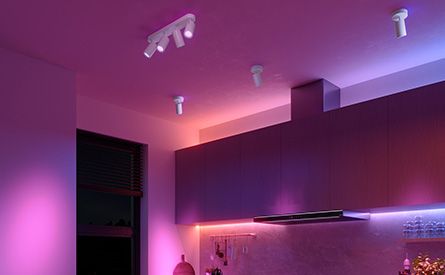
With smart lighting solutions, the lighting in the dining room can be flexibly adapted to any situation. Particularly handy are programmable lighting scenes that can be tailored to different everyday situations. With just a few taps, you can switch, for example, from a bright setting for breakfast to a cosy lighting atmosphere for a family dinner. Once set up, your favourite lighting scenes will be available at any time via the app.
Dining room lighting to match your interior style
The right dining room lighting combines functionality with a harmonious atmosphere, whilst also emphasising your individual interior style.
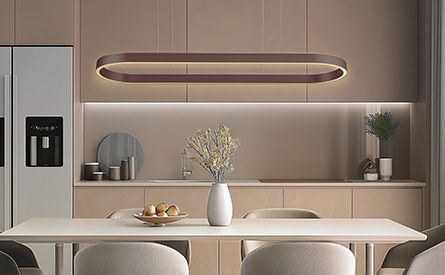
A modern, minimalist interior style is characterised by clean lines, simple shapes and a restrained colour scheme. Geometric pendant lights, delicate metal frames or elongated, linear lights blend harmoniously into this setting. Especially when hung above a rectangular dining table, elongated pendant lights provide even lighting and emphasise the clean lines of the room’s design. Those who prefer a calm overall look opt for understated designs that blend unobtrusively into the décor.
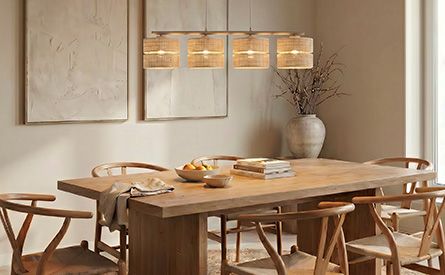
The Scandinavian interior design style is characterised by naturalness, lightness and a cosy atmosphere. Lamps made of wood, rattan or light-coloured fabrics reflect these characteristics and complement furniture and accessories in natural colours. Light-coloured pendant lights look particularly lovely above a wooden dining table. They bring warmth to the room and create a pleasant atmosphere with their light, perfect for shared meals. Materials with natural textures add subtle, welcoming touches.
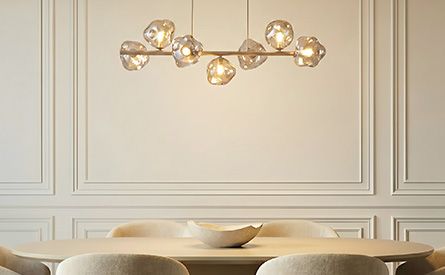
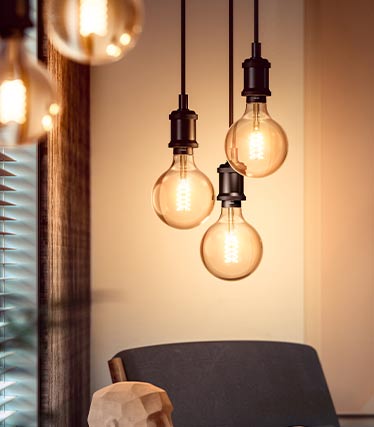
If you want to create a stylish and elegant dining room, you can add special touches with light fittings made of glass, brass or gold-coloured materials. Spherical glass pendant lights, delicate brass-effect frames or multi-bulb models lend the dining area a high-quality look. Placed above a dining table, they become a decorative focal point whilst also providing pleasant lighting. Warm white light highlights the fine materials and creates a welcoming atmosphere.
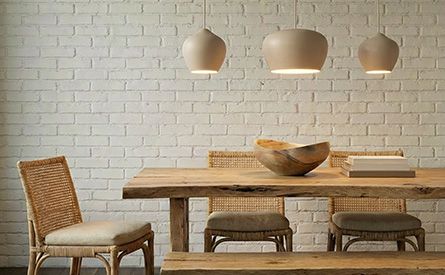
The modern industrial and retro styles feature geometric shapes, dark materials and a distinctive, elegant look. Pendant lights made of metal or glass, models with exposed details or vintage-style lights go particularly well with solid wooden tables, dark furniture and an interior with an urban feel. Large metal shades direct the light specifically onto the table top and effectively highlight the dining area.
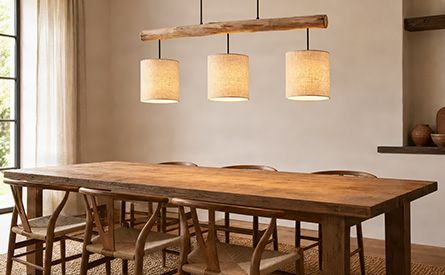
A cosy dining room thrives on warm light and harmonious lighting. Fabric shades, softly glowing pendant lights and several smaller light sources create a cosy atmosphere that makes you want to sit together for longer. Above the dining table, lamps with fabric shades provide soft lighting. In addition, wall lights, table lamps on sideboards or indirect light sources can create further pockets of light.
Choosing the right light colour and brightness for the dining room
The right lighting in the dining room plays a key role in creating a pleasant atmosphere and making the room suitable for a variety of uses. Whether you’re having dinner together, enjoying a leisurely breakfast or working at the dining table – the colour and brightness of the light should be tailored to the situation at hand.
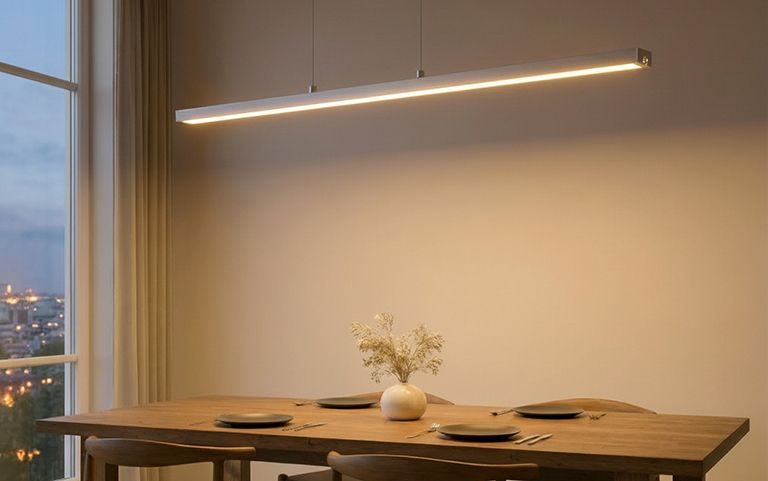
In the dining room, a warm white light colour of around 2,700 to 3,000 Kelvin is recommended. This light creates a pleasant, cosy atmosphere and is particularly well suited to shared meals and relaxing evenings. If the dining table is also used as a workspace or for other activities, a universal white light colour between 3,300 and 5,300 Kelvin may be a good choice, as it creates a more neutral atmosphere and can help you concentrate whilst reading, writing or carrying out tasks. Anyone wishing to use their dining room in a versatile way should therefore consider CCT lights. These allow you to adjust the colour of the light as required.
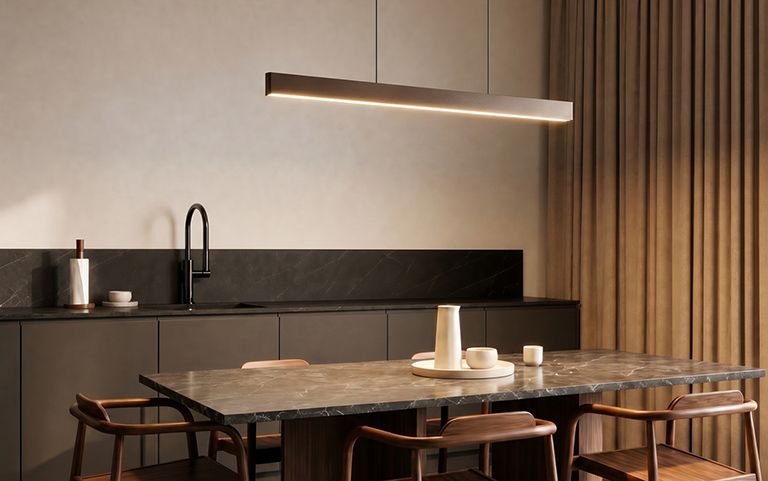
As well as the colour of the light, brightness also plays an important role. However, the highest possible light output is not automatically the best solution. Rather, what matters is that the lighting can be adapted to different situations. Dimmable lights offer a key advantage here: whilst subdued, atmospheric lighting is often pleasant when dining, it can often be brighter when working or playing board games. The amount of light required in the dining room depends, amongst other things, on the size of the room and the colours and finishes of the walls, furniture and floors.
Another important lighting feature for the dining room is colour rendering: in the dining room in particular, it is worth ensuring the Colour Rendering Index (CRI) is as high as possible. Good colour rendering ensures that food, crockery, table decorations and furniture appear as natural and true to life as possible. Not only does this create a pleasant lighting effect, but it also highlights, for example, the quality of the food.
Lighting ideas for small and open-plan dining rooms
Whether it’s a compact dining area or a spacious, open-plan living-dining area – with the right lighting, any room can be designed to be both functional and atmospheric. It is essential to adapt the lighting design to the spatial conditions and to create a well-thought-out combination of functional lighting, targeted accents and harmoniously coordinated luminaires.
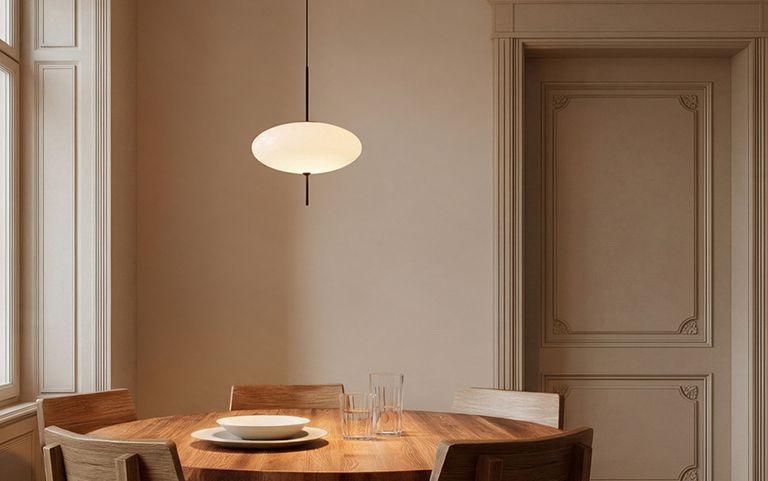
In small dining areas, it is important to provide sufficient light without making the room look cluttered. Compact pendant lights are particularly well suited to providing targeted lighting for the dining table whilst also adding a decorative touch. Lamps with transparent or delicate shades give the room an open and airy feel, as they do not obstruct the view as much. In addition to a pendant light, indirect lighting can create a pleasant atmosphere without taking up any extra space. Light-coloured walls and furniture surfaces help to distribute light by reflecting it, making the room appear larger.
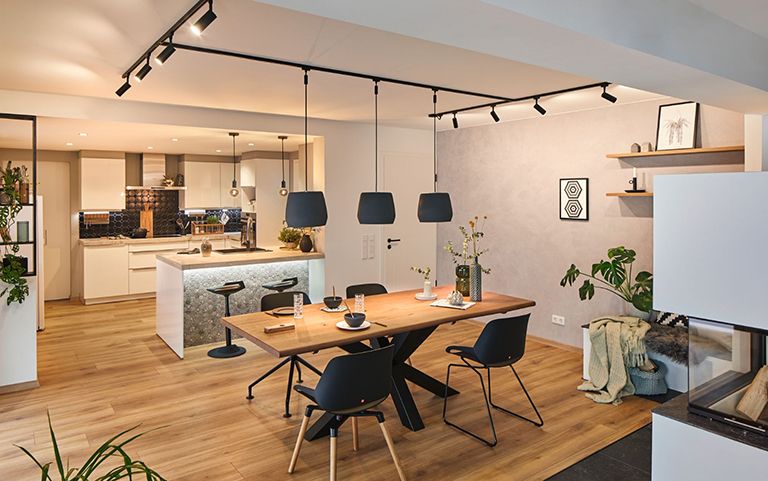
In open-plan living and dining areas, the kitchen, dining area and living room often blend seamlessly into one another. In this case, you should consider a rail system. It allows you to position several lights along a track and reposition the lighting as required. A distinction is made between rail systems with a single circuit and those that allow different areas to be switched on and off independently of one another. If you invest a little time in planning, you’ll end up with lighting that’s tailored as closely as possible to your own needs, providing the best light depending on the time of day and the situation.