




















Burglary protection with motion detectors, lighting and a presence simulation system
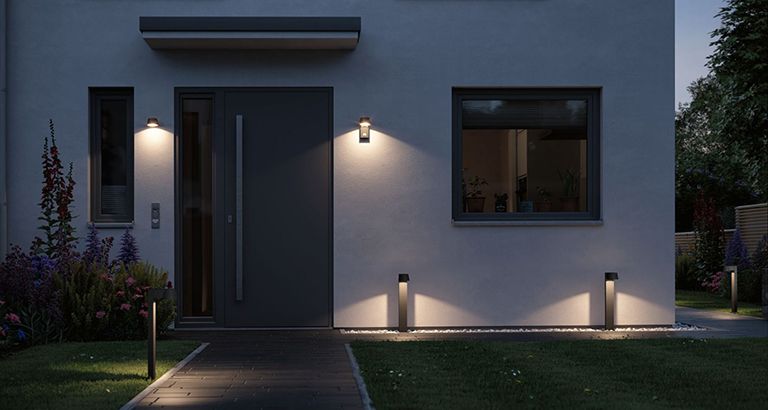
Well-planned lighting around the house can help to increase the sense of security and provide a useful addition to burglary protection. Outdoor lighting makes paths, entrances and other areas around the building more visible. Motion detectors can switch on lights specifically when movement is detected, thereby drawing attention. If you are away for a longer period, smart lighting indoors and outdoors can also help by simulating occupancy.
Lighting is a supplementary measure and is no substitute for mechanical security. Secure windows and doors, a reliable locking mechanism and other appropriate security measures form the basis of effective burglary protection. Light can provide useful support for these measures.
Top recommendations
A glimmer of hope for safety:A well-thought-out security system starts with windows, doors and locks – and is effectively complemented by sensor-controlled lighting, automated roller shutters and blinds, or outdoor cameras. After all, light can deter burglars – especially when it comes on unexpectedly, for example via a motion detector.
Another advantage of switching the lights on suddenly: unexpected light can attract extra attention, both from residents and from neighbours.



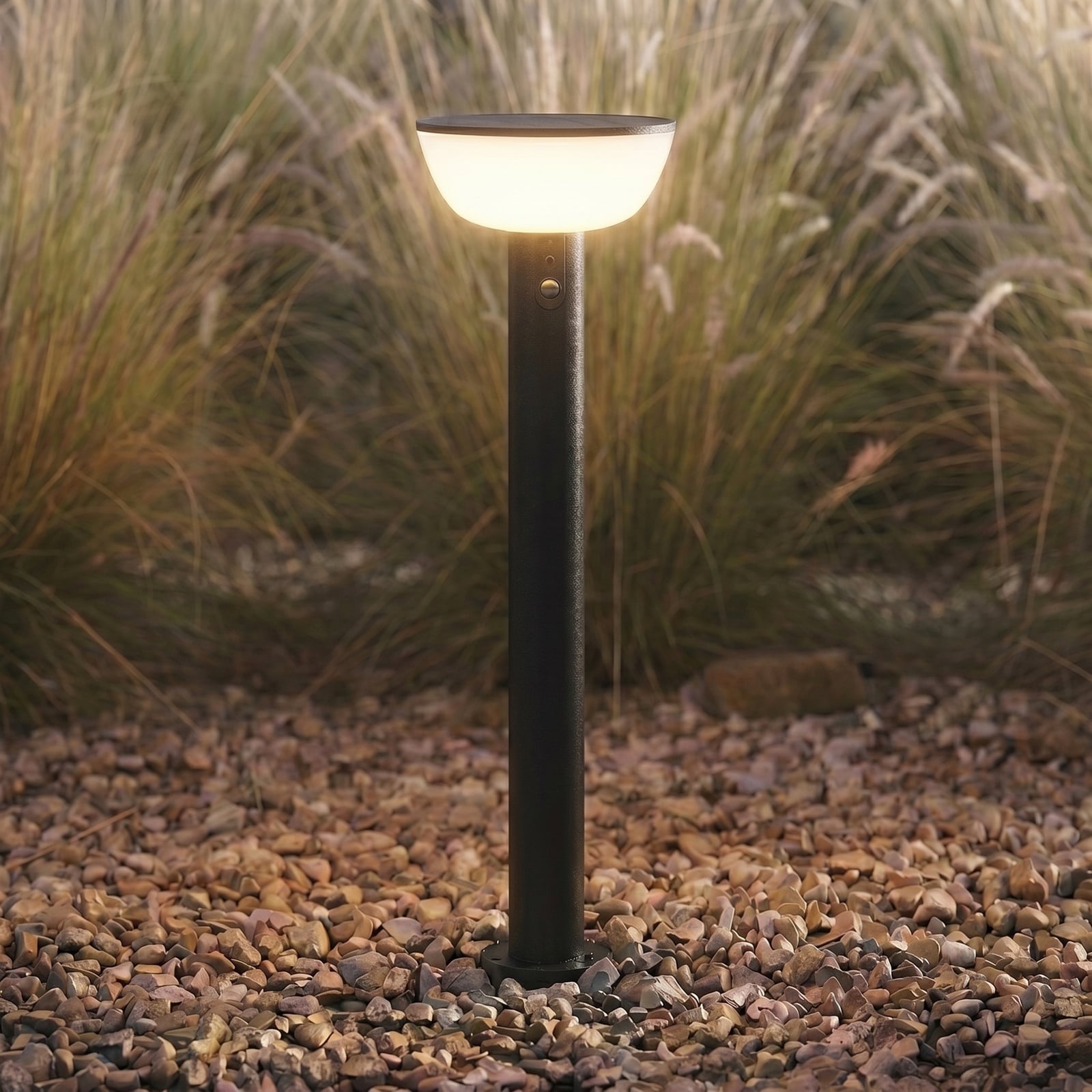
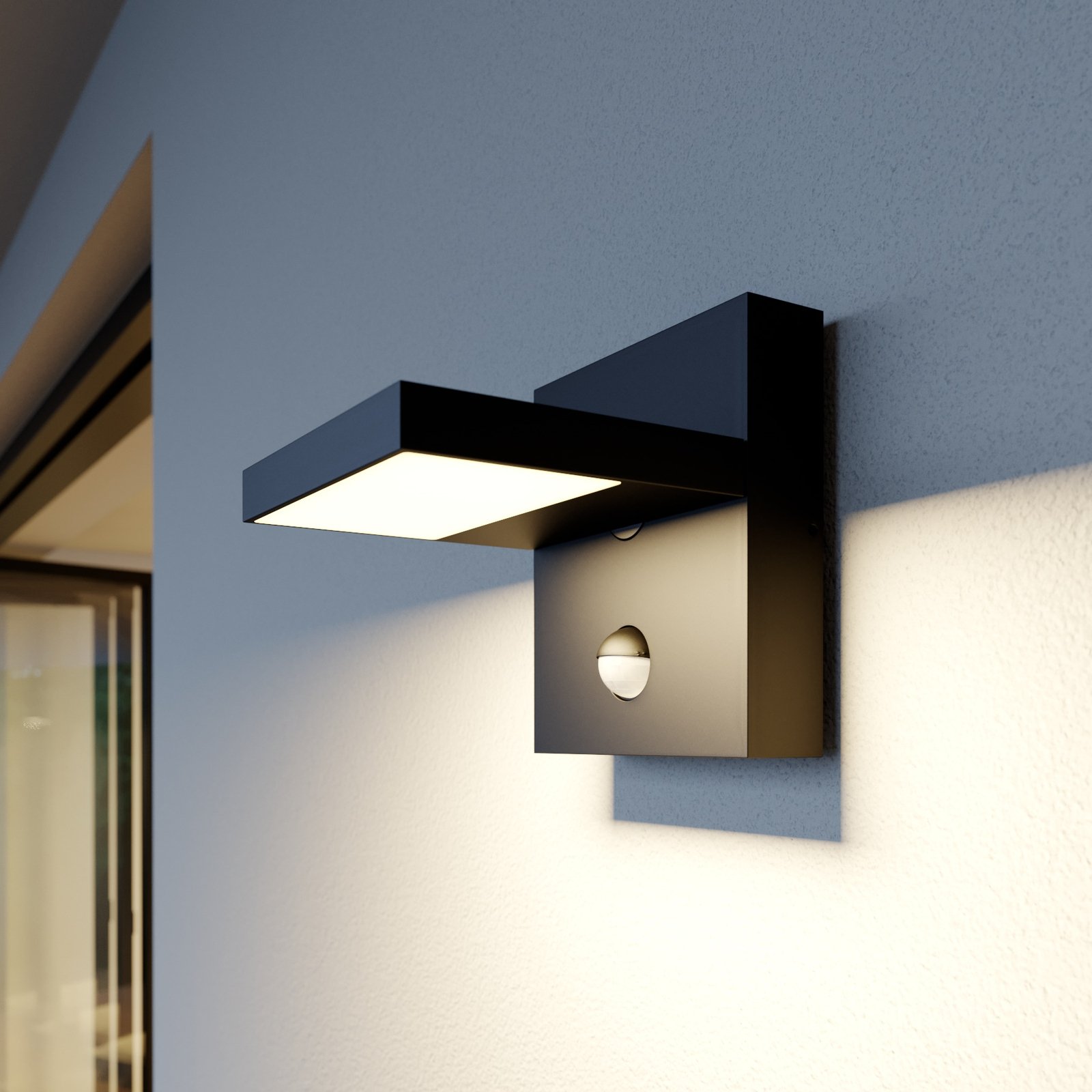


Using outdoor lighting strategically to improve security
To ensure safe and comfortable outdoor lighting, it is important to combine continuous lighting with sensor-controlled lighting in a way that suits the specific application. Both solutions serve different purposes and can offer their own advantages depending on the situation.
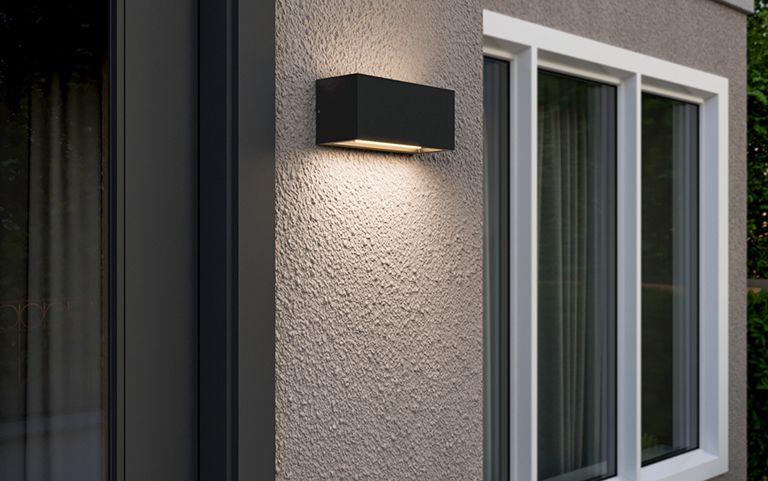
Permanent lighting provides continuous illumination, thereby ensuring visibility and helping you find your way around your home and property. A light left on permanently at the front door, along paths or by the garage can, for example, highlight areas where people might trip and make it easier to find doors, paths or driveways. At the same time, these areas remain clearly visible even in the dark.
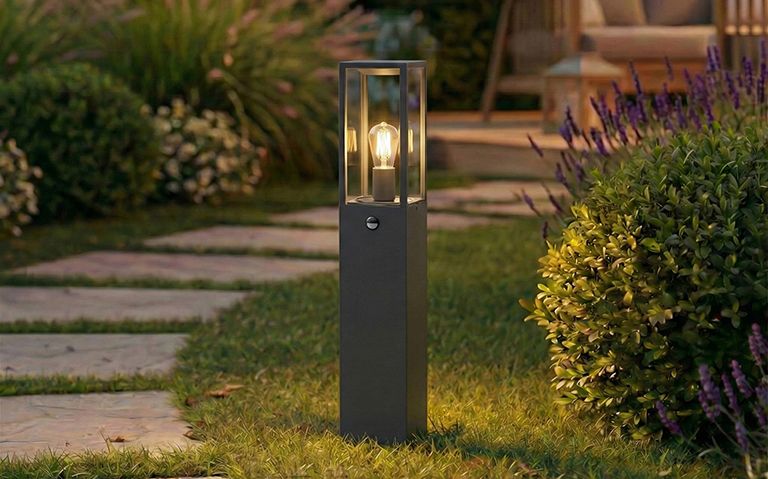
Motion detectors, on the other hand, only switch the lighting on when movement is actually detected. This is particularly handy for areas that aren’t in constant use, such as a side entrance to the house, a driveway, a garden path or a terrace that isn’t used very often. The light reacts as and when required, providing light exactly when it is needed.
Which solution is appropriate therefore depends on the field and the specific situation. At the entrance to the house or along frequently used paths, a combination of general lighting and motion detectors can be particularly useful. Areas that are used less frequently, on the other hand, can be equipped with a sensor-controlled light.
Key lighting areas around the house
To ensure comprehensive burglary protection using motion detectors, it is important not just to illuminate the main entrance. Side and rear entrances, windows, patios, balconies and areas around the house that are difficult to see into should also be included in the lighting design. Particularly in places where privacy screens, hedges or the layout of the property restrict a direct view of the grounds, carefully positioned outdoor lighting fitted with motion detectors can act as a deterrent.
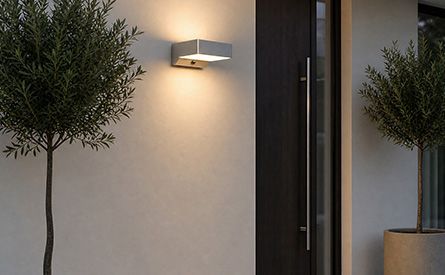
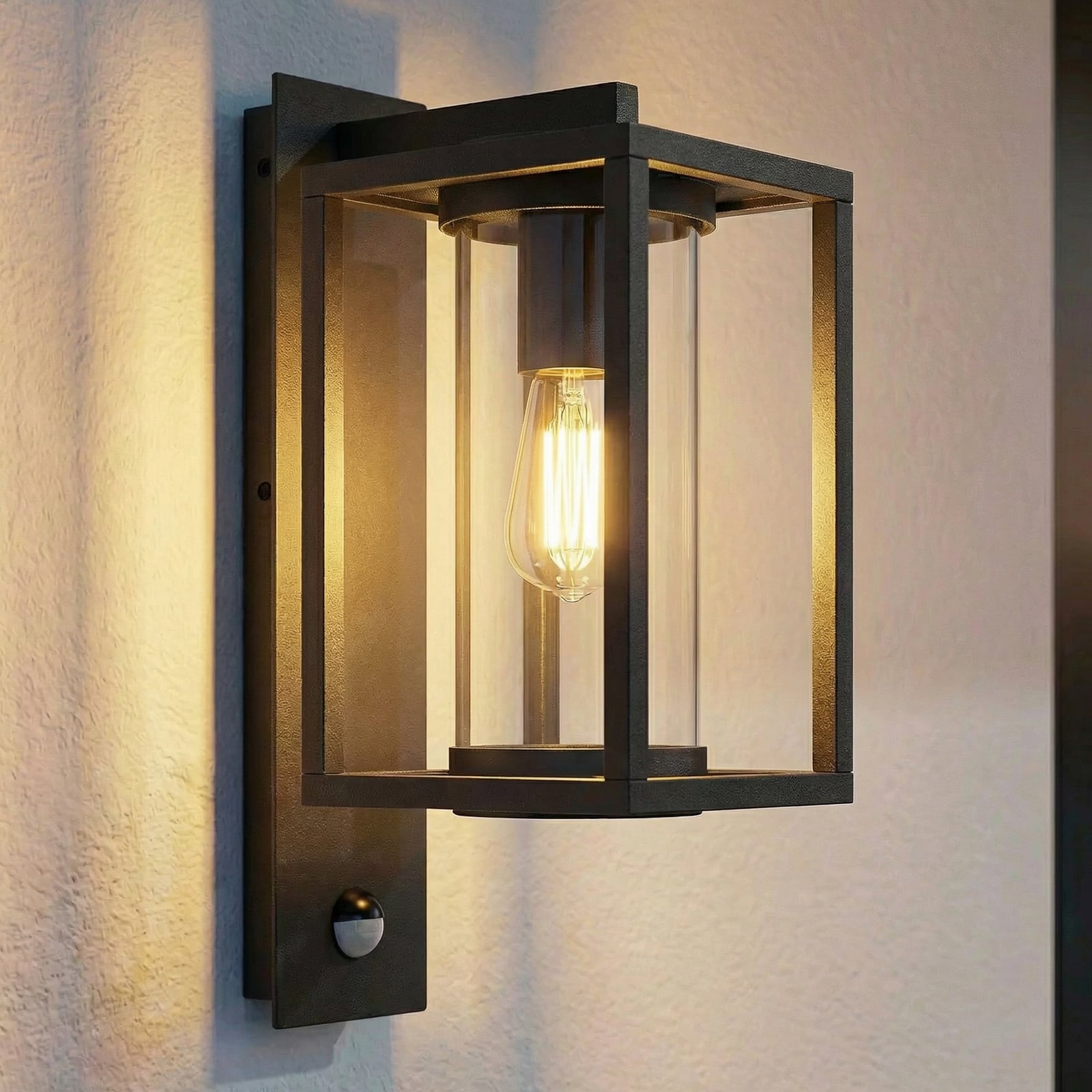
The front door is one of the most important areas for outdoor lighting. A wall light with a built-in motion detector can detect people as soon as they approach. The light should illuminate the entrance area, the door area and, if possible, the area in front of it as well, and should not only pick up people when they are right in front of the door.
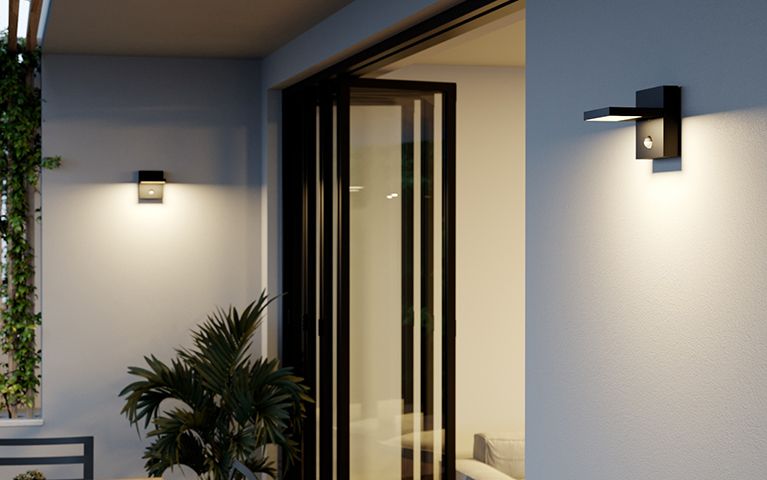
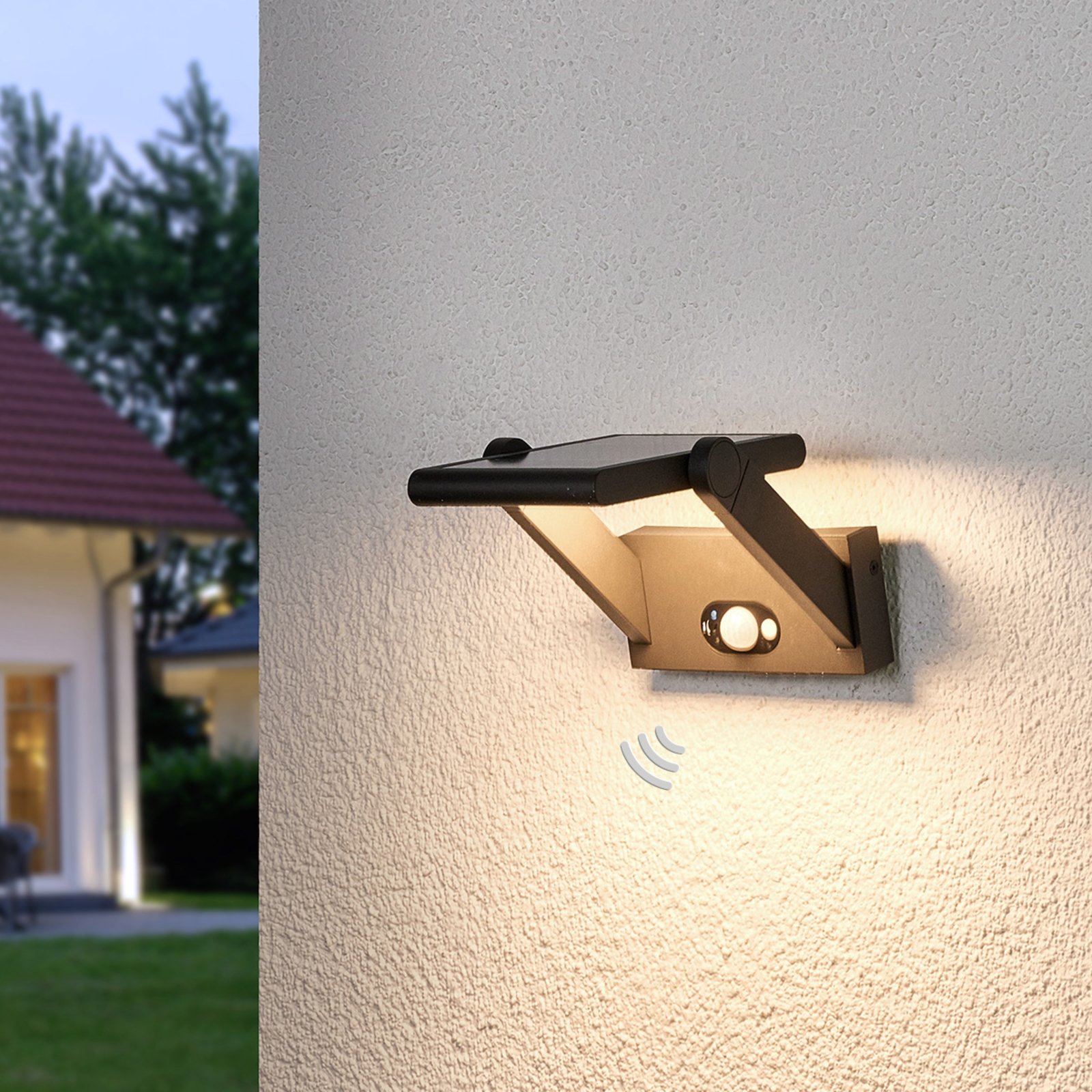
Patio doors and windows that are difficult to see through can provide potential burglars with additional ways of gaining access to the house. In this case, we recommend an outdoor light with a motion detector that reliably covers the entire area directly in front of the door or beneath or beside the windows.
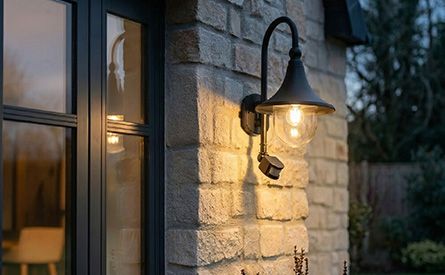
For side entrances and the rear of the house, a strategically placed light fitted with a motion detector is ideal for illuminating dark passageways, narrow paths and access points. For narrow areas, it is advisable to position the sensor so that the detection range extends as far as possible along the entire route.
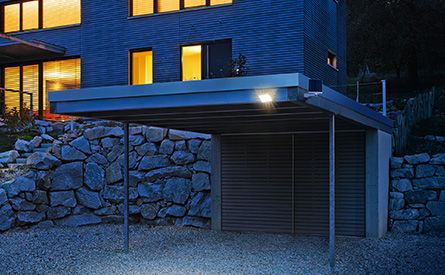
One or more bright outdoor lights fitted with motion detectors provide greater security and make it easier to find your way around the garage, carport and driveway when arriving at and leaving the property. For example, the sensor can be positioned so that it detects movement on the driveway or in front of the garage door.

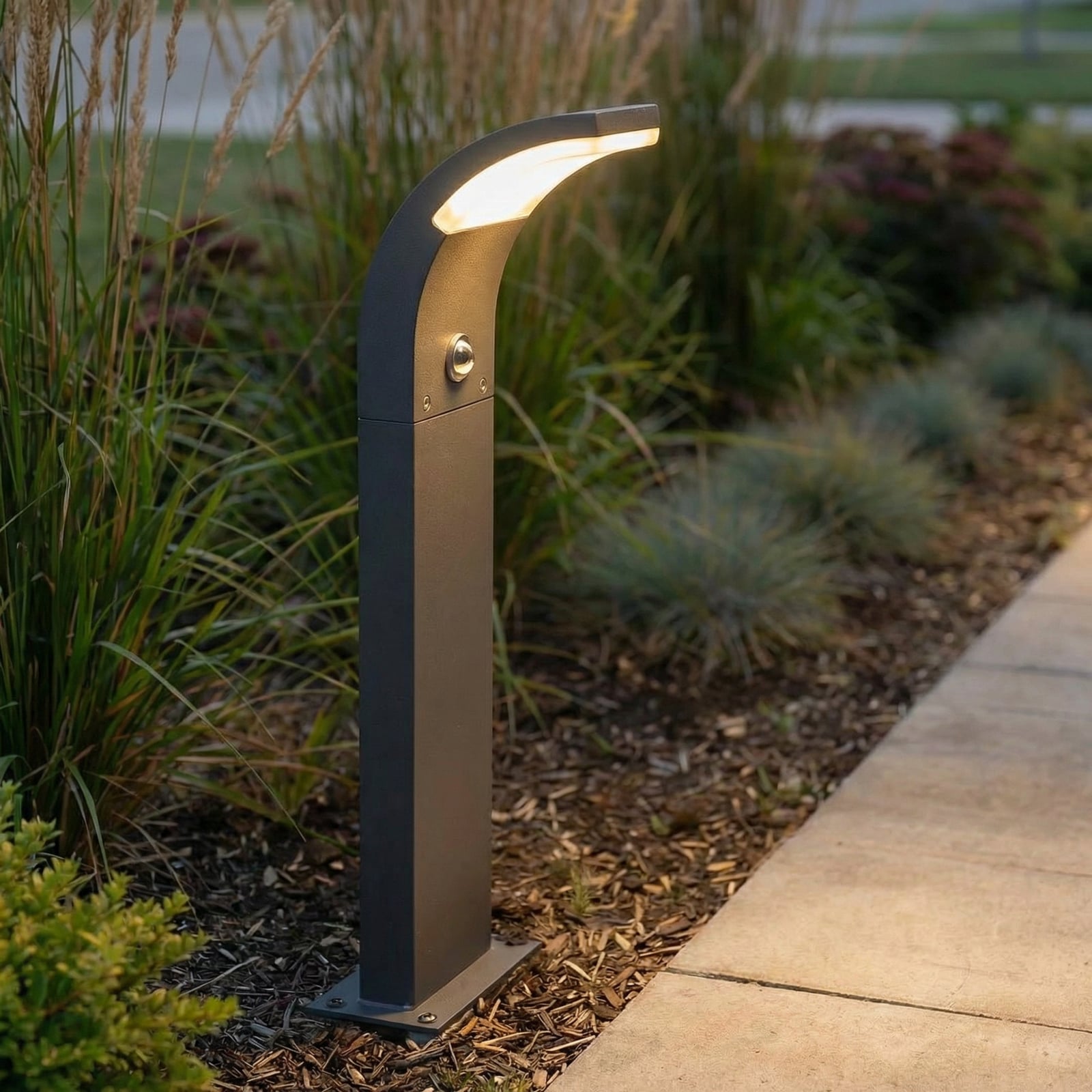
In the garden and along paths, lighting should, above all, ensure that it is easy to find your way around. Path lights with motion sensors can be used along paths. The sensor should detect the movement as early as possible. This activates the illuminated area in front of an approaching person.
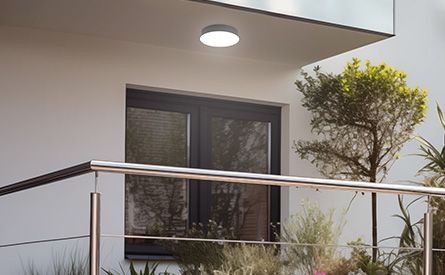
A suitable outdoor light fitting with a motion sensor can illuminate the path leading to the terrace. Balconies also deserve special attention if they have an easily accessible area or are at a low height. For covered areas, sensor-operated ceiling lights are also a viable option.
Different lights and sensor positions are suitable depending on the area. It is essential that the motion detector reliably detects movement along the relevant access route and that the light provides sufficient illumination of the area. Regardless of where it is installed, a motion detector should be positioned so that it detects movement in the relevant direction as early as possible. At the same time, unnecessary activations – caused, for example, by passing vehicles, animals or moving plants – should be avoided.
Using motion detectors correctly
For a motion detector to work reliably, it is not only the right sensor technology that matters, but above all correct installation and calibration. The detection area, range and mounting height should be suitable for the specific location. Before installation, it is therefore worth checking which area the sensor is intended to monitor and from which direction people typically enter that area.
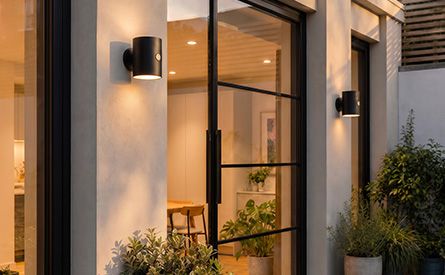
The range and detection angle vary significantly depending on the sensor. PIR sensors, for example, respond particularly reliably to movements across the sensor, whilst modern high-frequency sensors can detect movements regardless of their direction.
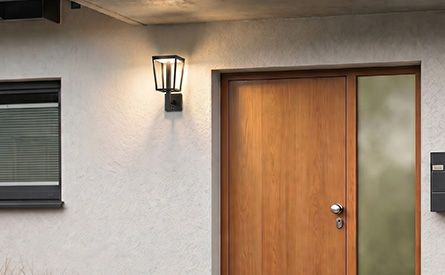
A motion detector should be fitted in such a way that the desired area is covered as fully as possible and at the earliest opportunity. Installing the sensor at a sufficiently high position also protects it from unauthorised access, as well as from accidental misalignment or damage.
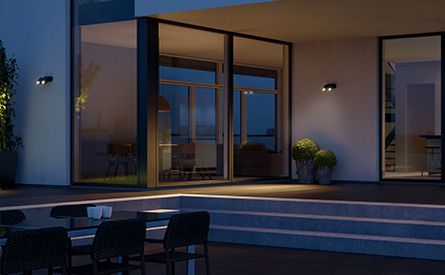
During installation, the sensor should be tested to ensure it covers the desired detection area. Many motion detectors can be swivelled horizontally and vertically. Ideally, the alignment should be checked by a second person whilst they are walking through the monitored area.
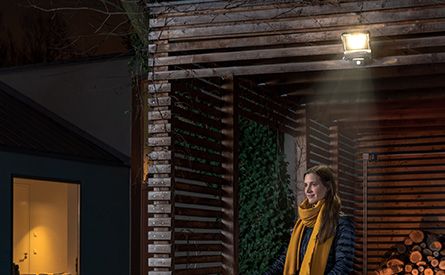
For passageways or front doors, a short lighting duration is usually sufficient, whilst for driveways or larger outdoor areas, a longer setting may be more appropriate. A built-in twilight sensor prevents the light from switching on unnecessarily in daylight.
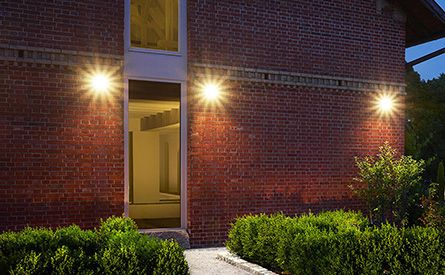
Motion detectors should, where possible, be positioned so that they do not react to unnecessary sources of movement. In outdoor areas, for example, passing vehicles, moving branches and plants, or animals can cause false alarms.
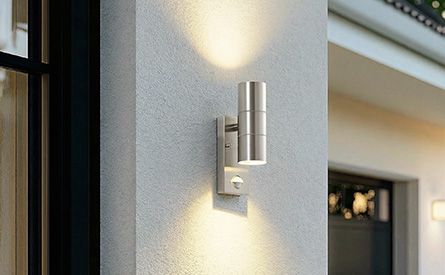
In the case of large plots of land, house entrances or access paths, care should be taken to ensure that no areas lie outside the detection range. Blind spots can occur, for example, when the sensor is obstructed by walls, protrusions or other obstacles.
Anyone installing a new motion detector or choosing a light fitting with a sensor should therefore not rely solely on the stated range. The key factor is the interplay between sensor technology, detection angle, mounting position and individual settings. Careful positioning ensures that the light is switched on exactly when it is needed – and that unnecessary switching operations are avoided as far as possible.
Simulating presence with light
A safe home – even when no one is there: Simulating occupancy with lighting is a simple yet effective way of giving the impression that a house or flat is occupied whilst you are on holiday or away for any other reason. After all, rooms that remain dark all the time may suggest that nobody is at home. In contrast, carefully planned lighting can mimic everyday routines and thus help to make your home seem less predictable.
Smart lighting systems offer greater flexibility than traditional timers. Switching times can be easily adjusted and several lights can be combined. Depending on the system, routines can also be controlled via a smartphone or modified from any location.
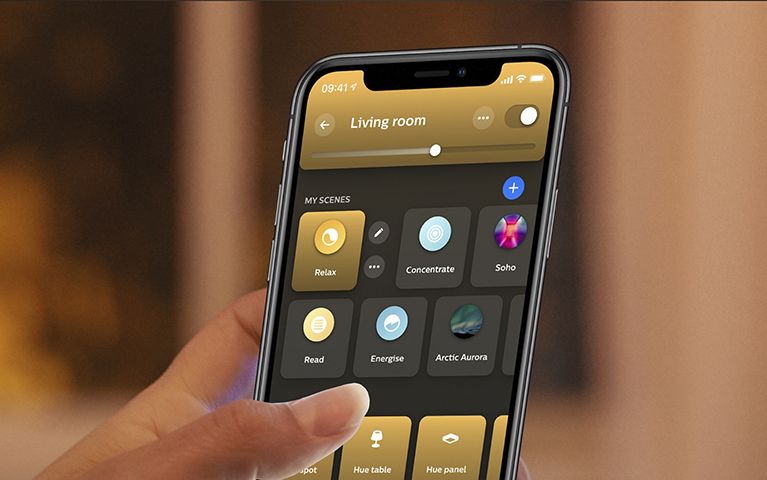
To ensure that the lighting simulation looks as natural as possible, lights should not simply be switched on and off at exactly the same time every evening. It makes more sense to combine different switching times and rooms. This makes it possible, for example, to recreate a typical evening routine.
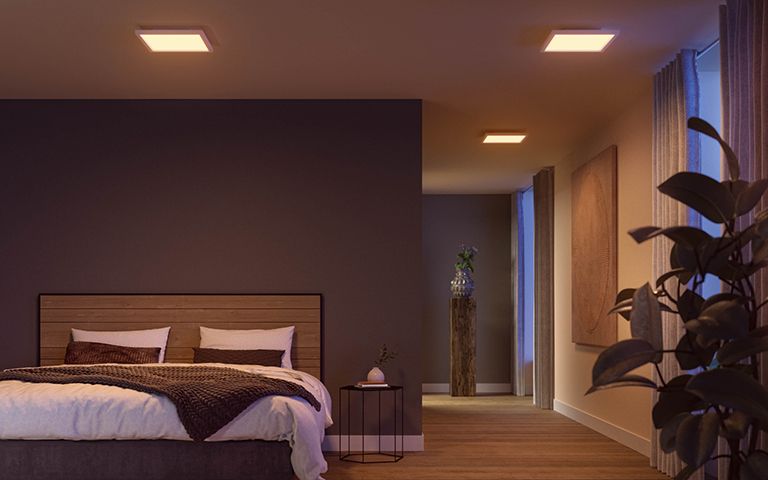
A credible presence simulation should not be limited to a single lamp. When several rooms and several light sources are included, it gives the impression that the occupants are moving around inside the house.
Smart lights offer another advantage: depending on the system, the lighting can also be controlled remotely via a smartphone. For example, users can check whether a routine is active or adjust a lighting sequence. This is particularly handy if your planned return is delayed or if a different arrangement seems more sensible during a longer holiday.
Example of a lighting simulation in the evening
A simplified example illustrates what such a routine might look like:
- 6.30 pm: The light in the corridor comes on
- 7.00 pm: The light in the living room comes on
- 8.15 pm: The light in the corridor goes out
- 9.45 pm: The light in the bedroom comes on
- 10.30 pm: The light in the living room goes out
This example is for illustrative purposes only and does not constitute a recommendation. In practice, switching times and routines should be adapted to individual habits, and switching times should be varied from time to time. After all, if the same light comes on at exactly 6.30 pm every evening and goes off again at 10.30 pm, a predictable pattern quickly emerges.
Common mistakes in burglary prevention using lighting
Outdoor lighting can be a useful part of a comprehensive security plan. However, to make the most of its benefits in everyday life, proper planning is essential. These common mistakes can be avoided:
- Light only the main entrance: The entrance area is important, but side doors, patio doors, cellar entrances and paths leading to the house should also be taken into account when planning. Areas with poor visibility in particular benefit from lighting tailored to their needs.
- Side entrances and patio doors are often overlooked: Outdoor lighting often focuses on the front of the house. It makes more sense to take a look at all the entrances and routes around the building. Consistent safety lighting is achieved through a comprehensive concept, not through a single luminaire.
- Incorrectly positioning a motion detector: A motion detector should cover the area you actually want it to detect. If it is mounted too high, too low or at an unfavourable angle, detection may be unreliable. The range and field of view should also be suitable for the location where it is to be used.
- Unnecessary detection on pavements or roads: If the sensor constantly detects passers-by, vehicles or movement on the pavement, the light will switch on unnecessarily often. Precise alignment reduces false triggers and ensures more effective lighting control.
- Avoiding dazzling neighbours or other people: Lights and spotlights must only be positioned so that the light is directed towards your own property. Effective shielding and correct alignment help to prevent harmful glare and ensure that the lighting is directed where it is needed.
- Using the same switching times consistently: If the lights are switched on and off at exactly the same time every day, the lighting pattern becomes somewhat predictable. Smart routines that are based on the time of day, sunset or actual usage offer an advantage here.
- Automating just one room or area: Smart lighting really comes into its own when several areas work together effectively. For example, entrance lighting, garden lights and individual indoor lights can be grouped together in shared scenes or routines.
- Viewing lighting as the sole means of burglary protection: Light can make areas visible, aid navigation and, as part of an integrated system, work in conjunction with motion detectors, cameras and smartphone alerts. However, lighting alone is no substitute for comprehensive burglary protection.

Lighting expert at Lights.co.uk
Expert tip
“When dark corners are illuminated by sensor-controlled lighting, the house becomes a more difficult target for burglars, as not only you, but also your neighbours, will be alerted by the light suddenly coming on.” However, no matter how clever the security measures may be, full letterboxes are a clear sign that no one is at home. “Asking your neighbours to empty it regularly whilst you’re on holiday is part of an effective burglary prevention strategy.”