






















)
Which fan is right for you?
Customised cooling, tailored to your homePleasant freshness at the touch of a button: the right fan not only provides cooling, but also noticeably increases your living comfort. But which model really suits your requirements? Room size, area of application and personal preferences are decisive factors.
We recommend particularly quiet fans with a gentle air flow for quiet nights in the bedroom. In the living room or open-plan living areas, on the other hand, appliances with high air circulation ensure even freshness throughout the room. If you work from home, you benefit from flexible solutions that can be customised at any time.
Discover the right fan solution for your home now and enjoy a pleasant indoor climate even on the hottest days of the year.
Our top recommendations
The best fans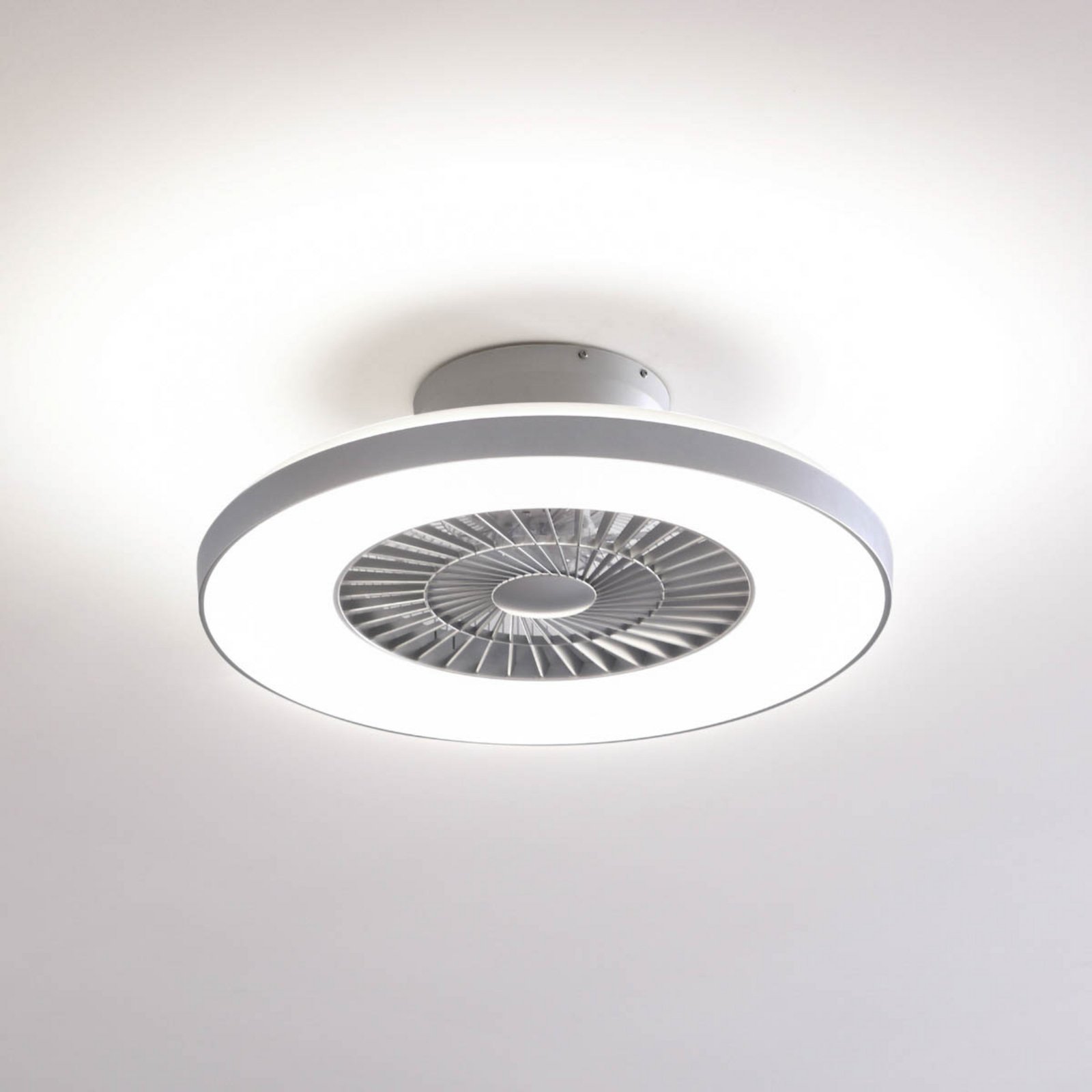
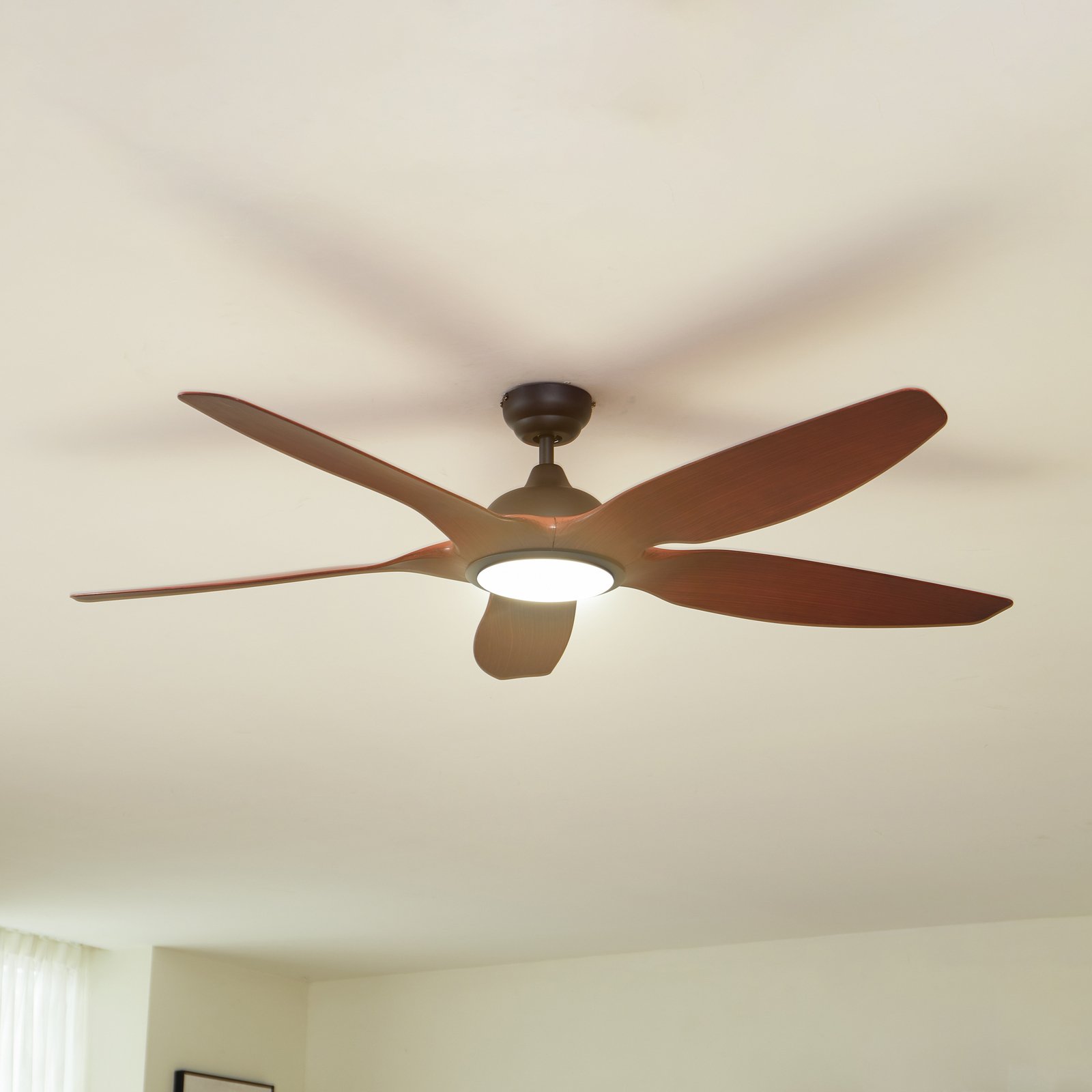
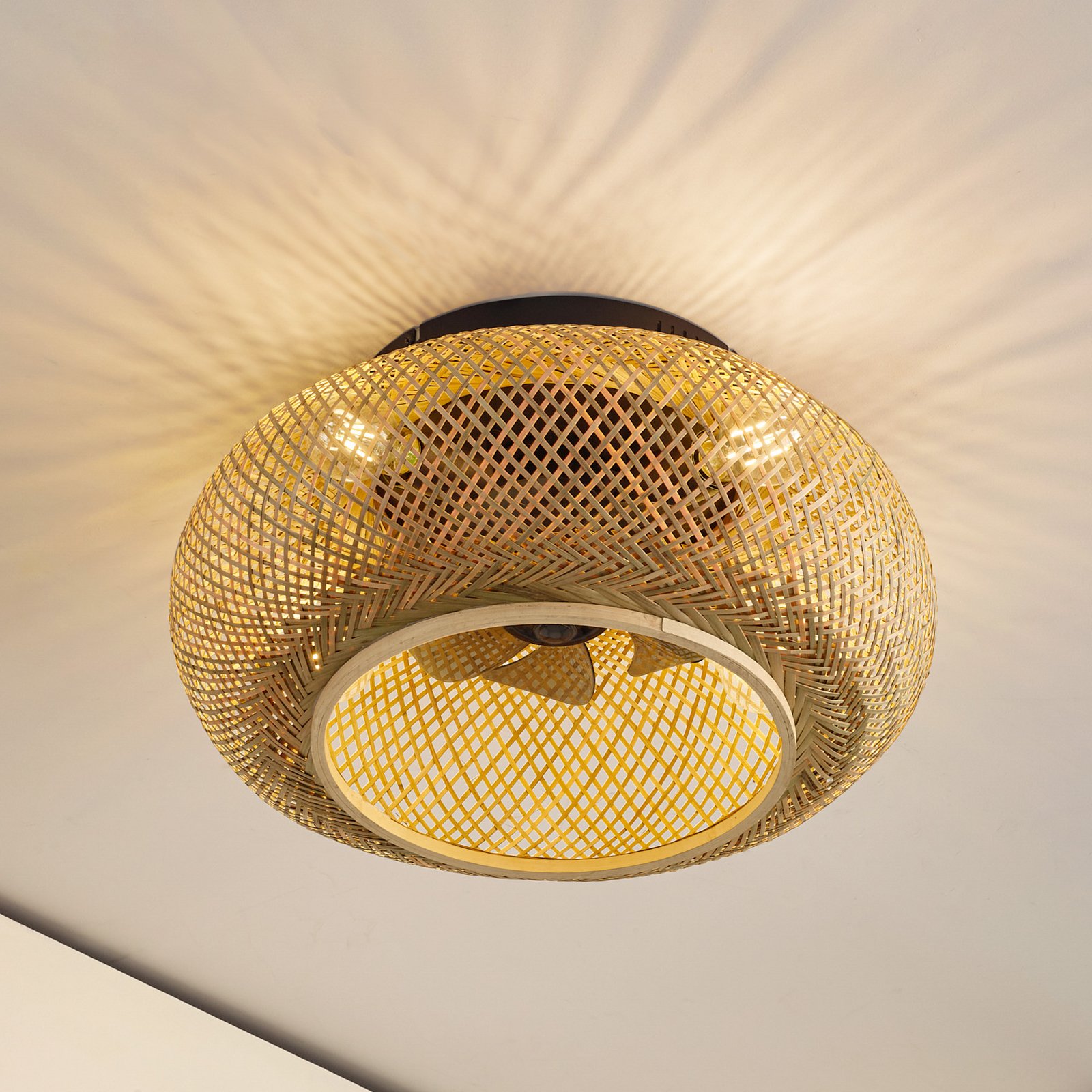
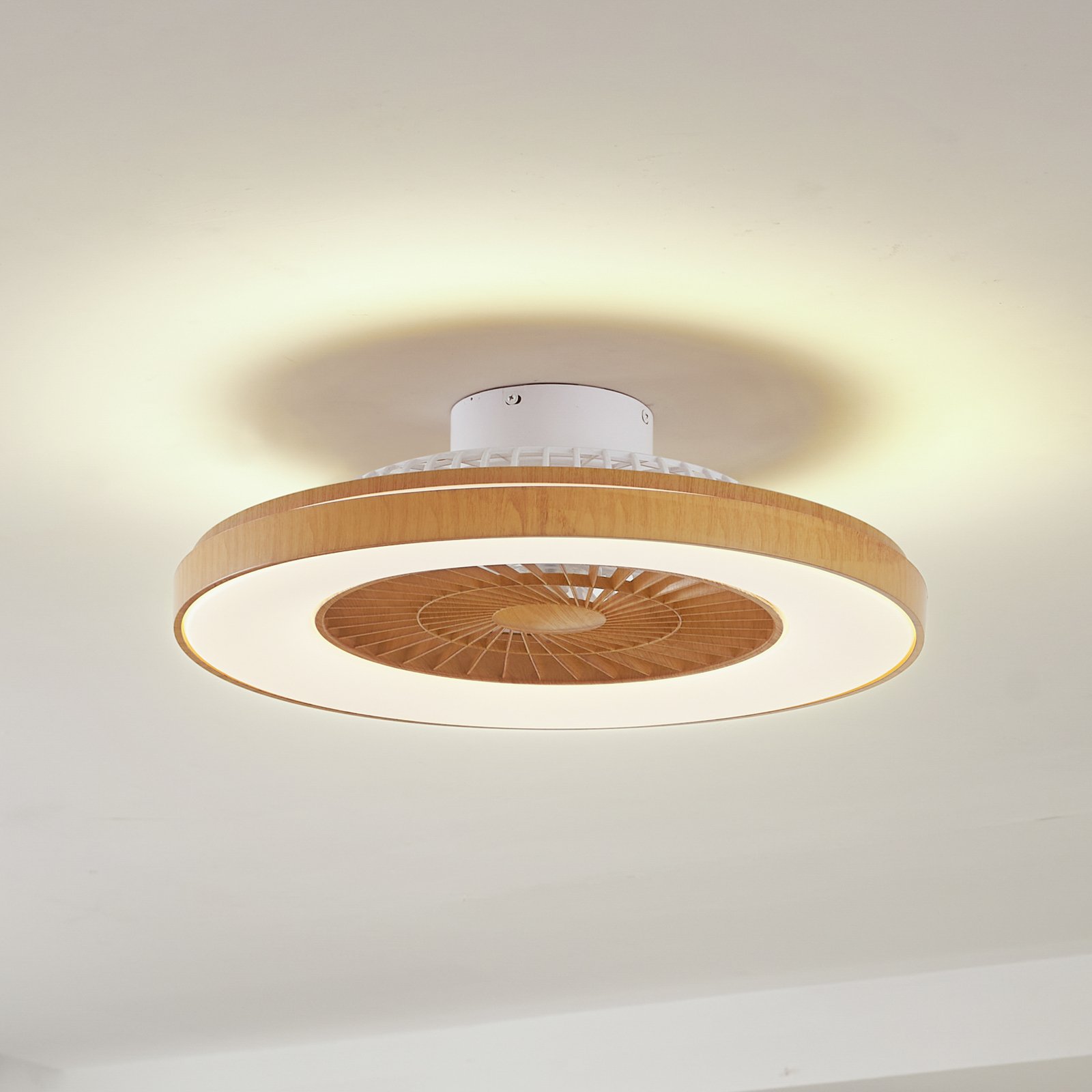
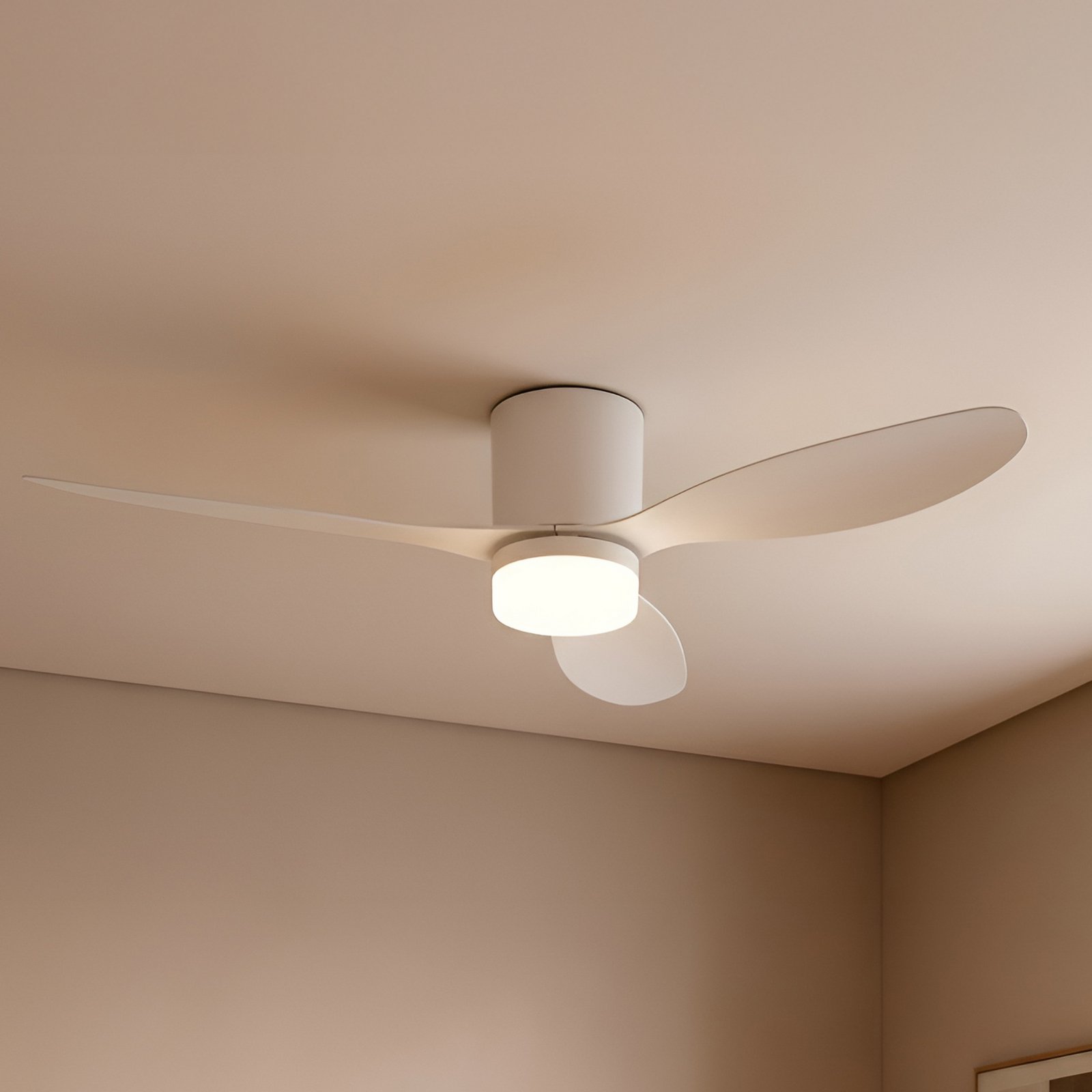
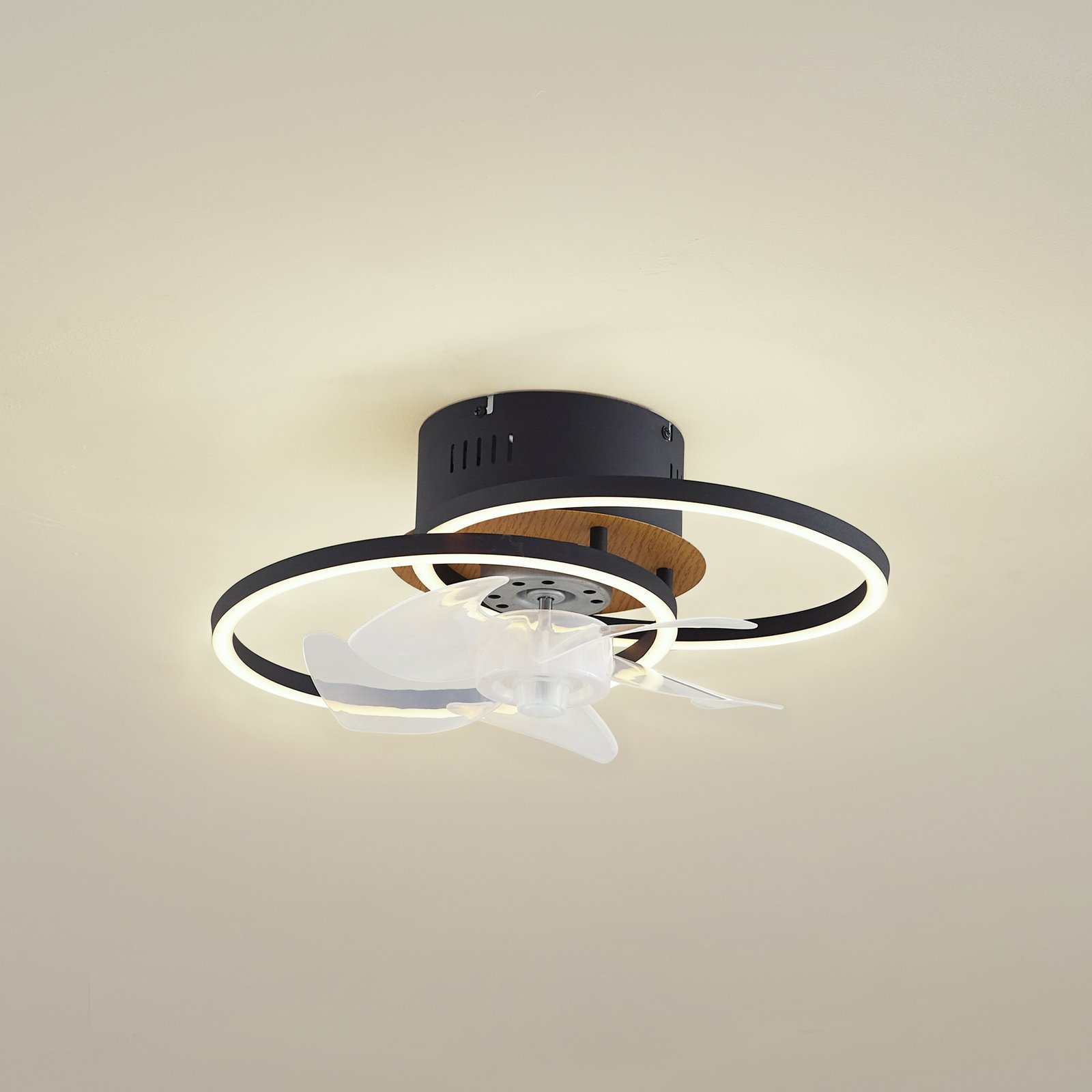
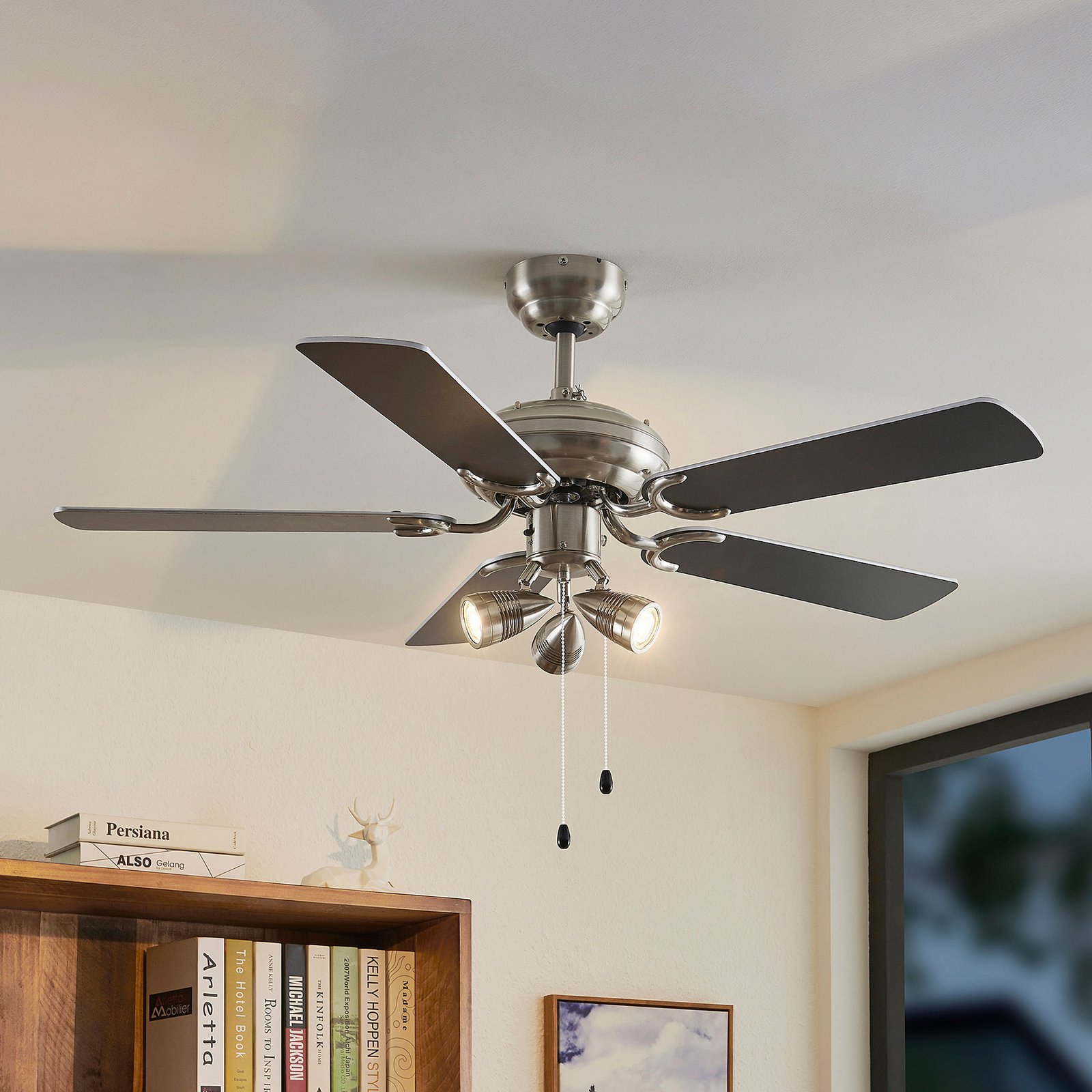
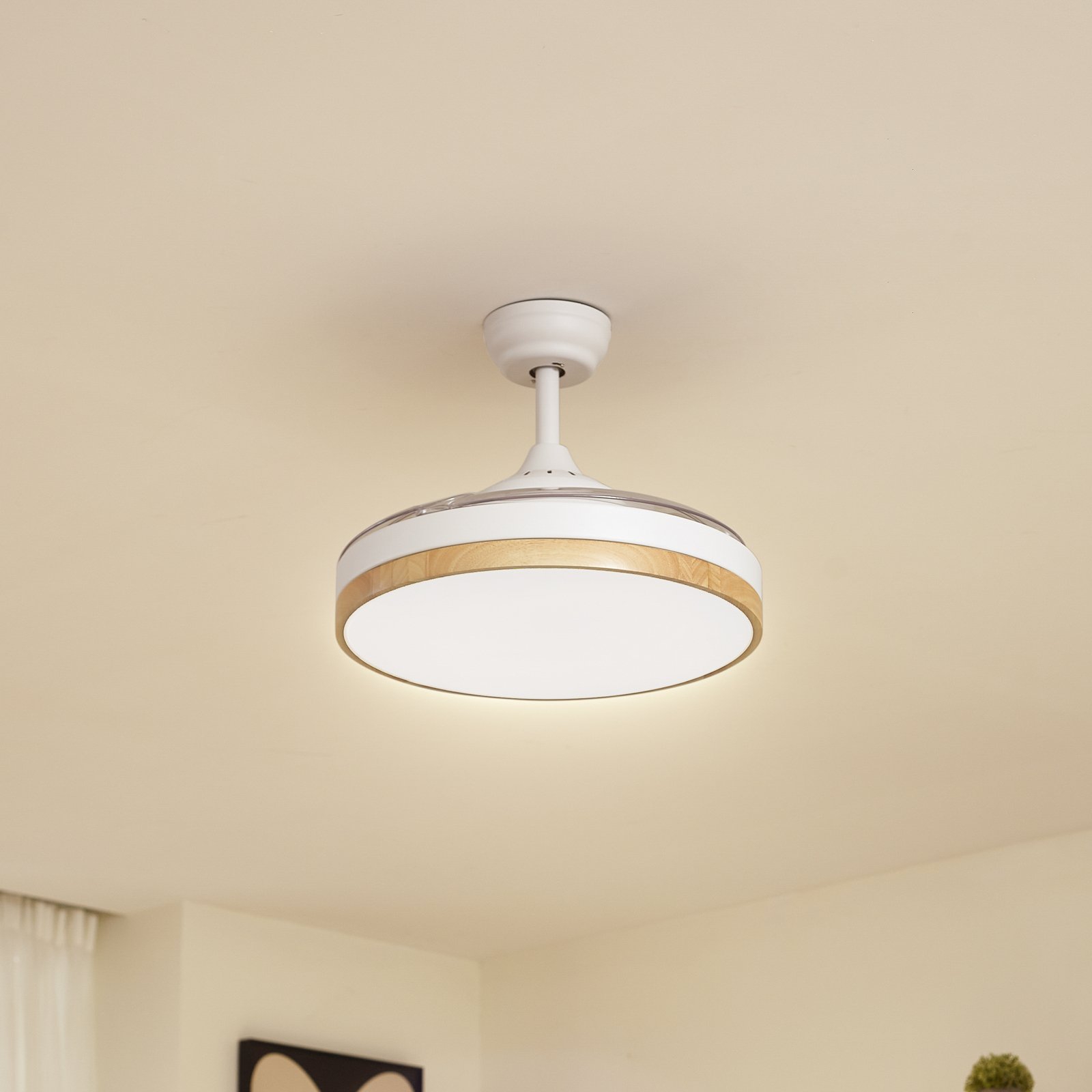
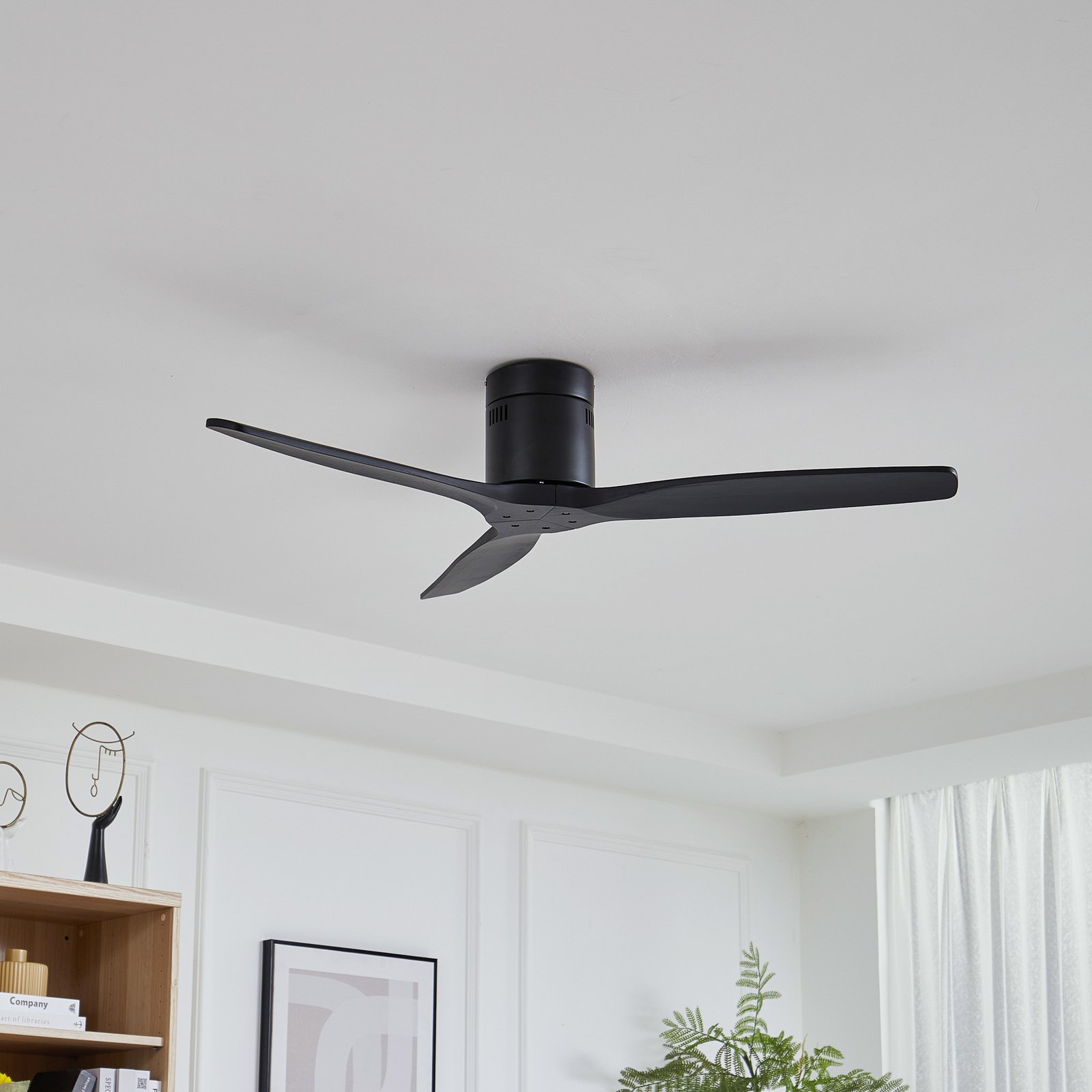
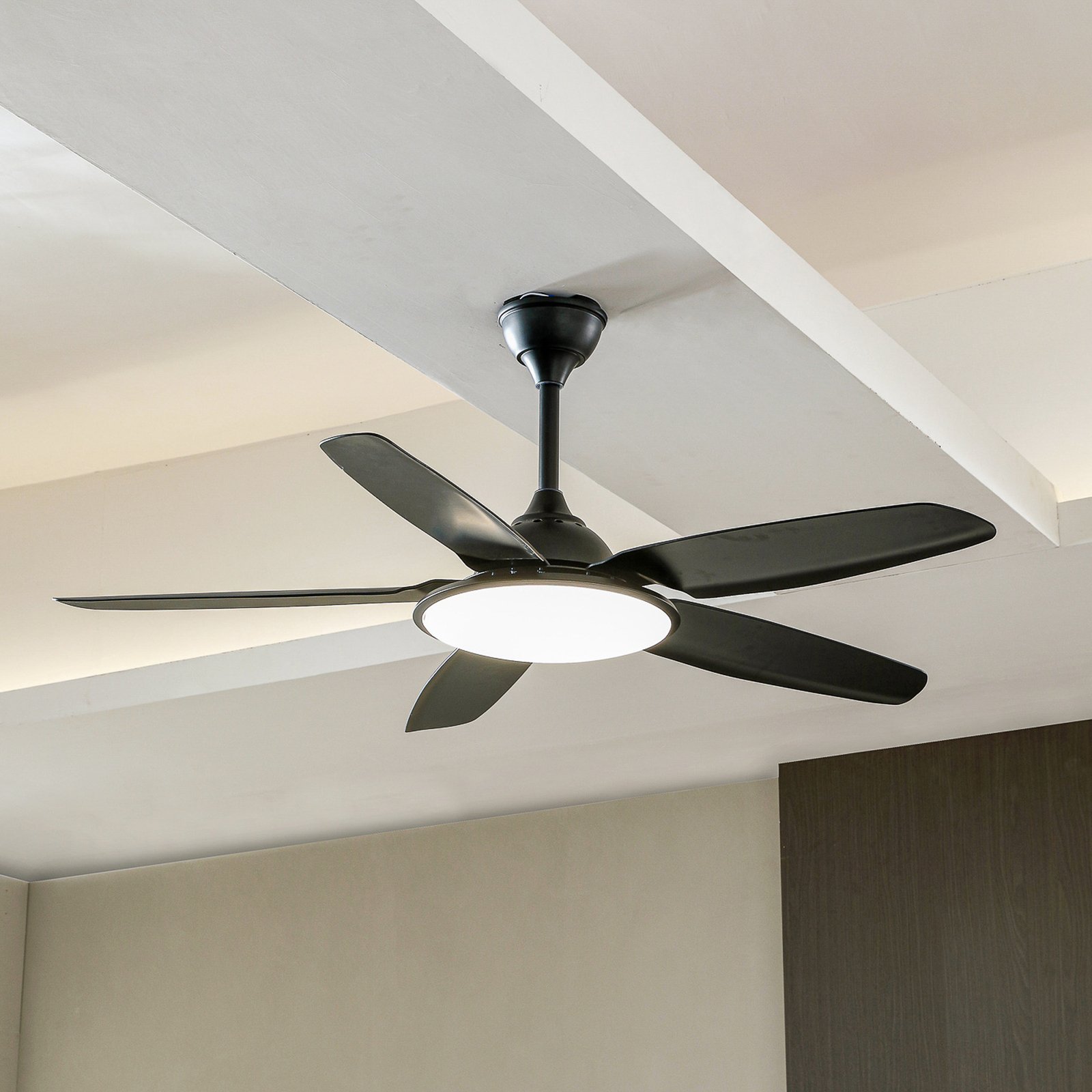
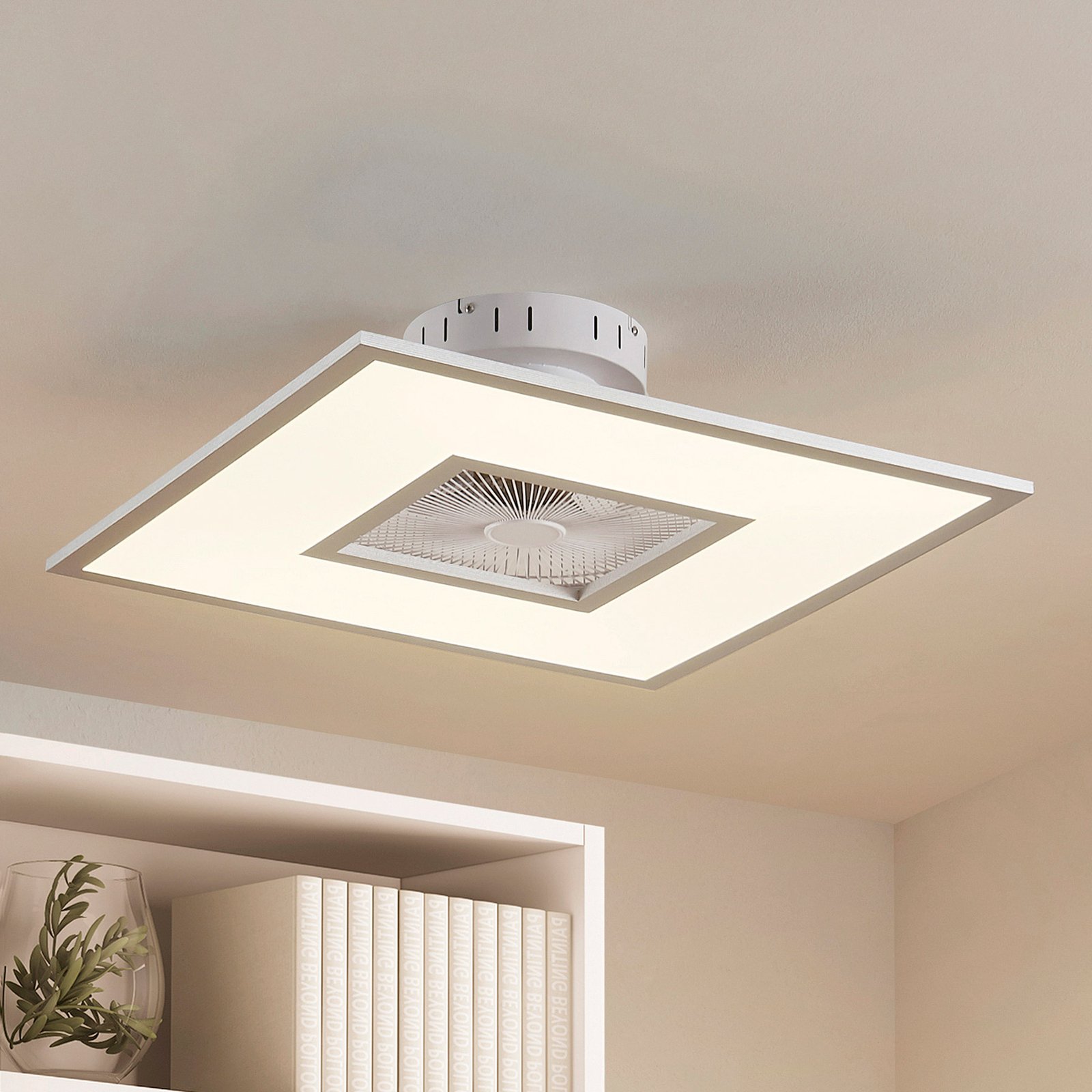
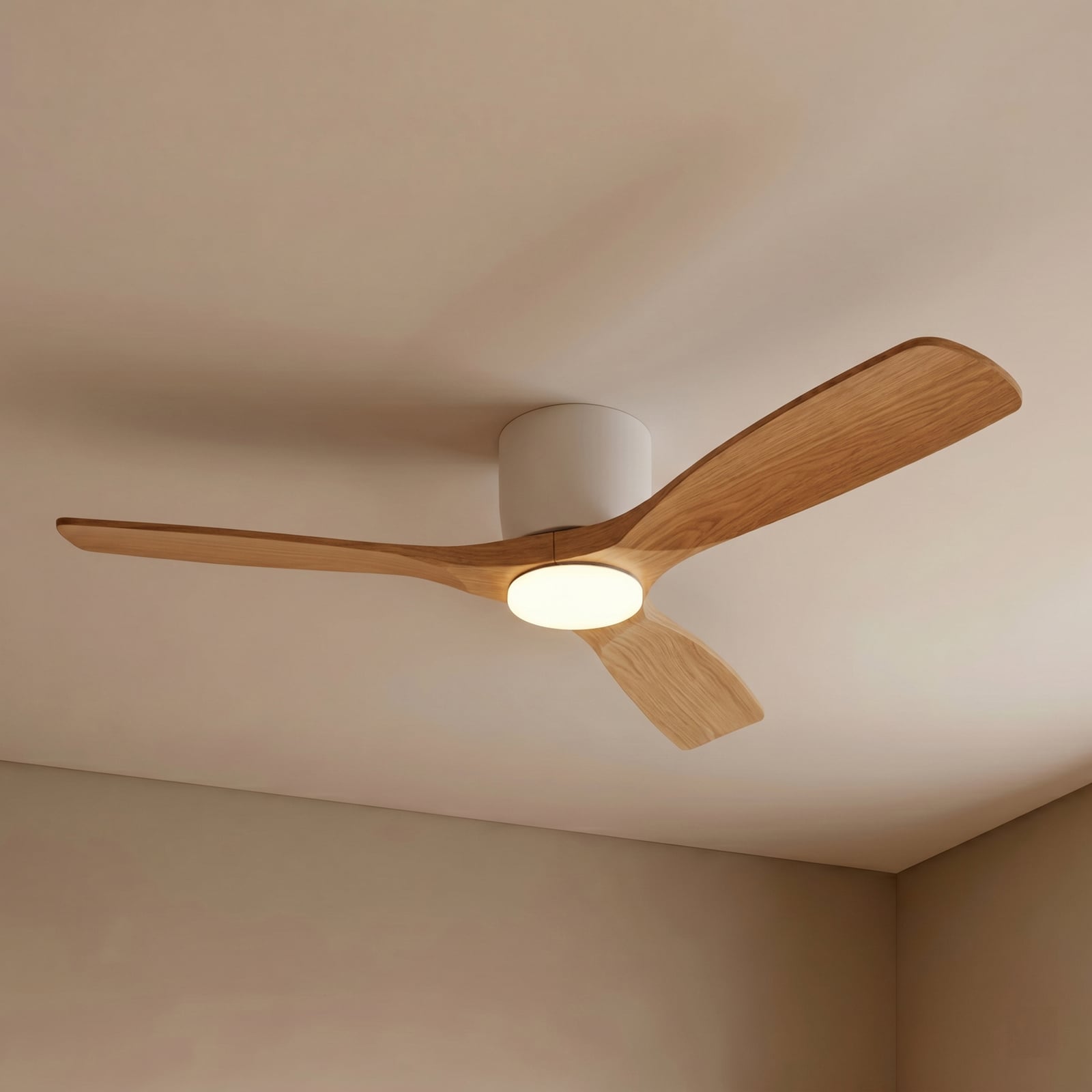
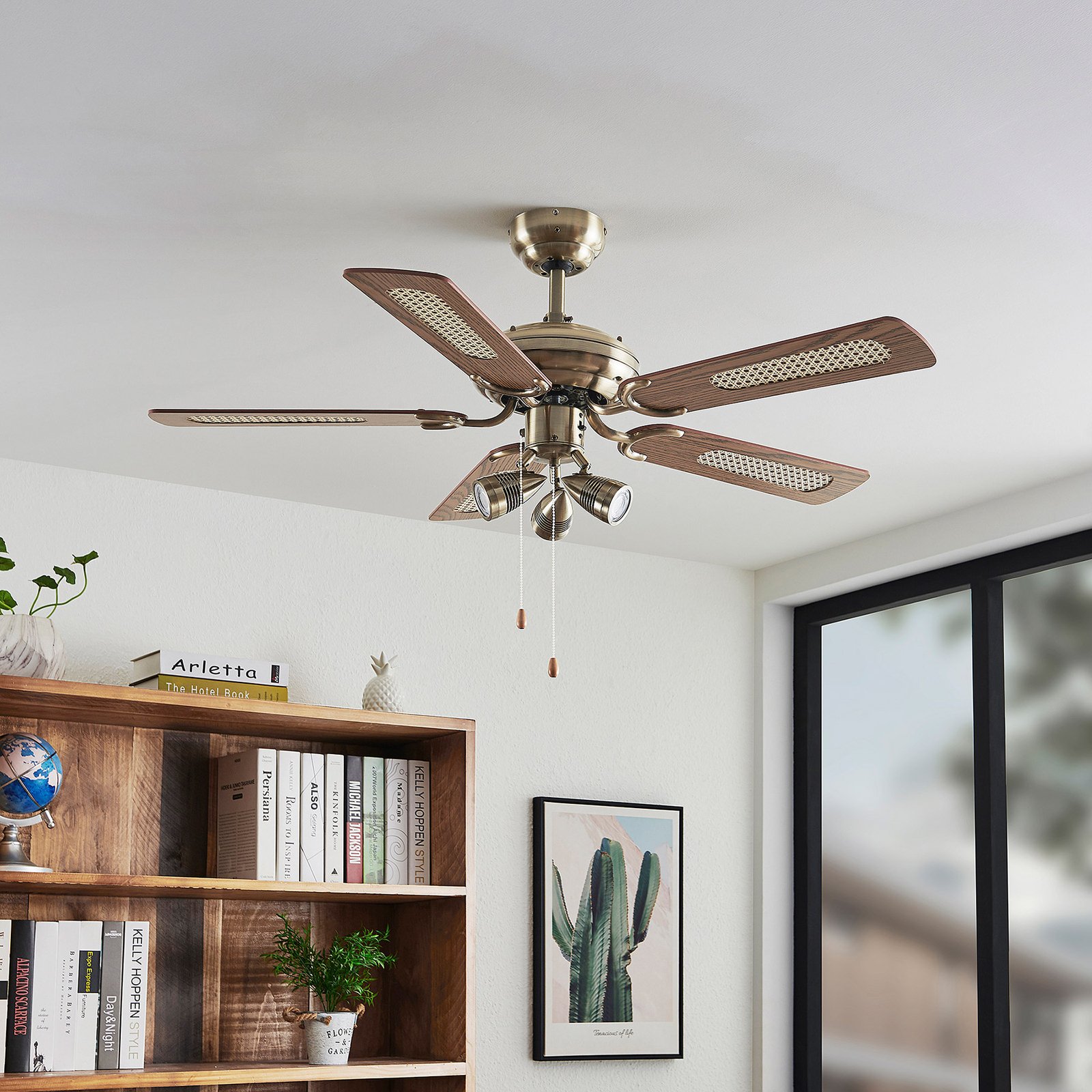
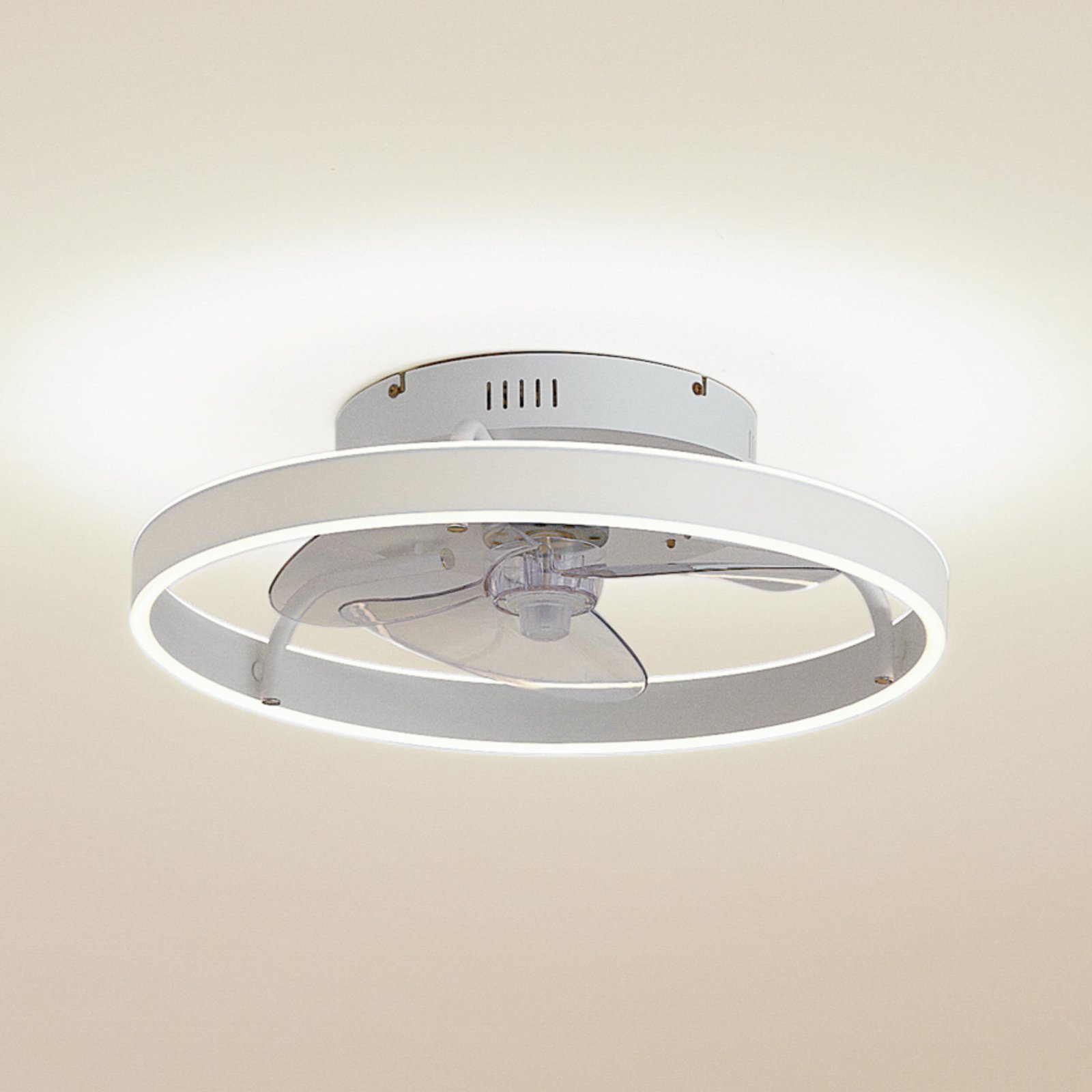
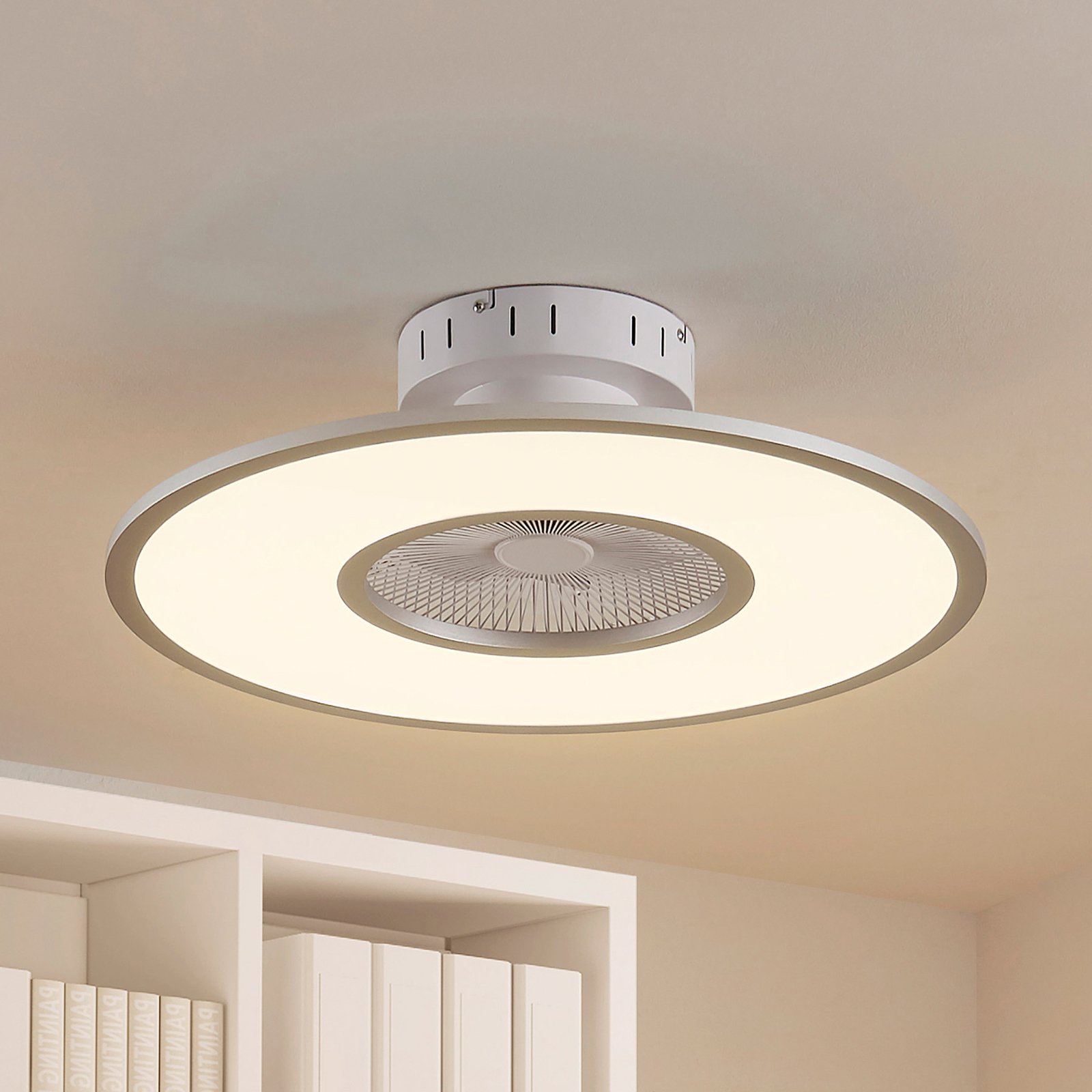
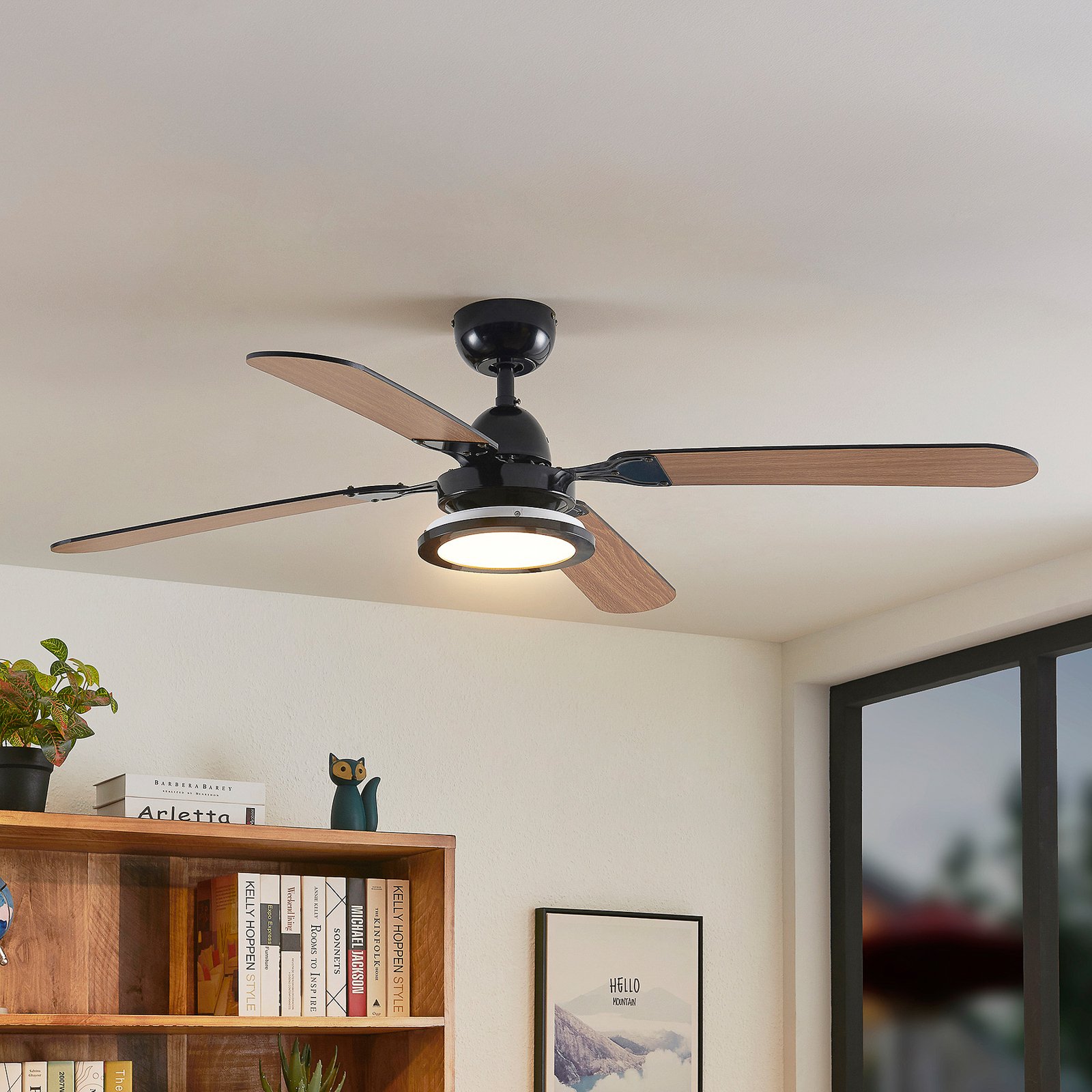
All types of fans
 "Ceiling fan")
 "ceiling fan")
 "Beacon ceiling fan")
 "Starluna ceiling fan")
 "Seawave from Hunter")
 "Himalaya ceiling fan")
 "Chrome-plated pedestal fan")
 "Fan accessories")
 "All fans")
What makes a good fan?
Before deciding on a model, it is worth taking a look at important criteria: the air circulation rate (measured in m³/h), the volume in decibels (dB) and the consumption in watts. Additional functions such as speed adjustment, quiet operation, timer, night mode or remote control make all the difference - especially when used in the bedroom or home office. A quiet fan with around 30-40 dB is ideal for night-time use, while devices with at least 40 watts are recommended for large rooms. However, as fans are also becoming increasingly energy-efficient, it is essential to look at the air circulation rate. The installation location also determines the effectiveness of the cooling - tower fans fit well in corners, table fans are suitable for selective refreshment.
How to find the right fan size
Depending on the size of the room, you should ensure that the fan diameter is suitable. The following overview provides a good orientation:
)
Small room,
e.g. guest room:
< 3 x 3 m
Ø: 76 - 122 cm
)
Large room,
e.g. living room:
< 6 x 6 m
Ø: 127 - 137 cm
)
Very large room,
e.g. loft flat:
> 6 x 6 m
Ø: from 142 cm
Which fan fits in which room?
Choosing the right fan depends heavily on where it will be used. Room size, utilisation and personal comfort requirements play a decisive role. To help you find the right solution quickly, we have summarised the most important rooms for you - with clear recommendations on what you should look out for.
)
Living room - comfort meets performance
The living room is often the largest and most frequently used room in the house. The most important factors here are a high air flow rate (m³/h), an appropriate rotor diameter and, last but not least, a look that matches the interior design style. Models with adjustable running speed via app or remote control are a clear comfort plus when you want to make yourself comfortable on the sofa.
)
Bedroom - quiet, gentle, comfortable
Sleeping comfort takes centre stage in the bedroom. A fan should be one thing above all: barely audible. Quiet operation (low dB values) helps to ensure undisturbed sleep. An adjustable running speed, on the other hand, ensures gentle air flows without direct, unpleasant blowing. As power outlets in the bedroom are often limited, fans with lighting are also recommended.
)
Large rooms - maximum air circulation
Open-plan living areas, loft flats or high ceilings pose special challenges. Power is what counts here. Very high air circulation is crucial for noticeable cooling. Several speed levels allow flexible customisation. If a ceiling fan is not sufficient or is ineffective due to high ceilings, high-performance pedestal fans can be used for permanent air circulation.
)
Home office - practical and efficient
The work area is all about targeted cooling without distraction. The fan should support, not disturb. Quiet operation ensures concentrated work and calls.
A compact design is particularly practical in the home office. However, if you can no longer use a power connection for a fan, you can rely on mobile pedestal and table fans.
)
Outdoor area - robust and weatherproof
On balconies, patios or in the garden, you need fans that can do more than just cool: Resistance is crucial here. It is important to ensure suitable IP protection (ingress protection) against the ingress of moisture and foreign bodies. In addition, open areas require more power. Robust, easy-care materials do the rest for perfect outdoor air circulation enjoyment.
)
)
)
Ceiling fans with and without light
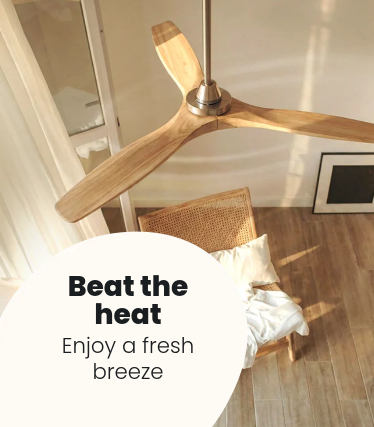
Whisper quiet for the bedroomsYou only have one power connection on the ceiling and can't decide whether you want to use it for a fan or a ceiling light? Then simply choose a fan with integrated LEDs for good general lighting. Also available with remote control, which you can use to select the light colour. A whisper-quiet model is recommended for the bedroom, for example with a WhisperWind® motor like Hunter. Functions such as a night mode or a timer function also ensure undisturbed sleep.
Installing and connecting ceiling fans correctly: To ensure that the fan works safely and reliably, it is important that it is installed and connected correctly. When working on the electrical installation of a house, always commission an electrician who can ensure that the ceiling fan in particular is securely and safely fastened. Load-bearing ceilings such as those made of concrete are ideal for the weight of fans.
)
)
)
Smart fans
Convenience through versatile controllabilityIn keeping with the times, fans can also be controlled smartly - by remote control or app. This makes it easy to adjust the speed and direction of travel. If the fan also functions as a light, the light colour can even be adjusted at the touch of a finger. If you wish, you can also call up the functions of the smart air freshener using a voice assistant. Another option: if provided by the manufacturer, simply retrofit a radio receiver and make the fan smart at a later date.
)
)
)
Standing stars and table fans
Flexible cooling - wherever you wantTable and pedestal fans can be operated from a power point in no time at all - perfect for spontaneous cooling. They are particularly popular in the study, home office or kitchen. In a direct comparison, tower fans impress with their space-saving construction, modern design and particularly even air distribution. Classic pedestal fans offer a higher air output and are sometimes height-adjustable. Oscillating models with several speed levels ensure individual air circulation in the room according to your own preferences.
Caution when positioning pedestal fans: To avoid draughts and tension, especially when using the fan for long periods of time, avoid pointing the airflow directly at the person. A slight incline ensures even air distribution.
)
)
)
Fans with IP protection class
Refreshment in the outdoor loungeIf even the most beautiful shady spot in the garden doesn't provide the necessary cooling in midsummer, it's time for a fan in the garden lounge. With an appropriate IP protection rating of at least IP44, ceiling fans, for example from the traditional company Westinghouse, can easily be hung in covered areas of the garden. If you only want to cool down temporarily, you can of course also take the table fan into the garden for a hot afternoon.
The most important facts about fans
)
A fan is useful all year round. While it cools pleasantly in summer mode, in winter mode - in reverse - it ensures good distribution of the heating air trapped under the ceiling. This option is perfect for reducing heating costs. If you want to benefit from your fan 365 days a year, you should make sure when buying it that it has the option of winter operation.
)
Ceiling fans are permanently mounted and wired via the ceiling connection. They are available either exclusively for cooling and distributing the air or with integrated LED lamps for general lighting. Standing and table fans can be positioned flexibly. With battery charging via USB, they are even a companion when travelling. Fans are already available for less than 100 euros.
)
Of interest are performance, suitability for a certain room size and different intensity levels. Depending on the type of ceiling, pay attention to the weight. Pedestal fans should be able to tilt and oscillate (move the head). Also practical: height-adjustable pedestal fans. And the operating options range from pull chains to smartphone apps.
:format(jpeg) "Winter mode")
In winter, the warm heating air that accumulates under the ceiling is better distributed in the room. This also keeps your feet warm and effectively saves on heating costs.
:format(jpeg) "Summer mode")
In summer, the fan circulates the air, creating a pleasant cooling effect on the skin. The strength of many fans can be regulated individually.