





















Furnishing a cosy and practical nursery
Ideas for your baby’s wellbeingA nursery should be a place where your baby feels safe and secure, and where parents can easily manage their daily routine. With a well-thought-out layout, you can lay the foundations for peaceful sleep, stress-free nappy changes and cosy moments together. It is important to make efficient use of the available space and to coordinate the individual areas in a logical manner.
It’s best to plan the nursery in small steps: first, think about where to put the cot, how to organise the nappy-changing area and what storage solutions you’ll need. Next, add a cosy relaxation area and decorate the room with colours, textiles, wall art and suitable lighting. The result is a space that will reliably support you and your child through several stages of development.
Planning a baby room
The basic furnishings for the roomWhen setting up the nursery, you don’t need to have everything straight away. A basic set of functional equipment is often quite sufficient to get you started. Further furniture, accessories and practical additions can be added bit by bit, once you know what you actually need in everyday life. If sleeping, nappy changes, storage and rest are all organised in a practical way, many everyday routines become easier.
The most important ingredients that should be included right from the start include:
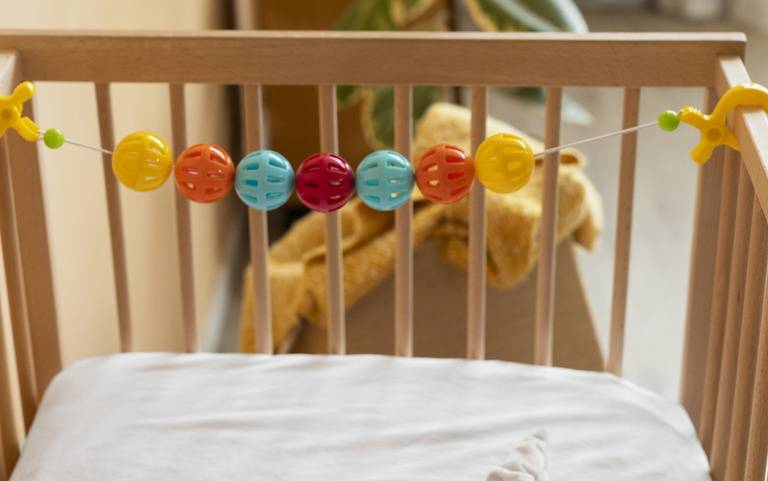
The cot is often the focal point of the room. Make sure there is enough space around the cot so that you can easily put your baby in and take them out. You should avoid overcrowding the room with furniture. You should also ensure that lights, cables and decorations are securely fixed and kept out of the baby’s reach. No objects that could come loose or fall down should be hung above the bed.

The nappy-changing area must fit in with the daily routine. Clothes, nappies and care products should be stored in an organised manner so that you can find what you need quickly. Good lighting is particularly important: you need sufficient light in the nappy-changing area to look after your baby safely and, for example, to be able to see their clothes or any changes to their skin clearly. The light should illuminate the changing area well without shining directly into the baby’s eyes.
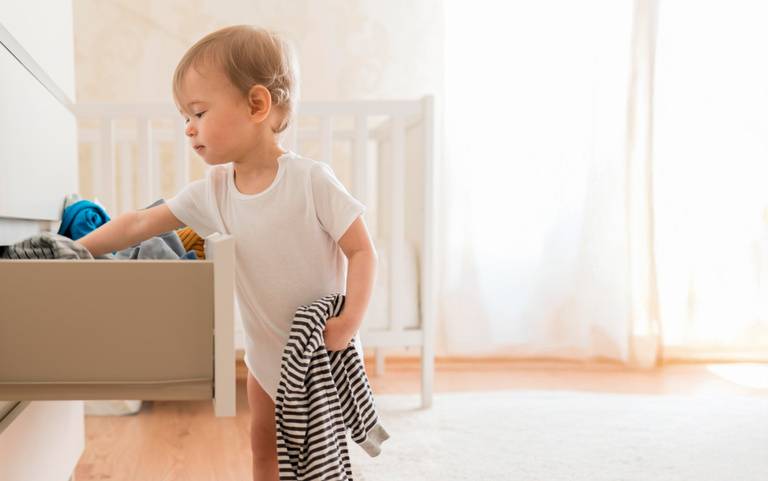
Baby clothes, care products, muslin nappies and, later on, toys too, all need their own designated place. Chests of drawers, wardrobes, drawers, baskets and shelves help to keep things tidy and make it easy to find frequently used items. A tidy storage area also helps to create a calmer atmosphere in the room: if as many small items as possible are tucked away behind cupboard doors or in closed drawers, the nursery will feel less cluttered.
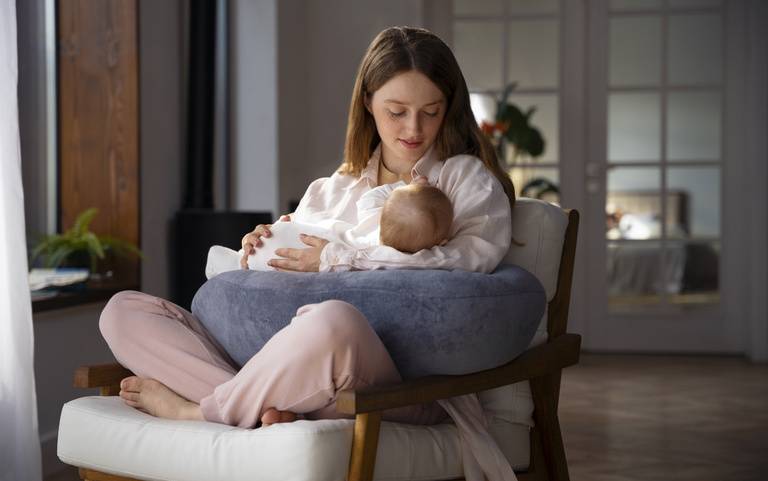
A comfortable armchair or rocking chair creates a cosy spot for breastfeeding, feeding, cuddling and reading aloud. A small tray for a drink, a burp cloth or other items you need frequently is particularly handy. An additional light source makes this area even cosier: a table lamp on a secure shelf, a well-placed wall light or a sturdy floor lamp provides pleasant lighting for quiet moments.
Designing a nursery that grows with your child: A nursery doesn’t need to be completely redecorated for every stage of your child’s development. If you opt for timeless solutions when it comes to furniture, colours and lighting, you’ll be able to reuse many of these items later on. Once the changing mat has been removed, a changing table can be used as a normal chest of drawers. A comfortable nursing armchair can later be used as a reading armchair. A wardrobe is still a practical addition to a child’s bedroom. What’s more, a ceiling light with good light distribution can continue to be useful later on when playing and getting dressed.
Colours and wall designs for the nursery
Different furnishing styles for your baby roomColours influence how a room is perceived. Light, soft colours make a baby’s room feel welcoming and airy. By using just a few accent colours, you can give it character without making the design look too busy.
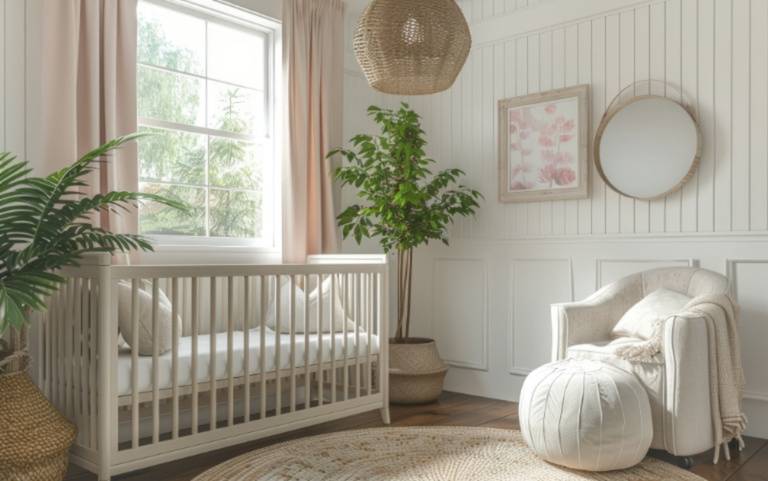
Warm white, cream, beige, sand and greige are ideal as a base for wall design. They can be combined with a wide range of furniture and textiles and go well with both natural materials and colourful accessories. Neutral wall colours are also practical if you decide to redecorate the room later, as they look modern in any room.
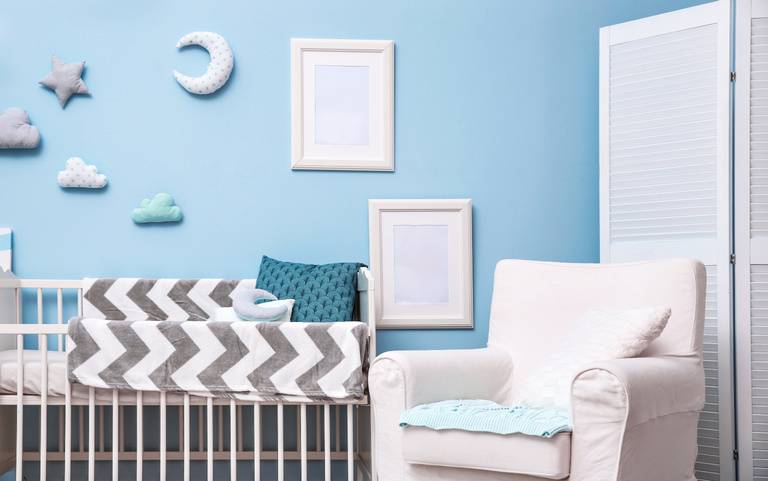
If you’d like to add a touch of colour to the nursery, muted and pastel shades are ideal. Sage and other soft shades of green go well with wood and beige. Rosé and lilac lend the room a soft, playful touch. Light blue and muted shades of blue can be combined with cream or sand. Warm yellow adds a cheerful touch.

An accent wall, subtle wallpaper patterns or individual wall stickers can enhance the look of the nursery. Popular motifs include nature scenes, small animals, stars, clouds and floral elements. Here, you can focus on a single area, as individual elements are easier to replace later on than a fully designed themed world.
Designing a nursery
Themed worlds and motifsCreating a themed space brings together colours, furniture, textiles, décor and lighting to form a harmonious whole. You don’t necessarily need a complete set from a single collection to achieve this. Often, all it takes is a few recurring colours, matching wall decorations and a light fitting that ties in with the design concept – just like your favourite interior design style in your living spaces.
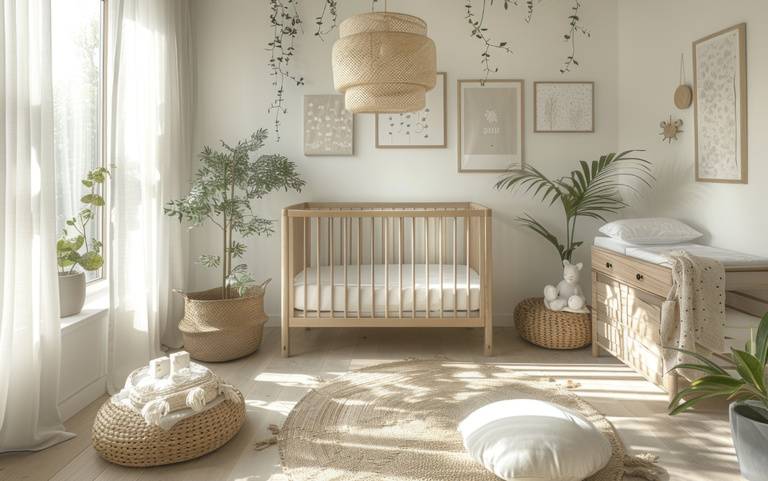
Forest-inspired motifs and shades of green, beige and brown create a peaceful, nature-inspired atmosphere in the nursery, which can be complemented by wooden furniture and woven baskets. Leaves, trees and forest illustrations are ideal for wall art, wallpaper or small decorative items. A lamp featuring an animal motif or made from natural materials can add the finishing touch to the décor.
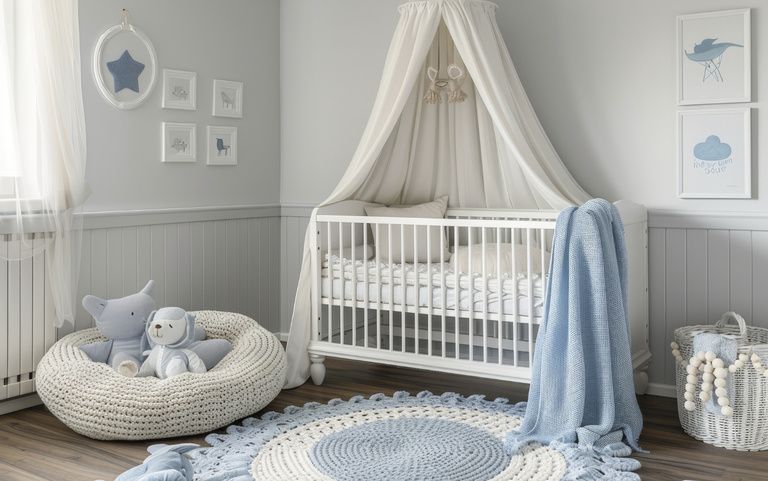
Clouds, stars, moons and rainbows form the basis for a cheerful, airy design. Light shades of blue, beige and pastel colours go particularly well with light-coloured furniture. You could decorate a wall with subtle cloud motifs and combine these with individual rainbow pictures or matching textiles. A night light featuring a moon or star design could tie in with the theme.
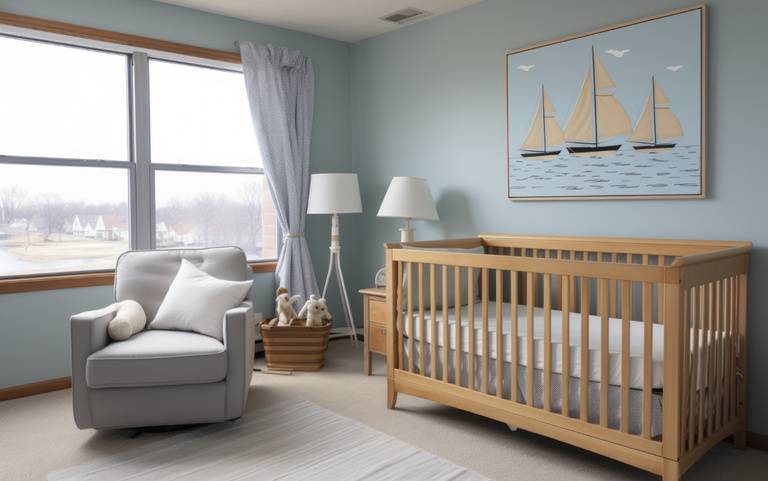
Ships, anchors, whales, fish and more give the nursery a nautical feel. Shades of blue, turquoise and sand create a harmonious colour palette that can be complemented by wavy patterns and organic shapes. Wall art featuring sea creatures, cushions or a rug can tie in with the theme. A light fitting with a nautical motif or in a soft shade of blue would also fit in well.
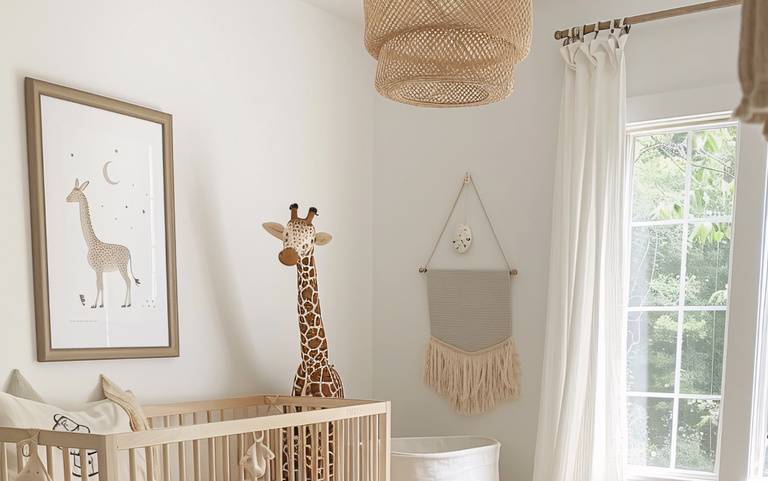
Lions, elephants, giraffes and monkeys bring the design to life. Combined with botanical motifs, shades of green, beige and warm earth tones, this creates a nature-inspired theme. Wooden furniture goes well with this; perhaps even a slightly warmer, reddish colour, which symbolises the vastness of the savannah. When it comes to lighting, lamps featuring animal motifs or simple designs in shades of green and natural colours are ideal.
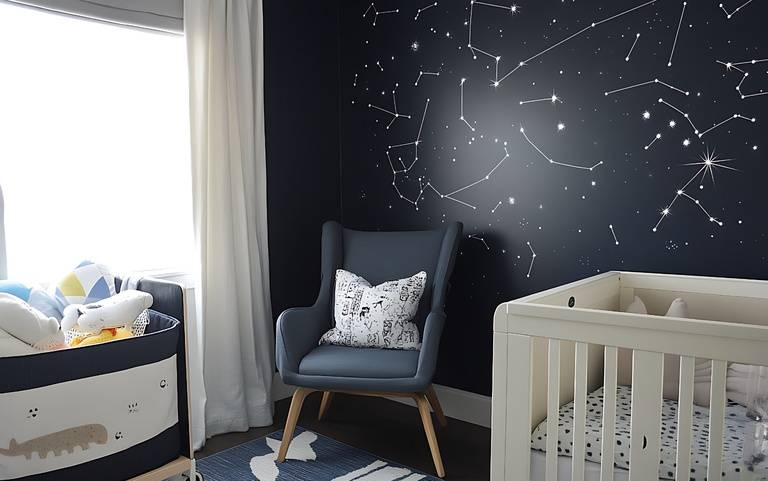
The moon, stars, planets and rockets are ideal for a imaginative nursery. Darker shades of blue and grey can be used as accent colours, whilst light-coloured walls and neutral-coloured furniture ensure good light reflection. Constellations, subtle space-themed wallpaper or individual planetary motifs look particularly lovely. A night light with a star motif completes the theme.
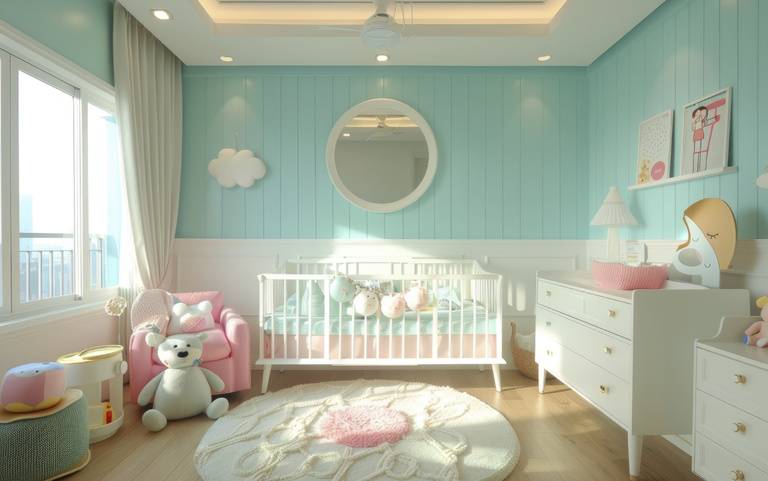
Castles, fairies and flowers create a fairytale atmosphere. Shades of pink, lilac and cream are ideal as a base and can be combined with light-coloured furniture and soft textiles. Wall art featuring fairy-tale illustrations, floral patterns and individual decorative elements lend the room a personal touch. Small lamps featuring charming designs reflect the design concept.
Lighting in the nursery
Light for everyday lifeLighting plays a particularly important role here: good general lighting makes it easier to find your way around the nursery, whilst an additional, dimmable light creates a relaxing atmosphere in the evenings. A subtle night light can also help you find your way around at night without having to light up the whole room.
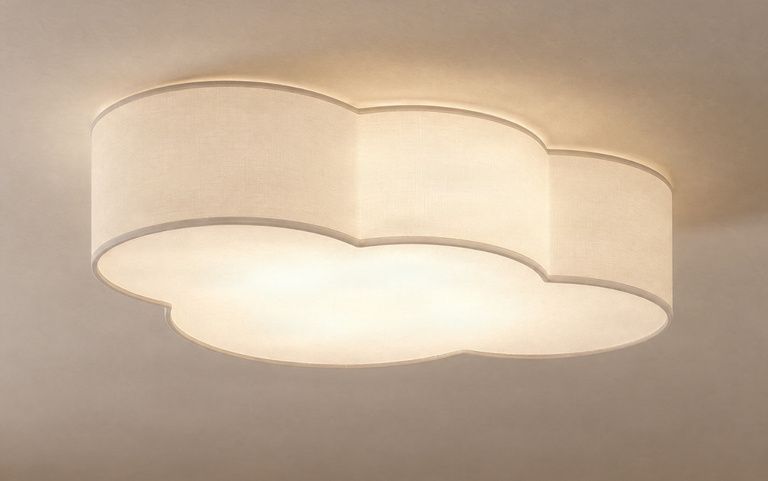
A ceiling light usually forms the basis of the lighting in a baby’s room. It should light the room as evenly as possible so that you can find your way around easily. To prevent the light from causing unpleasant glare, we recommend models with a fabric shade or made of satin-finished glass. A dimming function allows you to adjust the brightness to suit different situations.
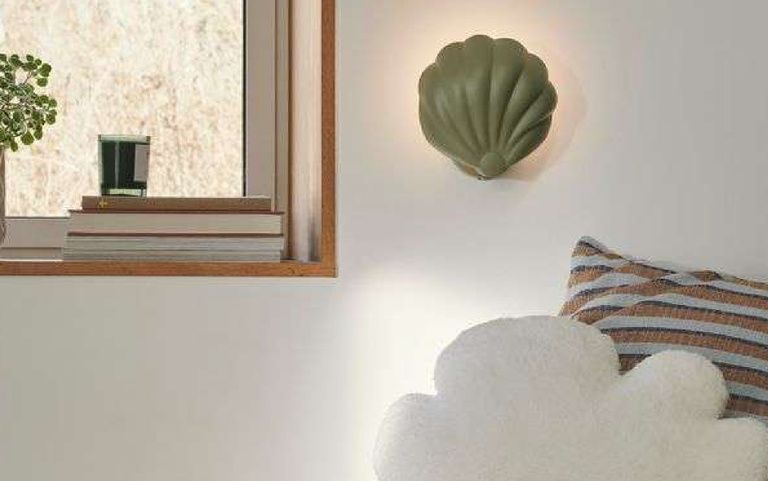
Reliable lighting is particularly important when changing nappies. Clothes, toiletries and the changing mat should be clearly visible. Depending on the layout of the room, a single ceiling light is not always sufficient for this. An additional light can provide targeted illumination of the nappy-changing area. A suitable wall light providing indirect or directed light without causing glare is recommended.
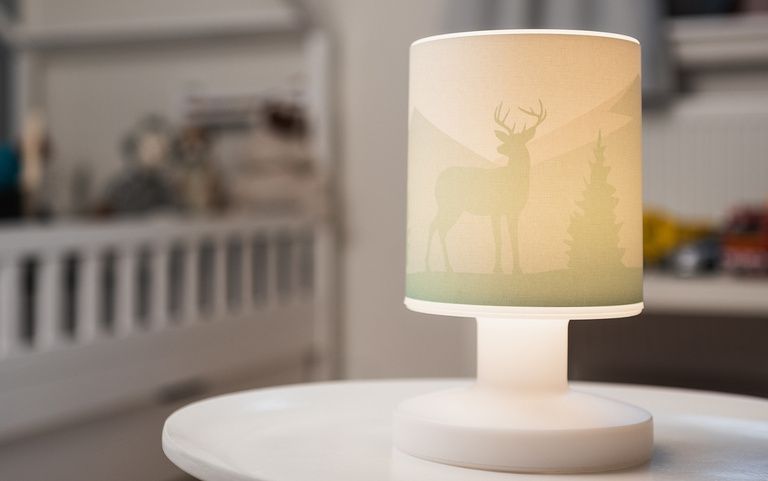
When your baby is settling down, a smaller, additional light source is often more pleasant than having the ceiling light on full. A table lamp or floor lamp can gently illuminate the surroundings and create a cosy atmosphere. Models with a dimmer switch are particularly handy. This way, you can dim the lights when you’re feeding your baby, cuddling them or reading to them.
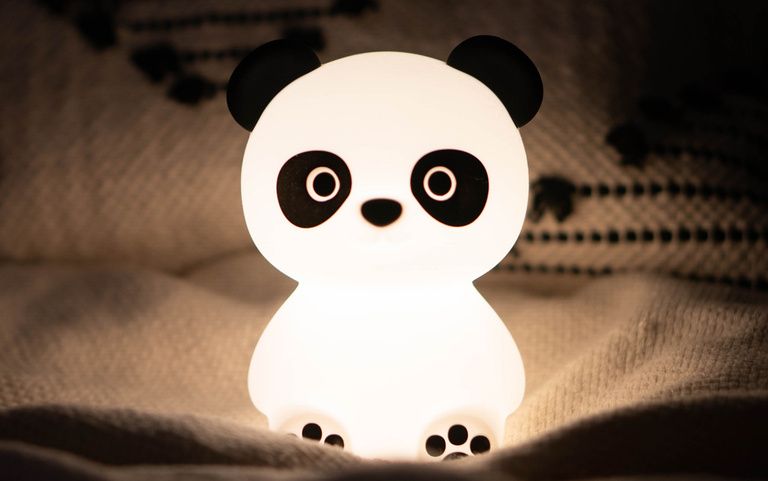
A night light makes it easier to find your way to the cot or changing table at night. It should only be as bright as is necessary for finding your way. Small plug-in lights, table lamps or other night lights designed for this purpose are suitable for this. Make sure that the night light is securely fixed and is not positioned directly next to the baby’s sleeping area or within the baby’s reach.
Creating a safe nursery: Safety is the top priority in any design. Furniture should be stable, and sockets and electrical appliances must be secured so that the child cannot reach them. No objects that could fall down should be placed above the bed. There should be no loose blankets, pillows or decorative items in the sleeping area that could hinder breathing. When changing a nappy, the baby must never be left unattended on the changing mat. You should also regularly adapt the layout to suit your child’s development. As soon as a child can grasp, turn, crawl or pull themselves up, objects and cables that were previously out of reach may become accessible. Reliable planning therefore takes into account not only current use but also the next stages of development.
Creating a cosy reading nook
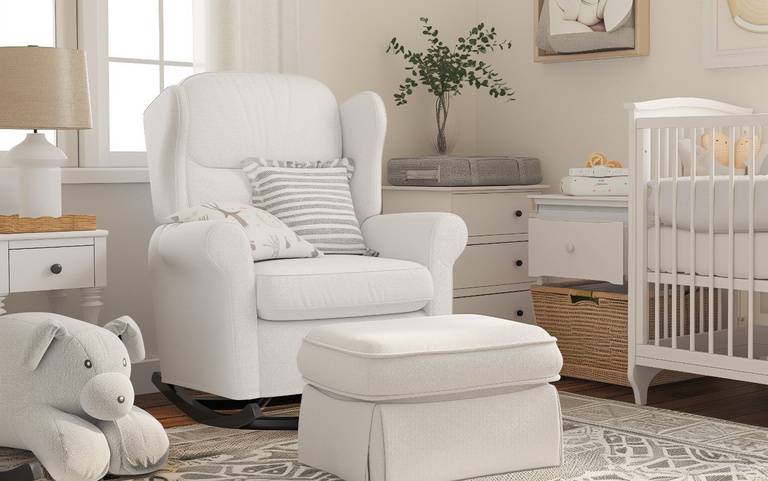
A quiet corner or feeding corner provides a dedicated space for peaceful moments together. Here you can breastfeed or bottle-feed your baby, cuddle them and, later on, look at books together. Even if you don’t have much space, you can create a corner like this with just a few items: a comfortable armchair or rocking chair forms the focal point. Make sure the seat height is comfortable, the backrest is comfortable and there is sufficient support for your arms. A soft blanket and a pillow can make you more comfortable. A small side table or a safe place to put things provides space for a drink, a burp cloth or a book. However, please ensure that the shelf is stable and has no sharp edges.
Textiles and accessories for a cosier feel: Textiles and decorative touches add personality to the nursery. That said, it isn’t necessary to decorate every empty space. A few carefully chosen items often look more harmonious than lots of different accessories. A carpet can add visual interest to a room and create a cosy atmosphere. Curtains complement the interior design and, depending on their material and style, can control the amount of light entering the room. Blankets and cushions can make the seating area more comfortable. Woven baskets are ideal for textiles or other storage purposes. Wall art adds colour and patterns to a room without you having to replace your furniture.
Storage space and tidiness in the nursery
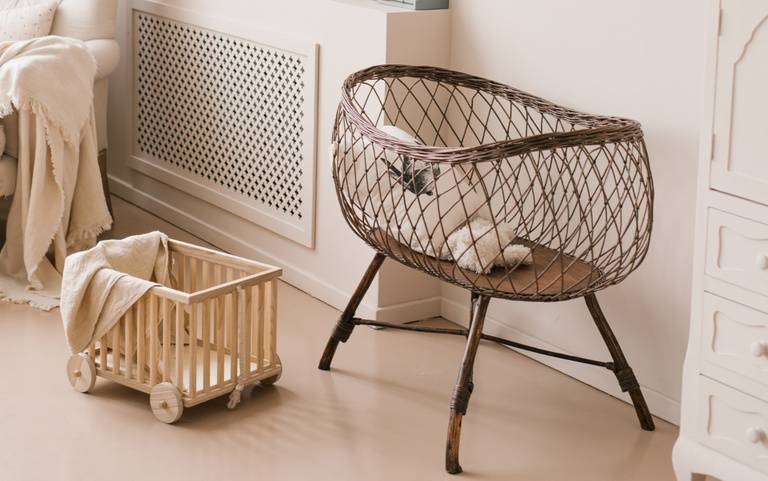
Lots of little things quickly pile up in the nursery: clothes in different sizes, nappies, baby care products, textiles and, later on, toys. A well-thought-out organisation system helps you keep track of things and keep the room tidy.
Nappies, wet wipes, care products and a change of clothes should be within easy reach at the nappy-changing area. Drawer dividers or small boxes help to keep items separate from one another.
Baskets are ideal for textiles, larger accessories and items you need on a regular basis. Closed drawers and cupboard compartments are ideal if you want to keep the room looking uncluttered.
If there isn’t much floor space, securely fixed wall shelves out of the baby’s reach can be a useful addition. They are suitable for lightweight storage boxes or selected decorative items.
How to furnish a small nursery cleverly
Different furnishing styles for your baby roomEven a small room can fulfil all the essential functions. It is crucial to make the most of the space and to choose furniture that serves multiple purposes or can be reused later on.
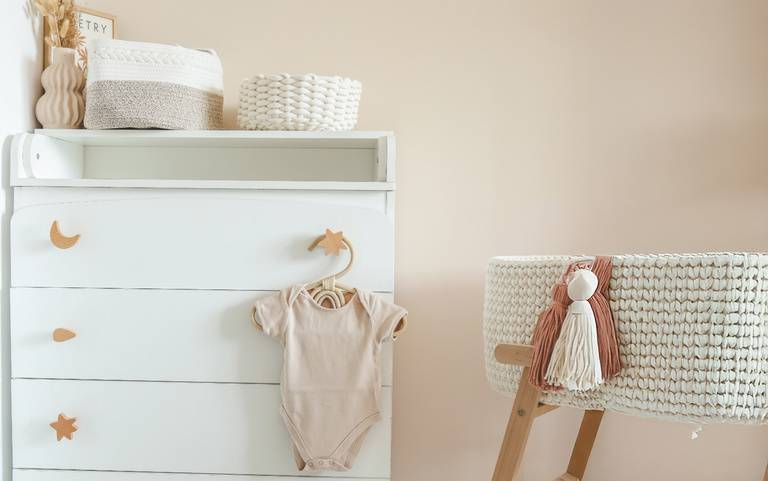
A chest of drawers with a suitable changing unit can be a space-saving alternative to a separate changing table. If you remove the top section at a later date, the chest of drawers can still be used as a piece of storage furniture.
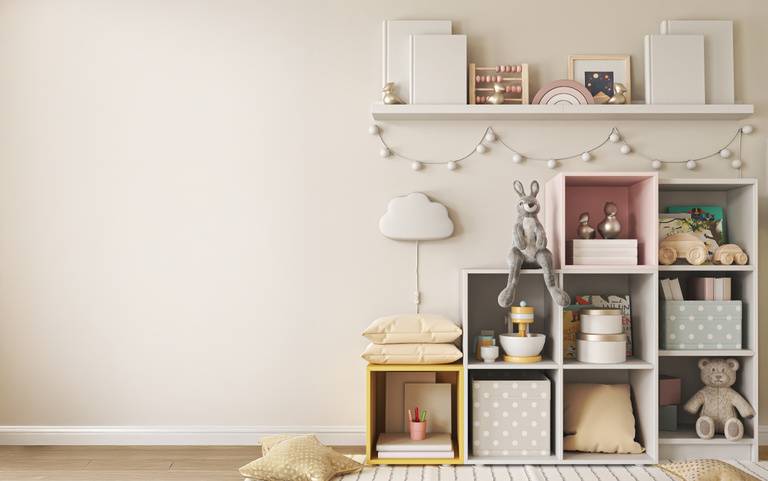
Wall shelves and suitable wall-mounted furniture provide extra storage space without taking up any floor space. Tall, narrow cupboards make better use of the room’s height than particularly wide pieces of furniture.
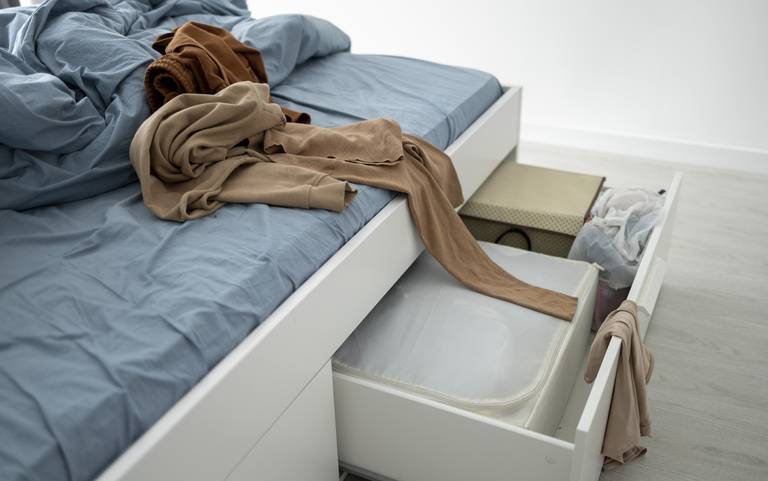
When furnishing your home, consider which pieces of furniture can save space. An under-bed chest of drawers, for example, is ideal for bed linen and toys – and it can also be placed under the bed in the parents’ bedroom.