




















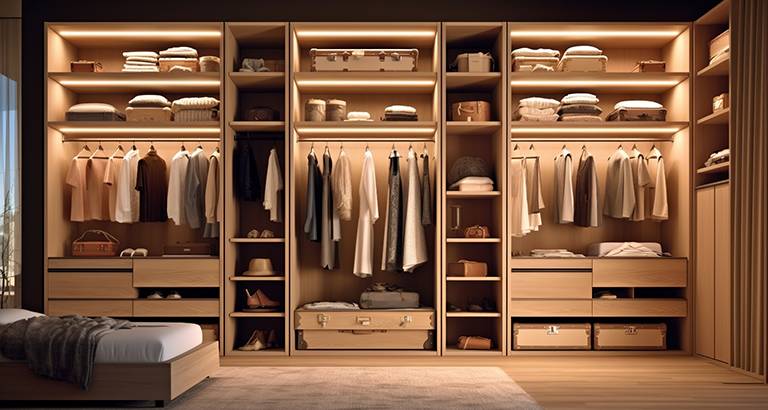
Organize wardrobe
Systematically achieving more order and clarityA full wardrobe and still nothing to wear? When clothes stack up, favorite sweaters disappear among rarely worn items, and the search for the right outfit every morning takes time, what's often missing is not additional storage space, but a well-thought-out organization system.
A well-organized wardrobe provides clarity and makes it easier to access daily attire. The key is a sensible layout, suitable organization solutions, and good lighting.
In this guide, you will learn how to organize your wardrobe step by step, make optimal use of existing storage space, and use the right lighting to make dark wardrobe areas more accessible.
The best way to organize a wardrobe, is to sort clothes by categories, divide wardrobe areas according to your own clothing style, and use suitable organization systems along with good lighting.
Sort and sensibly organize wardrobe
Correctly divide your wardrobe by keeping frequently worn clothes at eye and reach level and placing less needed items on upper shelves, hanging areas, and in drawers and compartments.
Before you purchase boxes, drawer inserts, or additional compartments, it is worth taking a look at the current contents of your wardrobe. An organization system works best when it suits your clothes and daily habits.

First, consider which clothing items you truly wear regularly. What is part of your everyday wardrobe? What do you only need for specific occasions or seasons? The goal is not to declutter the wardrobe but to create a foundation for new organization.
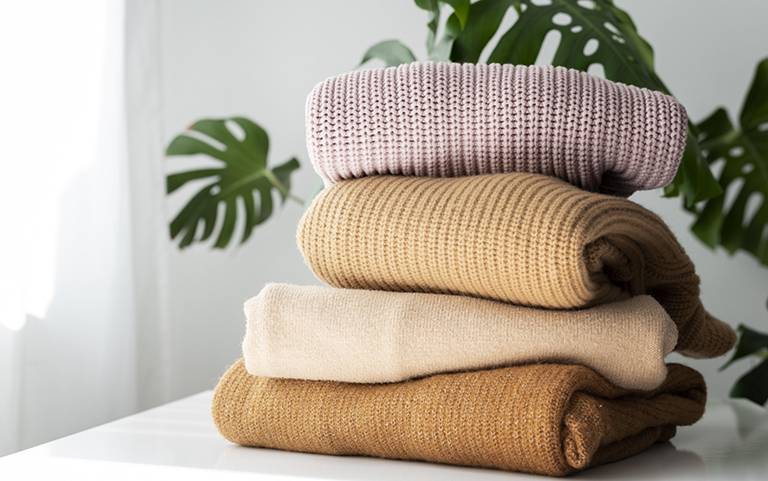
Then sort your wardrobe into practical categories. Depending on personal preference, you could create areas like T-shirts and tops, shirts and blouses, sweaters and sweatshirts, pants and jeans, dresses and skirts, sports and leisurewear, underwear and socks.
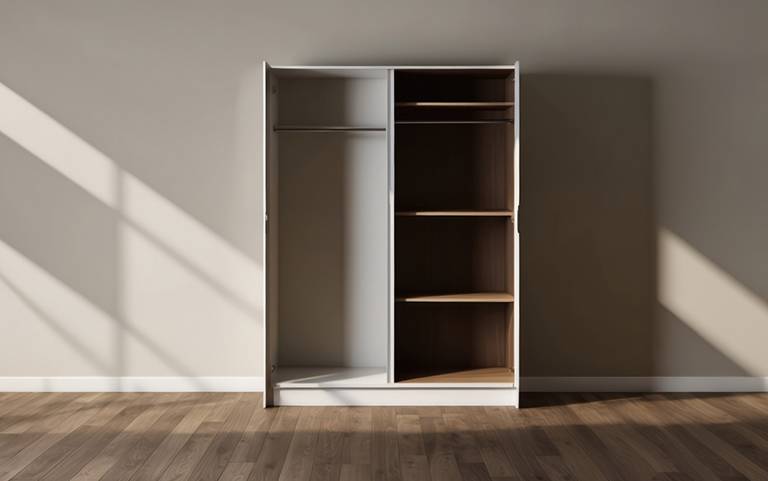
Look at the areas your wardrobe offers: How much space is available for hanging? How many drawers and compartments are there? Plan the areas so that they fit your wardrobe. The basic rule is: First decide what belongs where, then add the suitable organization systems.
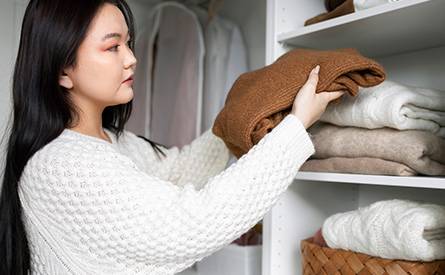
Fold or hang? Not every piece of clothing needs to hang on a hanger. The right storage for your clothes helps keep them organized and maintain their shape for as long as possible. Hanging clothes such as shirts and blouses, dresses, and blazers can often prevent creases and help maintain their shape better on appropriate hangers. T-shirts, sweaters, jeans and sturdy pants, as well as sports and leisurewear, can be folded to save space. Especially knitwear retains its shape better when folded than when hung on a hanger long-term. Avoid stacking too high. Small, manageable stacks are usually more practical in everyday life than tall piles where individual pieces are hard to reach.
Organize wardrobe to save space
You can organize a small wardrobe to save space by using vertical storage with additional levels, storing rarely used clothing higher up, and opting for compact organization solutions.
Especially in small bedrooms or narrow wardrobes, it is important to use the available storage space as efficiently as possible. Not every free centimeter needs to be filled. It's more about dividing the available space wisely and keeping it easily accessible.
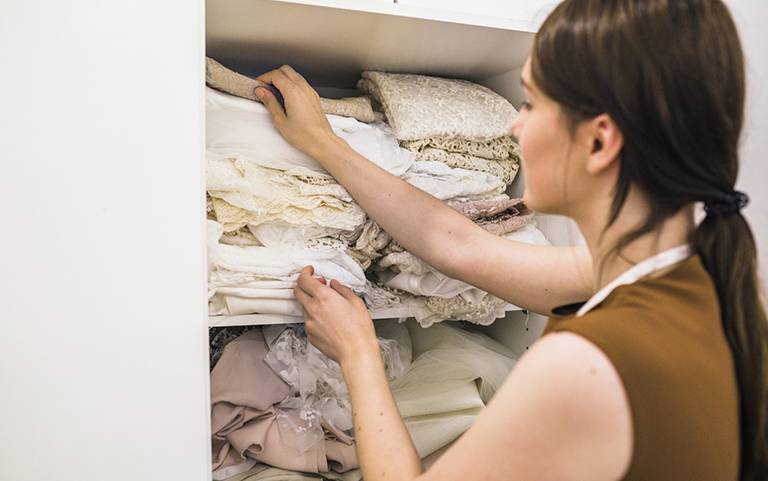
Many wardrobes have high shelves where space is not fully utilized. There is often unused space between two stacks or above folded clothes. With additional shelves, you can divide high shelves into several levels. This creates additional storage surfaces and allows for more organized grouping of clothes.
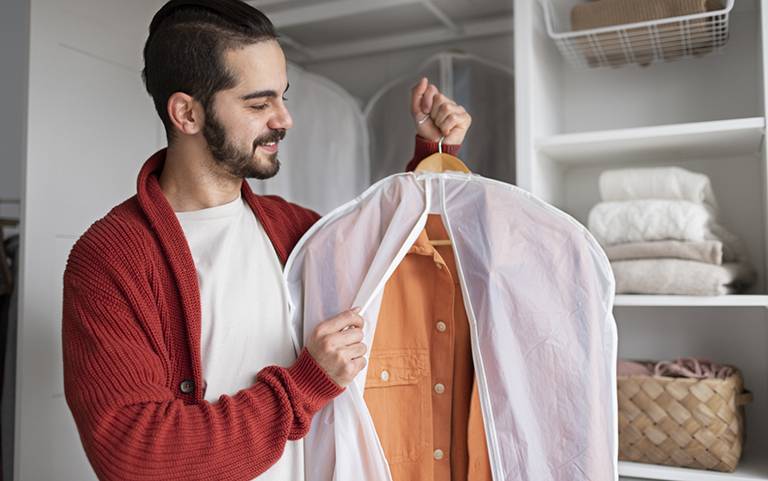
Depending on the wardrobe model, the inner sides of doors or side areas can offer additional storage space. Hooks and compact organizers are suitable for belts, scarves, bags, or other accessories. It's important that the additional organization solutions still allow the wardrobe doors to close easily and do not squish the clothes.
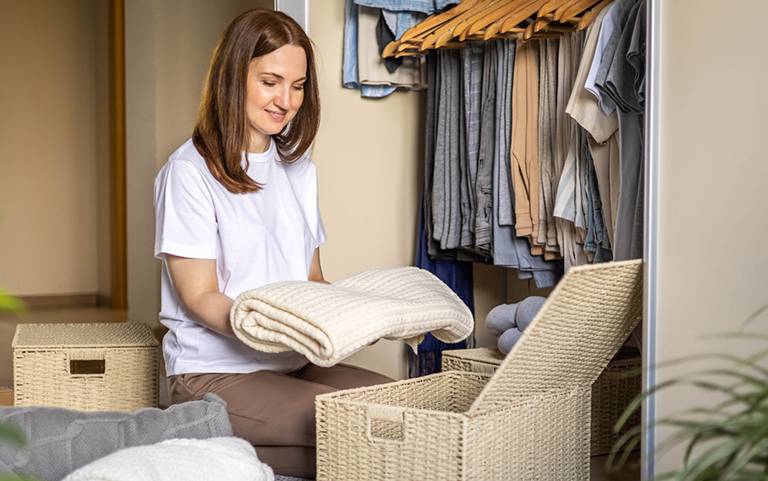
Not all clothes need to be readily accessible year-round. Winter sweaters, thick jackets, or summer beachwear can be stored in higher shelves or further back in the wardrobe during their off-season. Labeled storage boxes can significantly ease later retrieval and orientation.
Less is sometimes more: A common mistake in wardrobe organization is to fit in as many aids as possible. Additional boxes, baskets, and dividers can create order but also take up space themselves. Therefore, intentionally leave some space between clothing items. This makes it easier to remove and return individual pieces. For small wardrobes, specifically use solutions that address a particular space or clarity issue. Thoughtful division is often more effective than a large number of organizational aids.
Cleverly use organization systems for wardrobes
In a wardrobe, organization systems like drawer inserts, dividers, shelves, boxes, and baskets are useful if they specifically solve a particular organization or space problem. Once the individual wardrobe areas are determined, suitable organization systems can be selected. Each aid should fulfill a specific purpose: stabilizing stacks, organizing small items, or creating additional storage space. Frequently worn clothes should be arranged at eye and reach level. Rarely needed clothing can be placed in upper shelves or further back in the wardrobe.

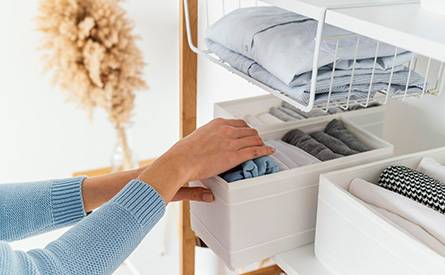
Underwear, socks, and other small garments quickly get mixed up in deep drawers. Drawer inserts divide the available space into smaller compartments. This makes individual pieces easier to find. Depending on the size, inserts can also be used for belts, ties, or similar items.
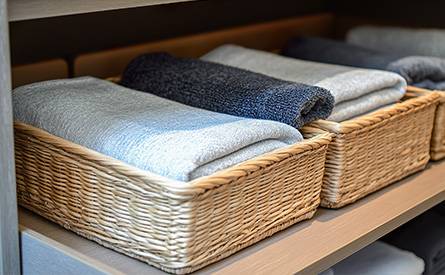
Boxes and baskets are suitable for items that are difficult to stack. Possible uses include scarves and hats, small bags, sports accessories, rarely needed clothes, and seasonal accessories. Open baskets allow for direct access. Closed or transparent boxes can be suitable for storage.
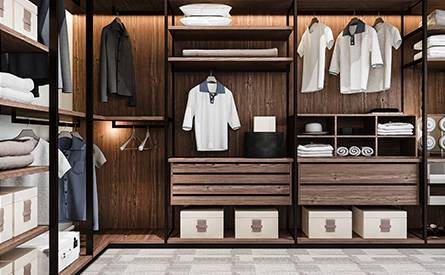
If folded clothes in a compartment keep tipping over or different categories get mixed up, dividers can help. They separate larger compartments and keep individual stacks apart. This is especially useful if you want to store different types of clothing next to each other.
High cabinet compartments often offer more room than needed for a single stack of clothing. Additional shelves create more levels and help make better use of the available height. When selecting, pay attention to fitting dimensions, sufficient stability, and the respective load capacity.
Belts, scarves, and bags don't always need their own compartment. Depending on the wardrobe setup, hooks or special organizers can be a space-saving alternative. They create additional hanging options and keep accessories at hand without losing valuable shelf space.
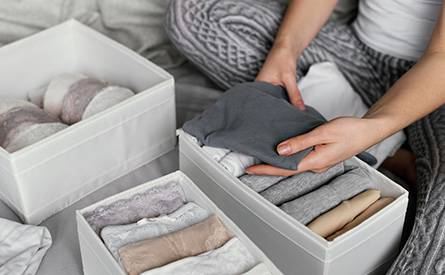
When clothing items are not needed for several months, boxes with clear labels are particularly practical. Transparent models provide a quick look at the contents. With opaque boxes, labels help maintain an overview without having to open every storage unit later.
Not every wardrobe needs the same tools. The critical factors are the size of the wardrobe, the quantity and type of your clothing, and your personal usage habits. Before purchasing, ask yourself the following questions: Which area is especially cluttered right now? Which garments are difficult to stack? Where is additional storage space lacking? What items do I need daily, and which are used infrequently? Do the planned organization systems fit into the existing compartments and drawers? This way, you can find solutions that genuinely improve your organization instead of adding additional effort.
Lighting in the wardrobe
Better visibility with the right lightA well-organized wardrobe is an essential foundation for order. However, even the best organization system is of little help if garments disappear into dark compartments. In an unlit wardrobe, dark areas quickly form. Clothes lie in the shadow of other items, colors are hard to distinguish, and items stored further back are easily overlooked.
Especially in bedrooms with little daylight or with deep wardrobe elements, lighting can significantly contribute to finding clothes faster and making better use of the available storage space.
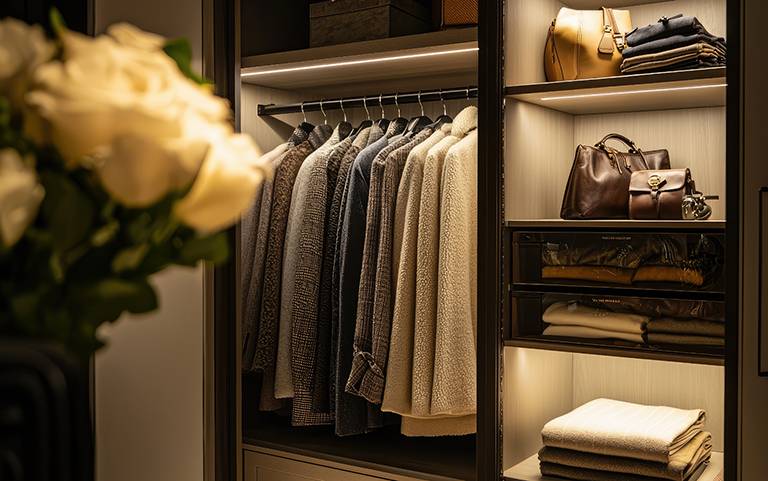
The wardrobe is best lit with uniform, glare-free lighting that illuminates deep compartments, clothes rails, and dark wardrobe areas well and allows for natural color rendition. Light should preferably be installed under shelves, above the clothes rail, or on the side, so no disturbing shadows are created and it doesn't shine unpleasantly into the eyes when opening the wardrobe.
These areas often need additional light
- Deep compartments: Rear garments lie in shadow.
- Clothes rails: Hanging clothes cover each other.
- Upper shelves: The view of higher items is obstructed.
- Drawers: Drawer contents are hard to see.
- Wardrobe sides: Light doesn't reach the edges.
Appropriate lighting ensures that you can recognize your clothes faster, better differentiate colors and materials, more easily access back wardrobe areas, better overview dark compartments and drawers, and use existing storage space more efficiently.
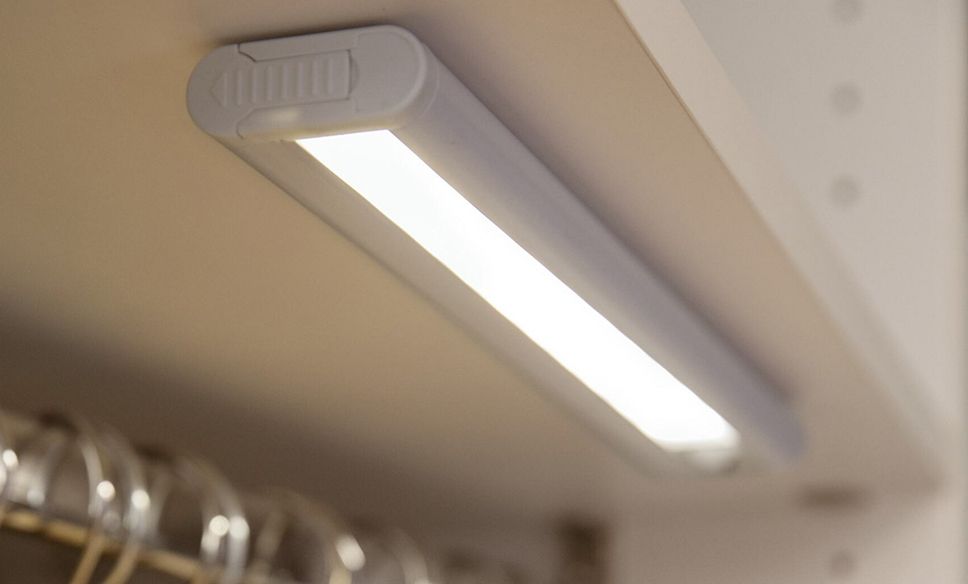
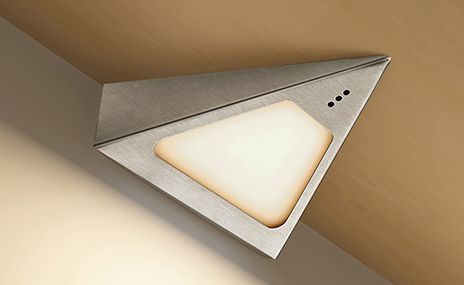
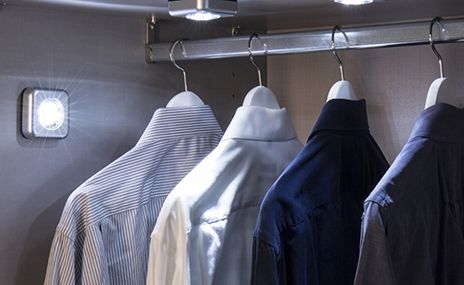
LED light strips and undercabinet lights
Optional with battery or batteryWith suitable LED lights, you can also retrofit an existing wardrobe. Which solution is suitable depends, among other things, on the size of the wardrobe, the existing power connections, and the desired ease of use.
LED light strips and undercabinet lights are particularly suitable for targeted illumination of compartments and wardrobe areas. Lights under shelves can directly illuminate the compartments below them. This makes folded clothes more visible. A light above the clothes rail can help evenly illuminate hanging clothes. However, make sure the garments don't completely block the light. Side-mounted lights can be a useful addition if the center of the wardrobe is already well lit, but the edges remain dark.
If no power connection is available nearby, battery-powered lights can be a practical solution. This option is especially interesting for easy retrofitting.
A motion sensor in the wardrobe is sensible if the lighting can be automatically switched on when opening or entering the wardrobe, thereby increasing ease of use. Additionally, the battery life is increased by switching according to need.
Wardrobe fully organized
This is how the new organization works in everyday lifeThe wardrobe doors are closed again, each piece of clothing has its place, and the dark compartments are well lit. However, the actual advantage of the new organization will only become apparent in the coming weeks.
A sensibly divided and well-lit wardrobe can noticeably ease everyday life. Instead of searching for a particular piece of clothing for a long time in the morning, you can quickly see what is available and where to find it.
Conclusion
With thoughtful planning for more comfortA well-organized wardrobe is not created merely by additional boxes or more storage space. The key is the combination of a sensible layout, suitable organizational systems, and lighting that makes even hard-to-reach areas visible.
If you first analyze your wardrobe, logically assign wardrobe areas, and then purposefully select organizational aids and lighting, you create a solution that suits your needs.
This way, a chaotic wardrobe becomes a functional storage space that saves you time in the long run, makes daily clothing choices easier, and makes available clothing more accessible.

Lighting expert at Lights.co.uk
Expert tip
"Don't plan the lighting for your coffee corner only after the machine and accessories have found their place; think about the lighting from the start. A strategically placed under-cabinet or wall light ensures that the work surface and coffee machine are evenly illuminated, preventing distracting shadows when preparing. For a cozy atmosphere in the evening, you can complement the functional task lighting with a dimmable table or battery lamp with warm white light. Cordless lights are especially practical if there is no additional power outlet at the desired location. This way, the coffee corner combines functional lighting for everyday use with a pleasant atmosphere for relaxed coffee enjoyment."